Table of contents
Activities and equipment for sensory integration should help a person regulate, organise, and respond to sensory input in a way that feels safe and purposeful. In my work designing sensory rooms for autistic children, pupils with ADHD, adults with dementia, and people with sensory processing differences, I’ve found that the best results come from matching the right equipment to the individual’s sensory profile rather than filling a room with popular products.
A well-planned sensory integration space uses movement, touch, sound, light, and deep pressure in a structured way to support attention, emotional regulation, body awareness, and daily function. When parents, schools, and therapists understand which activities calm, alert, or organise the nervous system, they create spaces that genuinely improve outcomes rather than simply looking impressive.
Highlights
- Sensory integration activities should be chosen for the person’s needs, not just the room size or budget.
- The most effective equipment supports regulation, movement, proprioception, tactile exploration, and predictable sensory input.
- Home, school, and therapy rooms need different layouts, routines, and safety considerations.
- Simple setups often work better than overstimulating rooms packed with lights, sounds, and competing equipment.
What sensory integration means in practice
Sensory integration is the brain’s ability to receive, sort, and respond to information from the senses. That includes the familiar senses such as sight, sound, touch, taste, and smell, but also the vestibular system, which helps with balance and movement, and the proprioceptive system, which tells us where our body is in space. When sensory integration is difficult, a person may become overwhelmed, under-responsive, clumsy, restless, anxious, or unable to focus on everyday tasks.
In practical terms, activities and equipment for sensory integration are tools that help the nervous system process input more effectively. For one child, that may mean swinging before handwriting to improve body awareness and attention. For another, it may mean deep pressure and low lighting to recover after a noisy classroom. For an adult with dementia, it may involve tactile objects, calming visual cues, and familiar music to reduce distress. This is why I always say sensory support is not a trend-driven shopping list; it is a response to a real neurological need.
If you are still planning the overall space, it helps to understand the different layouts available for home, education, and care settings. I often suggest reviewing different types of sensory rooms before choosing equipment, because the room’s purpose should always guide what goes into it.
How I choose the right activities and equipment
Start with the sensory goal, not the product
The first question I ask is simple: what do we need this person to feel or do more successfully? Are we trying to calm after overload, improve attention before learning, build tolerance for touch, encourage movement, or create meaningful engagement? Once the goal is clear, the equipment choice becomes much easier. A child who seeks movement may benefit from a platform swing or rocker, while a child who avoids unpredictable input may do better with beanbag pressure, soft textures, and dimmable lighting.
This is where many setups go wrong. A family may buy a bubble tube, projector, music system, fibre optics, and spinning chair because those are commonly associated with sensory rooms. Yet if the child is sound-sensitive and visually overwhelmed, that room may increase dysregulation instead of reducing it. Effective sensory integration spaces are selective. They are designed around the user’s thresholds, preferences, and triggers.
Observe patterns in everyday life
I look closely at what happens before dysregulation and what consistently helps. Does the child crash into furniture, chew sleeves, hide under cushions, pace, spin, or cover their ears? Does concentration improve after pushing heavy objects or jumping? Does sleep improve when deep pressure is used before bedtime? These patterns tell you whether the person is seeking or avoiding particular types of input, and they point toward the activities most likely to help.
Educators and therapists can document this in a simple observation chart. Parents can do the same at home by noting times of day, environments, sensory triggers, and successful calming tools. This approach is far more reliable than copying another family’s sensory room online, because the same equipment can be regulating for one person and distressing for another.
Core equipment that supports sensory integration
Movement and vestibular equipment
Vestibular input can be powerful for helping with alertness, balance, coordination, and regulation, but it needs to be used thoughtfully. In therapy settings, I often include swings, rocking seats, balance boards, or crash mats because they support controlled movement and motor planning. A swing can help some children organise their attention before table work, while a rocking chair may offer gentle rhythmic movement for a child who needs calming rather than stimulation.
At home, you do not need a clinical setup to offer useful movement input. A small indoor rocking option, floor cushions for safe crashing, or a mini trampoline used with supervision can all be effective. If families want a starting point, I often recommend browsing options such as an indoor sensory swing or a balance board for kids, but only if the child actively benefits from movement rather than becoming overstimulated by it.
A poor setup in this category is one where spinning, rocking, and climbing equipment are all packed into a small room with no supervision plan. An effective setup allows one type of movement at a time, with enough space for the user to feel secure and enough structure for the adult to judge whether the input is helping or escalating behaviour.
Proprioceptive and deep pressure equipment
Proprioceptive input is often the backbone of sensory integration support because it is grounding, organising, and usually easier to tolerate than visual or auditory stimulation. This includes activities that involve pushing, pulling, squeezing, carrying, climbing, resistance, and deep pressure. In many autism and ADHD setups, this is the most consistently useful category because it helps the body feel “where it is,” which can reduce restlessness and improve emotional control.
My go-to items include beanbags, crash pads, weighted lap pads, body socks, resistance bands, and large cushions. A weighted blanket can be helpful for quiet-time routines if the user enjoys deep pressure and it is used safely. In classrooms, chair bands and weighted cushions can support seated work. In therapy rooms, obstacle courses that include crawling, pushing, and carrying tasks often produce better regulation than passive sensory viewing equipment alone.
One of the most common mistakes I see is using deep pressure reactively but not proactively. If a child always becomes overloaded after lunch, build a proprioceptive routine before the difficult period rather than waiting for distress. This small change often reduces meltdowns, improves transitions, and makes the sensory room a supportive environment rather than an emergency exit.
Tactile resources
Tactile activities should offer both exploration and control. Some people seek varied textures and will benefit from bins, textured panels, putty, kinetic sand, water play, and fabric swatches. Others are defensive and need gradual exposure starting with predictable, dry, non-sticky textures before progressing further. I never force tactile play in a sensory room because forced touch can increase aversion and anxiety.
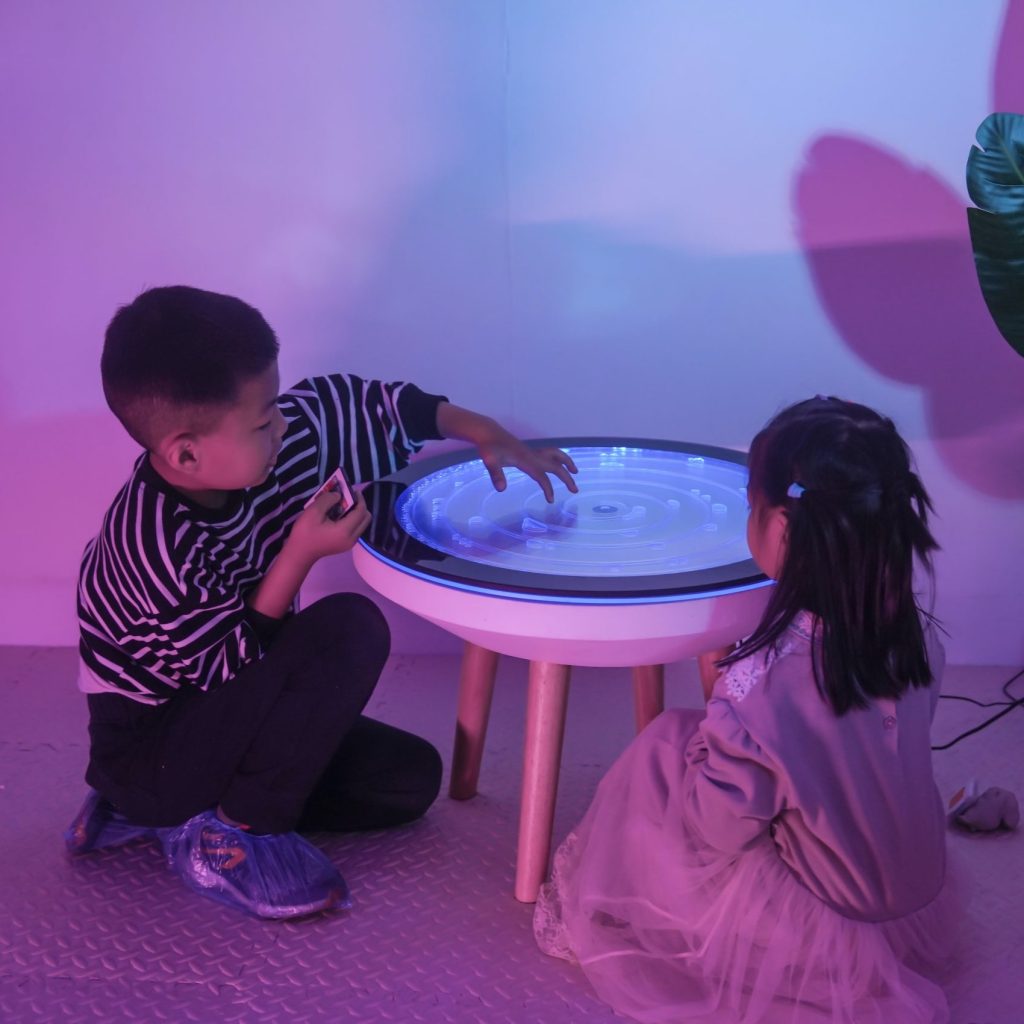
Good tactile equipment invites choice. That might include baskets of fiddle tools, soft brushes, sensory mats, reusable gel pads, or therapy putty. For some users, a simple tray with rice, scoops, and hidden objects works better than expensive wall-mounted features because the activity is purposeful and easy to control. For adults with dementia, tactile quilts or familiar textured objects can be especially effective in promoting calm engagement.
Visual equipment
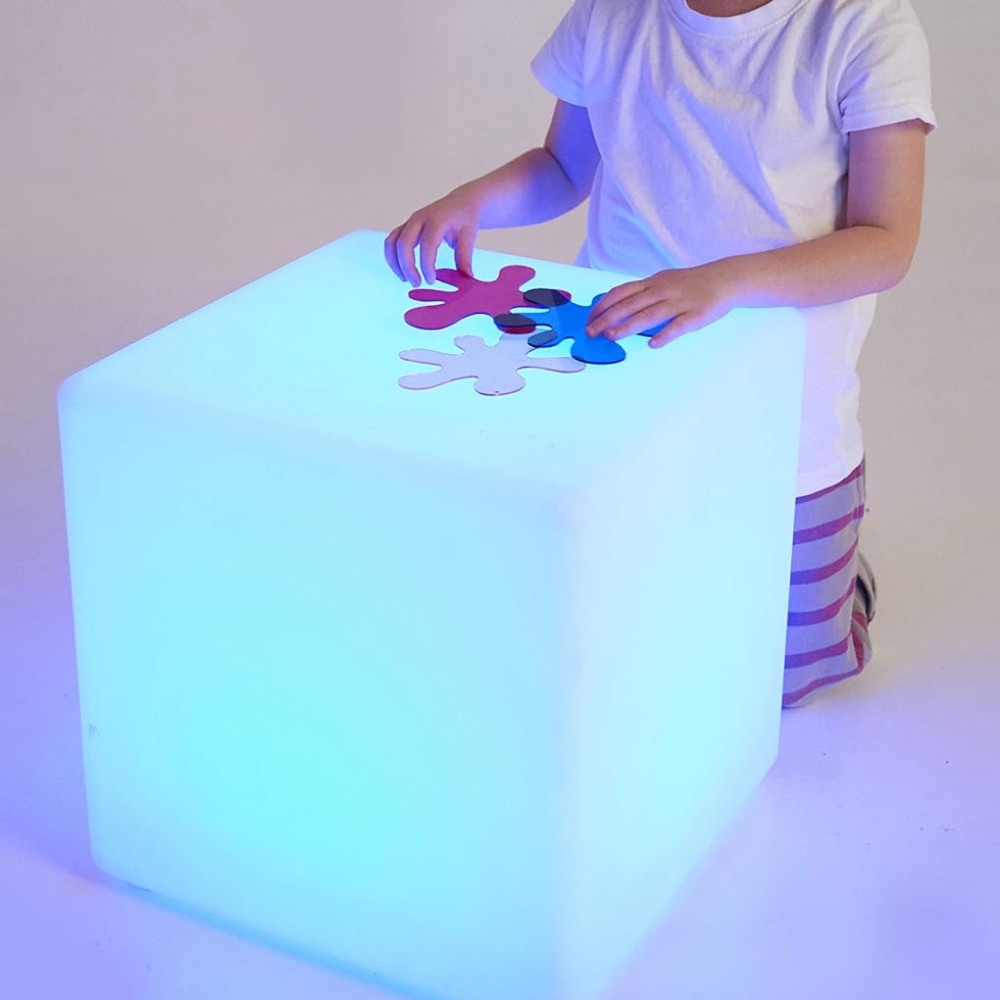
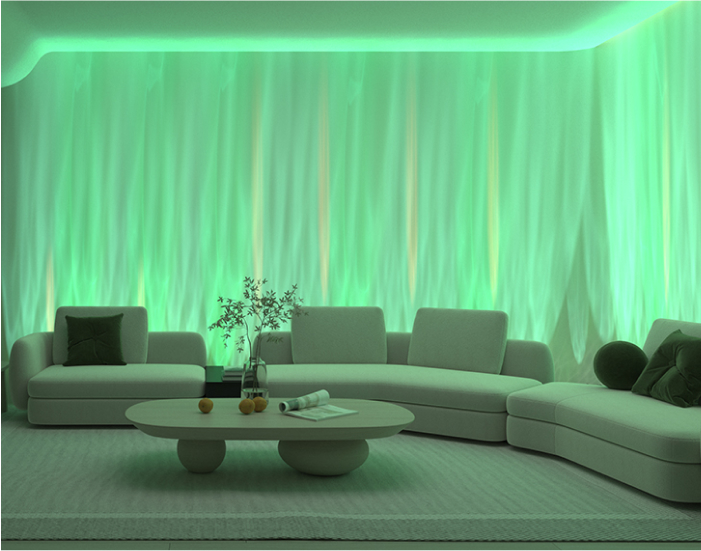
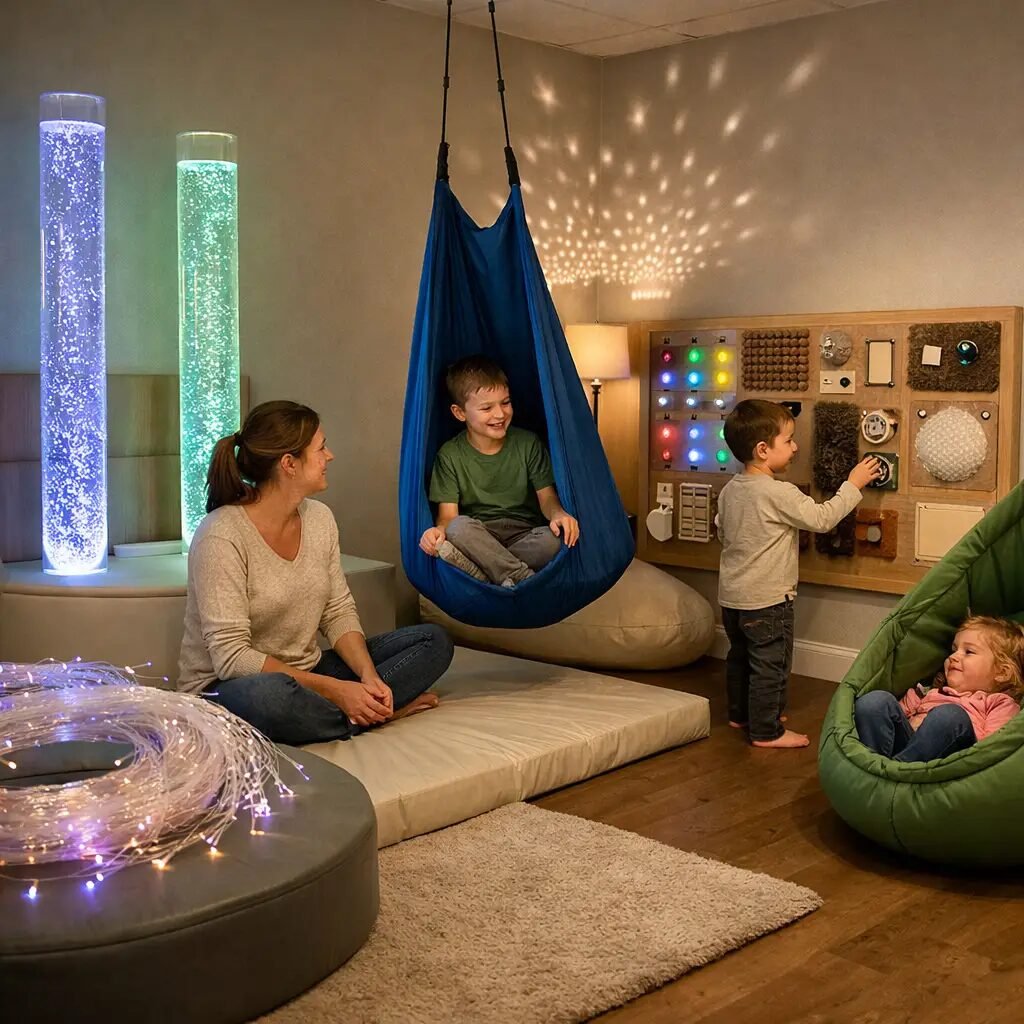
Visual sensory equipment is often the first thing people picture, but it should support regulation rather than dominate the room. Bubble tubes, LED strips, fibre optics, projectors, and light panels can all create predictable visual input, help with visual tracking, and support calming routines when used sparingly. I prefer adjustable lighting so I can reduce brightness when someone is overloaded and increase it when engagement is the goal.
If you are building a calmer visual environment, a set of sensory LED lights can be useful, especially when colour changes are slow and controllable. The key is contrast: effective visual spaces are uncluttered, with one focal point at a time. Poor visual spaces layer bright colours, flashing projections, reflective surfaces, and busy wall displays, which creates competition for attention and can overwhelm autistic users very quickly.
Auditory tools
Sound should always be optional. In some sensory rooms, gentle rhythm, nature sounds, or familiar music help with transition, relaxation, or attention. In others, any added sound becomes another demand on a nervous system that is already overloaded. I recommend equipment that allows quick volume control and easy shut-off rather than fixed sound effects.
Headphones, small speakers, and simple sound choices are often enough. For children who benefit from reducing background noise, noise cancelling headphones for kids can be an excellent addition. That is particularly useful in schools where the sensory room may serve as a recovery space between demanding lessons.
Best sensory integration activities by goal
Activities for calming and regulation
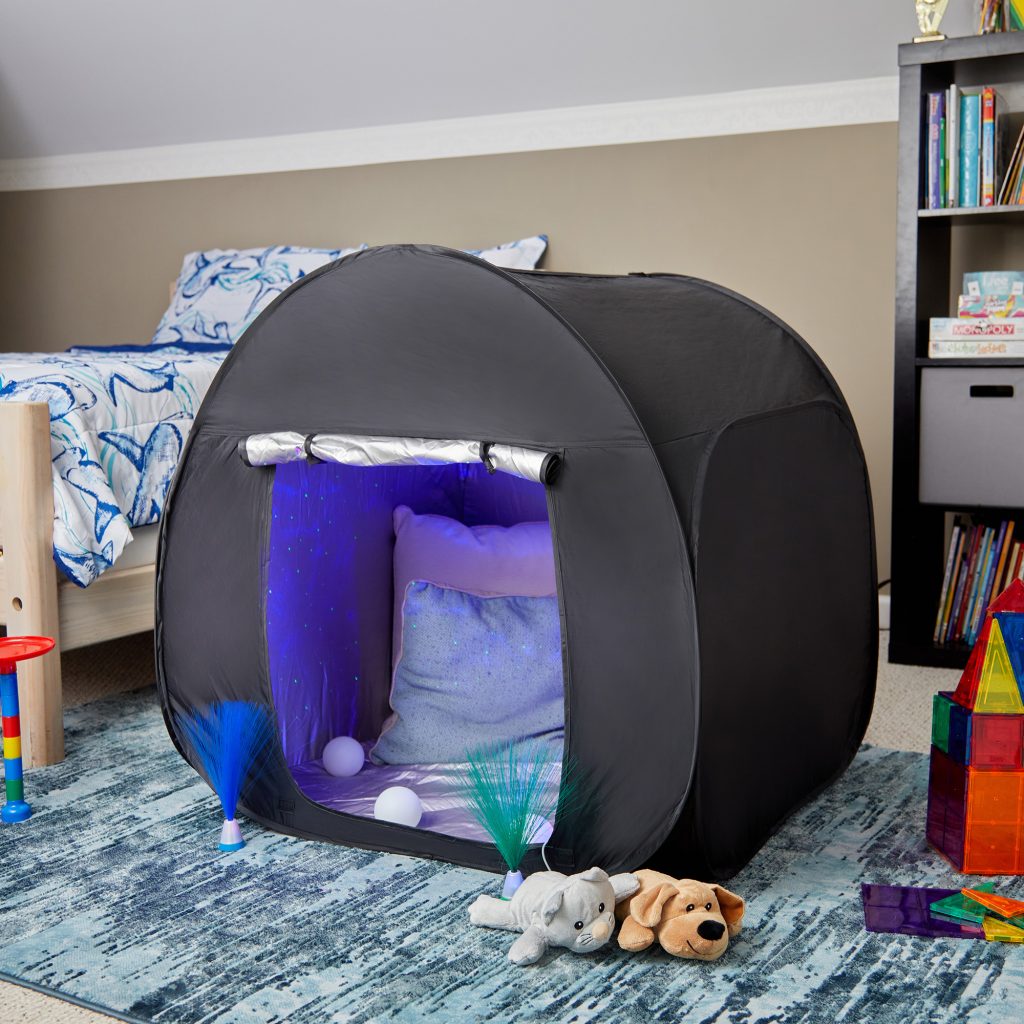
When the goal is calming, I use low-arousal activities with predictable rhythm and clear boundaries. Examples include lying under a weighted blanket, slow rocking, squeezing a therapy ball, breathing with a visual light cue, rolling a peanut ball over the body, or sitting in a beanbag corner with dimmed lights. For children who struggle after school, a 10-minute calming routine can make evenings much smoother.
A regulation activity should reduce demand, not add pressure. I avoid asking lots of questions during this phase. Instead, I might offer two simple choices: “beanbag or blanket?” or “lights on blue or warm white?” The ability to choose gives the user a sense of control, which is often just as regulating as the equipment itself.
Activities for alerting and focus
If a child is sluggish, unfocused, or disconnected, I use short bursts of alerting input. That can include bouncing on a therapy ball, wall pushes, crawling through tunnels, stepping stones, animal walks, or carrying weighted objects across the room. In classrooms, this is often more effective than telling a child to “sit still and concentrate,” because the body first needs the right type of activation.
I keep alerting activities brief and purposeful. Too much can tip into dysregulation, especially for children who already struggle with impulse control. For example, two minutes of jumping followed by a seated task works far better than 15 minutes of increasingly wild movement that leaves the child unable to settle.
Activities for body awareness and coordination
Body awareness improves when activities combine movement with planning. Obstacle courses are excellent for this if they are simple and repeatable. I might set up a route that includes crawls, stepping stones, a push task, and a crash landing into cushions. The child learns where their body is, how much force to use, and how to sequence movement.
This type of sensory integration work is especially useful for children with dyspraxia, autism, or ADHD who may seem clumsy, bump into others, or struggle with transitions. In therapy rooms, I often repeat the same sequence across several sessions so the nervous system can build predictability and confidence rather than facing a completely new sensory challenge each time.
Step-by-step: how I set up a sensory integration room that actually works
When I am planning a room from scratch, I follow a clear process so the space serves real regulation needs instead of becoming a storage area for sensory products.
Step one is to define the main purpose of the room. Is it for calming, active sensory breaks, therapy sessions, or a combination with zones? Step two is to identify the primary users and their sensory profiles. Step three is to divide the room into no more than two or three sensory functions, such as movement, calm, and tactile exploration.
Step four is to choose anchor equipment first. That might be a swing, crash pad, beanbag area, or light corner. Step five is to add portable tools that can be rotated rather than permanently displayed. Step six is to test the room at different times of day and observe whether users become calmer, more focused, or more distressed. If the room is not changing behaviour in a positive direction, revise it. The best sensory rooms evolve after real use.
For anyone planning a space in more detail, I often suggest looking at sensory room equipment options to think in categories rather than buying isolated items. That approach usually leads to a better balance of movement, calming, and tactile support.
Common mistakes I see again and again
The biggest mistake is overstimulation. Too many lights, too many colours, too many sounds, and too many choices can make a room unusable for the very people it is meant to help. A sensory room should never feel chaotic. If every wall lights up, music is playing, and multiple pieces of equipment demand attention, the nervous system has nowhere to rest.
The second mistake is copying a generic “autism room” idea without assessing the individual. Autism is not a single sensory profile. Some autistic people seek intense movement and deep pressure; others avoid movement and are highly sensitive to light or sound. The same is true for ADHD, sensory processing disorder, and dementia. According to the UK National Autistic Society, many autistic people experience hyper- or hypo-sensitivity to sensory input, but the pattern varies widely between individuals source.
The third mistake is failing to measure outcomes. If a room is regularly used but sleep, transitions, engagement, or emotional regulation are not improving, something needs to change. In schools especially, I encourage staff to track whether sensory breaks improve return-to-learning time. Research from the CDC shows that around 1 in 36 children has been identified with autism spectrum disorder source, which makes practical, outcome-focused sensory support increasingly relevant across education and family settings.
Adapting sensory integration equipment for home, school, and therapy settings
At home, I prioritise flexibility and daily usability. Families need sensory support woven into real routines such as getting ready for school, unwinding after school, and settling before bed. That usually means portable items, soft zoning, and equipment that can be put away. A corner with cushions, a weighted tool, dimmable lights, and a movement option is often more effective than trying to convert an entire room into a highly themed space.
In schools, the sensory room should support function, not avoidance. I want pupils to use it to regulate and return, not to escape every difficult task. Timed sessions, clear goals, and staff training are essential. The room should include robust equipment that can cope with regular use and support both calming and movement-based breaks depending on the timetable and student need.
In therapy settings, the advantage is that activities can be carefully graded. I can challenge balance, tolerance, sequencing, and tactile processing while observing subtle responses. That level of assessment is harder in busy homes and schools, but the principles still carry across: start with the person, match the input to the goal, and keep adjusting based on real outcomes.
Frequently Asked Questions
What are sensory integration activities?
Sensory integration activities are structured experiences that help the brain process sensory input more effectively. They can include swinging, deep pressure, obstacle courses, tactile play, or calming light-based routines depending on the user’s needs.
What equipment is best for sensory integration?
The best equipment depends on whether the person needs calming, alerting, movement, tactile exploration, or body awareness support. Commonly effective options include swings, crash mats, beanbags, weighted tools, tactile resources, and adjustable lighting.
How do I choose sensory equipment for an autistic child?
Start by noticing what the child seeks, avoids, and finds regulating in everyday life. Choose equipment that matches those patterns rather than buying popular items that may be overstimulating or irrelevant.
Can sensory rooms help children with ADHD?
Yes, sensory rooms can help children with ADHD when they provide purposeful movement, proprioceptive input, and calming breaks. The most helpful setups improve regulation and focus rather than offering unstructured stimulation.
What is the difference between calming and alerting sensory equipment?
Calming equipment usually provides steady, predictable input such as deep pressure, soft seating, dim lighting, and gentle rocking. Alerting equipment increases activation through movement, resistance, bouncing, or more energising sensory tasks.
Do sensory integration activities work for adults?
Yes, adults can benefit from sensory integration activities, especially those with autism, ADHD, dementia, anxiety, or sensory processing differences. The equipment may look different, but the principles of regulation, choice, and matched sensory input stay the same.
How many items should be in a sensory room?
There should be enough equipment to meet the user’s needs without overwhelming the space. In most cases, a smaller number of well-chosen items works better than a room filled with competing sensory features.