Table of contents
A child can start using a sensory room from infancy, but the right age depends far more on developmental stage, supervision needs, and individual sensory profile than on a fixed birthday. In practice, the best answer to “at what age should a child start using a sensory room?” is: as soon as the environment is adapted safely and purposefully for that child’s needs, whether that is a baby needing calm visual input, a toddler seeking movement, or an older child learning self-regulation.
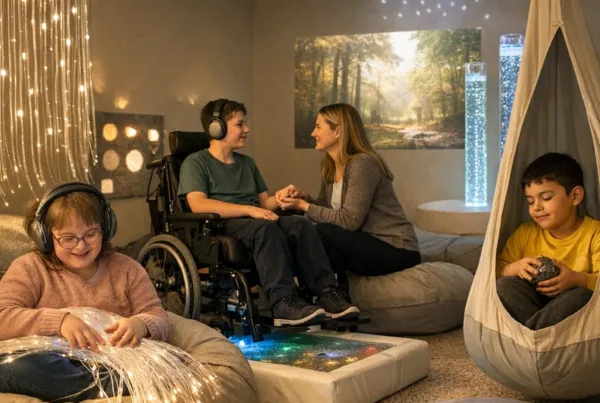
Across home, school, and therapy settings, well-designed sensory rooms are used successfully with babies, toddlers, school-age children, teenagers, and adults with autism, ADHD, sensory processing differences, and even dementia. The most effective spaces are never built around age alone; they are built around regulation, safety, and function.
Highlights
- Most children can begin using a sensory room very early, provided the space is age-appropriate and supervised.
- There is no single “best age”; readiness depends on sensory needs, mobility, communication, and regulation challenges.
- Toddlers and preschoolers often benefit most from simple, calm sensory zones rather than overstimulating rooms.
- School-age children can use sensory rooms more intentionally for calming, focus, transitions, and therapy goals.
- Safety, session length, and equipment choice matter more than starting age.
What a sensory room is and why age is only part of the answer
A sensory room is a dedicated environment designed to support sensory regulation through controlled input such as light, sound, texture, movement, and deep pressure. In clinical and educational practice, these spaces are used to either calm an overwhelmed nervous system or provide targeted stimulation for a child who is under-responsive, restless, or seeking input.
That definition matters because many families assume a sensory room is only for older autistic children, or that it should be introduced once a diagnosis is confirmed. In reality, neither assumption is correct. Children do not need a formal diagnosis to benefit from sensory support, and waiting for a label can delay helpful intervention. A baby who struggles to settle, a toddler who constantly crashes into furniture, or a five-year-old who melts down after school may all be showing sensory regulation needs that a carefully planned sensory space can support.
Professionals usually look first at function: what is the room for this child? If the goal is calming, the space should reduce input and create predictability. If the goal is movement and body awareness, the room may need more opportunities for gross motor play and deep pressure. This is why one two-year-old may benefit from a tent, cushions, and soft lighting, while another may need climbing foam, push-pull activities, and a short movement circuit.
Research also supports early sensory-informed intervention. The U.S. Centers for Disease Control and Prevention reports that autism affects about 1 in 36 children, while sensory challenges are also common in ADHD and developmental differences according to CDC surveillance data. Early support does not need to be intensive to be valuable; often, the greatest gains come from small environmental adjustments made consistently.
At what age should a child start using a sensory room?
The most accurate professional answer is that a child can start using a sensory room as early as babyhood, provided the space is designed for passive, calming, closely supervised use. For infants and very young toddlers, this does not mean a fully equipped sensory room with flashing lights and active apparatus. It means a soft, low-demand environment with gentle visual focus, comfortable positioning, and minimal auditory clutter.
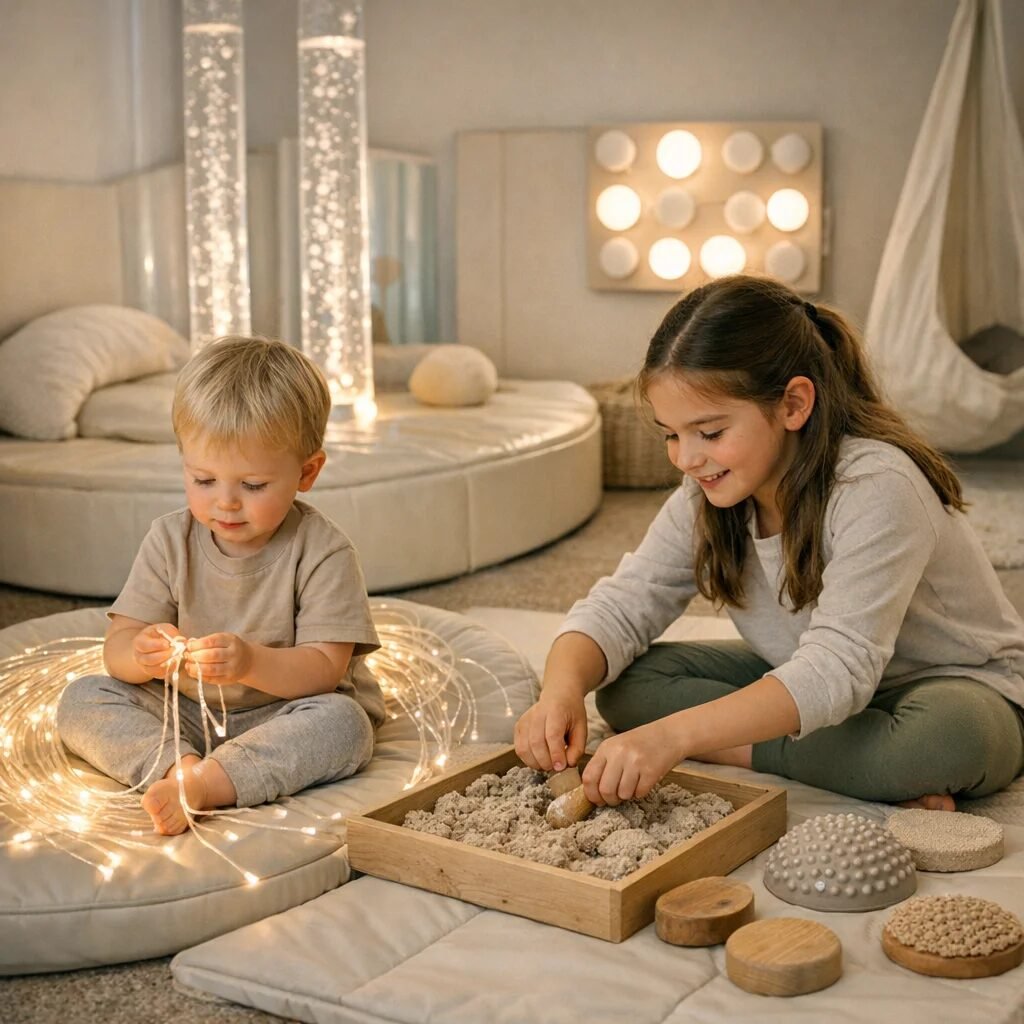
From around 18 months to 3 years, many children begin to engage more actively with sensory spaces. At this age, interest often shifts toward crawling, climbing, pushing, hiding, squeezing, and cause-and-effect exploration. The room becomes less of a “place to look” and more of a “place to do.” Even so, this stage requires very selective setup choices because toddlers can become overstimulated quickly if the room contains too many competing features.
Between ages 4 and 7, many children are able to use a sensory room more intentionally. They may start learning that certain tools help them calm down, transition between activities, or prepare for sleep or learning. In school settings, this is often the age where sensory rooms become most visibly useful, because children can begin to associate the space with routines such as “five minutes to regulate before group time” or “movement break after lunch.”
Older children and teenagers often gain the deepest long-term benefit because they can reflect on what helps and what does not. A sensory room then becomes less about entertainment and more about self-management. For these children, the question is not when they should start, but whether the room has evolved as they have.
How sensory room use changes by developmental stage
Babies and young toddlers
For babies, sensory room use should be simple, calm, and adult-led. Gentle colour changes, soft projections, slow-moving bubbles, and supportive floor seating can help create a co-regulating environment. A product such as the Galaxy Projector can work well for short, quiet sessions, especially during wind-down periods, as long as brightness and duration are carefully moderated.
One common mistake at this stage is assuming more stimulation is always better. It often is not. Babies and toddlers who are already disorganised by busy environments usually respond better to one or two predictable sensory elements than to a room full of lights, music, mirrors, and tactile toys all at once. A calmer setup supports eye tracking, relaxation, bonding, and body awareness far better than a highly activated one.
Preschool children
Preschoolers often benefit from zones within the room. A quiet den or enclosed retreat can help with emotional shutdowns, while a soft movement area can help children who seek proprioceptive and vestibular input. An enclosed retreat such as a Sensory Tent can be especially effective for children who need reduced visual input after busy nursery or reception days.
At this stage, observation matters. If a three-year-old enters the room and immediately throws every cushion, spins rapidly, and becomes more dysregulated, the setup may be too open-ended or too stimulating. If another child crawls into a tent, squeezes a cushion, and gradually softens their breathing, the room is doing its job. Effective use is judged by the child’s nervous system response, not by how long they stay in the room.
School-age children and beyond
Once children are old enough to follow simple routines, a sensory room can support transitions, concentration, and emotional regulation much more directly. In schools, these spaces are often most effective when staff stop treating them as reward rooms and instead use them as regulated intervention spaces. A child with ADHD may use movement equipment before seated work; a child with autism may use dim lighting and familiar tactile tools after lunch when noise has been high.
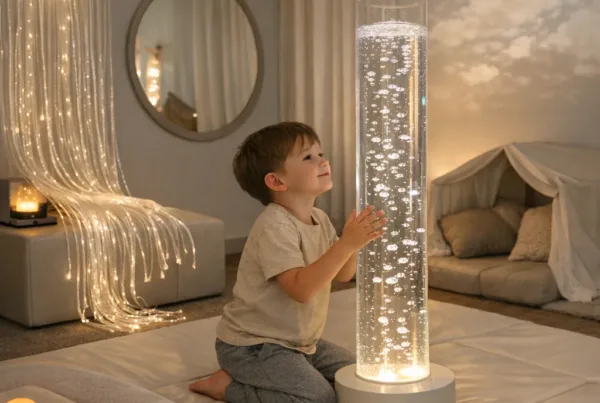
Visual features can become more meaningful at this age, especially when paired with explicit regulation strategies. A moving light feature such as the Bubble Tube Tank Vortex Tower can create a reliable focal point for breathing, waiting, or calming scripts. The key is not the product itself, but how it is used: “watch the bubbles while shoulders relax” is purposeful; “go in and play with the lights” is often too vague to be therapeutic.
How to know a child is ready for a sensory room
Readiness is not about chronological age alone. A child is usually ready when an adult can identify a clear need the space is intended to address. That need might be calming after overload, increasing alertness before learning, supporting transitions, improving body awareness, or offering a safe retreat from chaotic sensory environments.
There are several practical indicators of readiness. A child may seek pressure by crashing into sofas, hide under tables when overwhelmed, cover their ears in noisy areas, chew clothing, or become highly unsettled by transitions. These behaviours often signal that the nervous system is asking for support. In those cases, a sensory room can be introduced as part of a predictable routine rather than as a last resort during crisis.
Readiness also depends on whether the adults around the child understand how to use the space. An excellent room used inconsistently is less effective than a simple room used skilfully. Parents, teachers, and therapists should know the child’s triggers, preferred regulation tools, typical signs of overload, and how long the child generally benefits from sensory input before fatigue or escalation begins.
The National Autistic Society notes that many autistic people experience hyper- or hypo-sensitivity to sound, light, touch, taste, and movement in its guidance on sensory differences. That is why readiness should be viewed through a sensory lens: what type of input helps this child organise, and what type overwhelms them?
Step-by-step: setting up a sensory room for different ages
The safest and most effective sensory rooms are built in stages. Starting small allows adults to test what regulates the child before investing in more equipment. This approach also helps prevent one of the most common design mistakes: creating a visually impressive room that is too intense for actual daily use.
Step one is to choose the room’s primary purpose. Decide whether it will mainly be for calming, active regulation, therapy tasks, or mixed use. A home calming space may need soft seating, low lighting, and a retreat zone. A school regulation room may need a more structured flow with a waiting area, movement station, and calm-down corner.
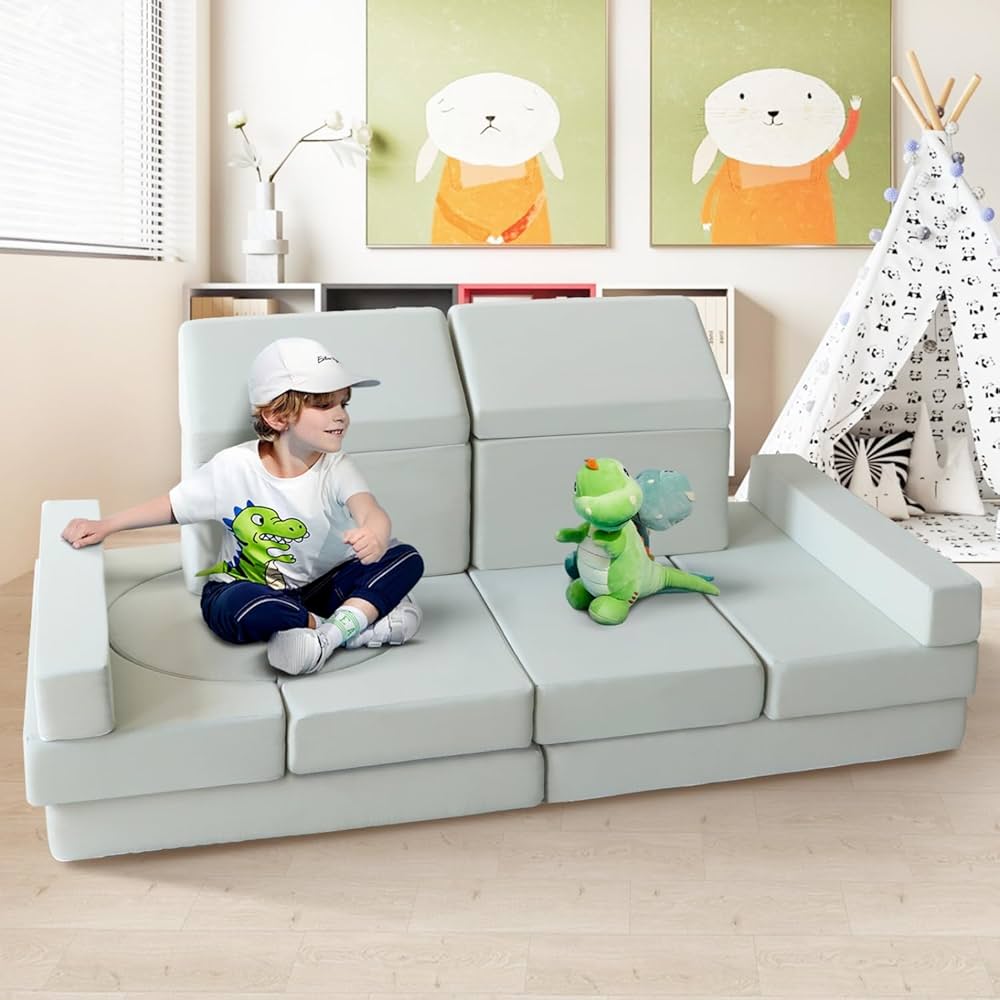
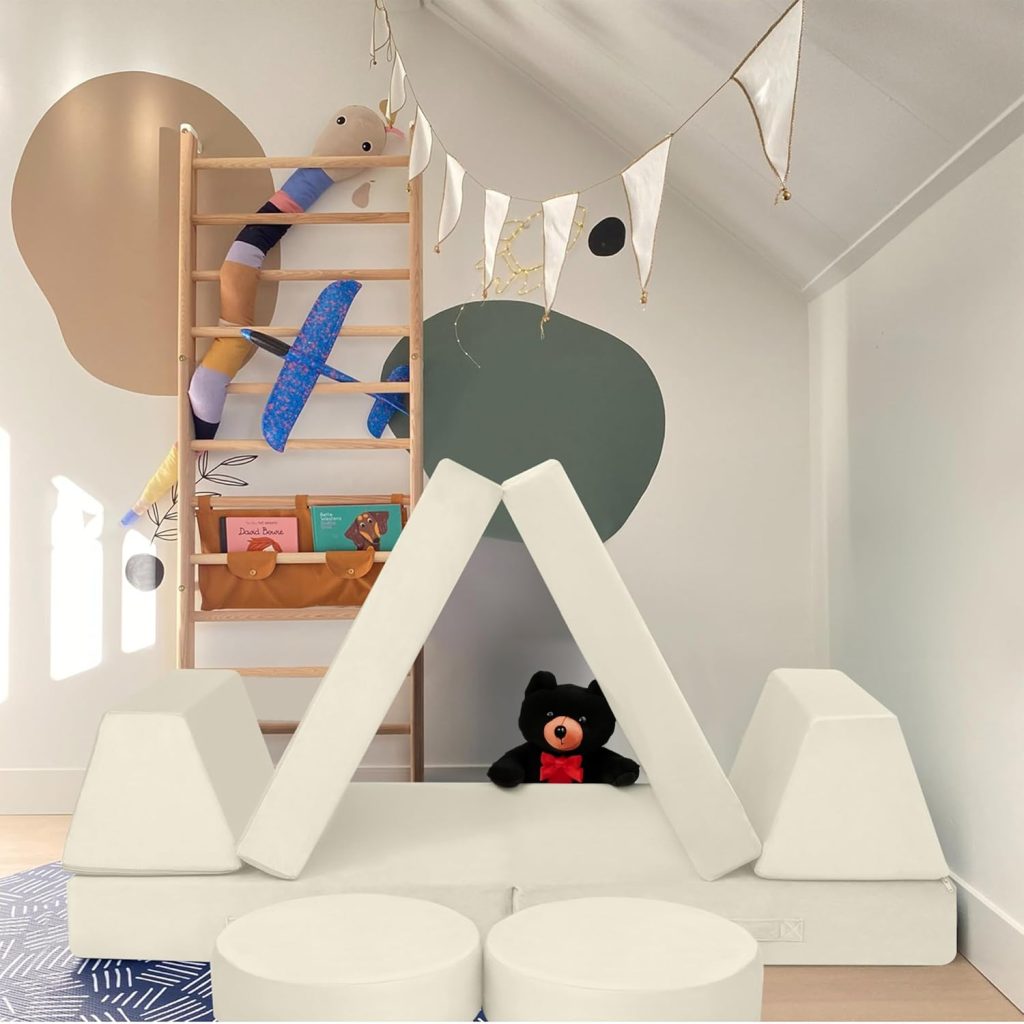
Step two is to match equipment to developmental level. For younger children, focus on floor safety, body positioning, and one or two sensory focal points. Soft seating such as a Kids Modular Play Sofa can create flexible, low-risk seating for toddlers and preschoolers, while allowing adults to quickly reconfigure the space for rest, climbing, or cocooning. For older children, add tools that support choice-making and self-regulation language.
Step three is to build in tactile and handheld options without clutter. A simple fidget can be far more effective than a room full of novelty items. The Schylling NeeDoh Nice Cube is a good example of a portable tactile tool that can support transitions into and out of the room, especially for school-age children who need something familiar in the hand while settling.
Step four is to review safety before use. Secure cables, anchor unstable equipment, check washable surfaces, and monitor visual intensity. A sensory room that is calming but difficult to clean or supervise quickly becomes impractical. For a more detailed checklist, it helps to review guidance on sensory room safety and cleanliness.
Common mistakes when introducing sensory rooms too early or too late
The biggest mistake when introducing a sensory room early is overcomplicating it. Some parents and settings invest in strong lighting effects, loud musical equipment, and dozens of interactive items for children under three, then wonder why the room seems to increase dysregulation. A poor setup overwhelms attention and makes it harder for the child to filter input. An effective setup for a young child usually feels quieter, softer, and far less crowded.
Another mistake is waiting too long because adults think the child should “grow out of it” or become verbal enough to ask for support. Early sensory provision often prevents escalation patterns from becoming entrenched. A child who repeatedly experiences overload without a regulation strategy may begin to associate school, transitions, or public spaces with stress. Introducing sensory support sooner can reduce distress and strengthen trust.
There is also a difference between a sensory room and a playroom, and confusing the two causes problems. A playroom invites stimulation, novelty, and free choice. A sensory room should have a therapeutic purpose, even in the home. If every item in the room is noisy, brightly coloured, and highly activating, the space may be fun, but it will not reliably support regulation.
Finally, many adults assume that if a child likes a feature, it must be helping. That is not always true. Some children are drawn to input that excites rather than regulates them. The adult’s role is to notice the outcome: calmer breathing, looser body posture, improved attention, and smoother transitions are more meaningful than a child simply wanting to stay in the room longer.
Using sensory rooms across home, school, and therapy settings
At home, the best sensory rooms are often modest in scale but highly personalised. Families know the child’s daily rhythms, so they can use the room before predictable stress points such as mealtimes, homework, bath time, or bedtime. Even a converted corner of a bedroom can function well if it includes safe seating, controlled light, a retreat area, and two or three proven regulation tools.
In schools, sensory rooms work best when they are integrated into routines rather than used only after behaviour escalates. A child with autism may need five minutes in a low-arousal environment before assembly. A child with ADHD may benefit from movement and proprioceptive input before literacy work. Used this way, the room supports access to learning rather than becoming a place children are sent to once dysregulated.
In therapy settings, the room should be even more intentional. Occupational therapists, speech and language therapists, and specialist teachers may use the same equipment in very different ways depending on goals. One therapist may use a bubble tube for shared attention and communication; another may use dim light and a body sock to improve regulation and postural control. The child’s age matters, but the therapeutic objective matters more.
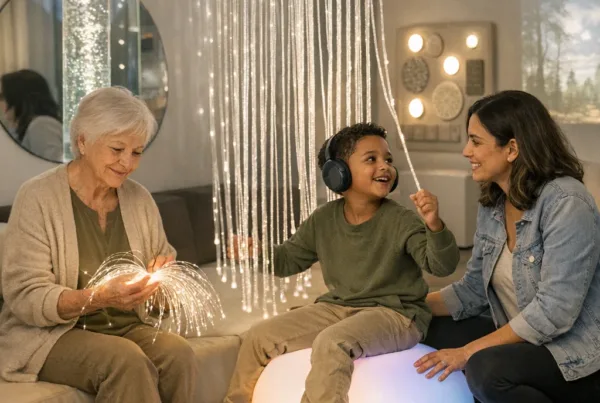
Sensory-informed environments are not limited to children, either. Similar principles are used successfully with dementia care, where calm lighting, reduced visual clutter, and familiar tactile cues can lower distress. This wider application reinforces the key principle: sensory rooms are tools for nervous system support across the lifespan, not novelty spaces reserved for one diagnosis or age group.
Frequently Asked Questions
Can a baby use a sensory room?
Yes, a baby can use a sensory room if the environment is designed for calm, supervised use. Gentle lighting, soft textures, and minimal stimulation are more appropriate than active or flashy equipment.
Is there a best age to introduce a sensory room?
No single age is best for every child. The right time depends on the child’s sensory needs, developmental stage, and whether the room can be used safely and purposefully.
Are sensory rooms only for autistic children?
No, sensory rooms can support children with autism, ADHD, sensory processing differences, anxiety, developmental delay, and high stress levels. They can also help children without a diagnosis who struggle with regulation.
How long should a young child stay in a sensory room?
Many young children do best with short sessions of 5 to 15 minutes. The ideal length depends on whether the child is calming, becoming overstimulated, or using the space for a specific therapeutic goal.
What should be in a sensory room for a toddler?
A toddler sensory room should include soft flooring, simple lighting, safe seating, and limited but purposeful sensory tools. Tents, cushions, soft play, and a single calming visual feature usually work better than a crowded setup.
Can a sensory room make behaviour worse?
Yes, if it is too stimulating, used inconsistently, or treated like a reward room rather than a regulation space. Poorly matched sensory input can increase dysregulation instead of reducing it.
Should a sensory room be used every day?
For many children, yes, daily use can be very helpful when built into predictable routines. Regular use often works better than waiting until a child is already overwhelmed.