Table of contents
Combining sensory exploration with other developmental skills means designing activities and environments where a child or adult is not only calming or stimulating their senses, but also building communication, movement, attention, emotional regulation, and independence at the same time. In a well-planned sensory room, every texture, light source, sound, swing, and calming corner can be used with purpose to support broader development rather than serving as isolated stimulation.
Effective sensory spaces are rarely accidental. The strongest results are seen when sensory input is matched to a person’s profile, goals, and daily challenges, whether that involves autism, ADHD, sensory processing difficulties, dementia, or complex learning needs. In practice, this means choosing equipment and activities that help the user engage, organise, and learn, while avoiding overloaded environments that look impressive but deliver little developmental value.
Highlights
- Sensory exploration can strengthen communication, motor skills, focus, emotional regulation, and independence when activities are planned with clear developmental goals.
- The best sensory rooms balance stimulation with function, using equipment intentionally rather than filling the space with too many competing features.
- Autism, ADHD, sensory processing disorder, and dementia each require different sensory strategies, even when the same room is used.
- Simple changes in layout, sequencing, and adult support can turn sensory play into meaningful developmental practice at home, in schools, and in therapy settings.
What combining sensory exploration with developmental skills actually means
Sensory exploration is the process of using sight, sound, touch, movement, smell, and body awareness to understand and respond to the world. When this is combined with developmental skill-building, the activity is designed to do more than provide input. A fibre optic light activity, for example, can become a turn-taking task, a language prompt, a fine motor challenge, or a self-regulation routine depending on how it is structured.
This matters because sensory input does not exist separately from learning. A child who is under-responsive to movement may struggle to sit and attend in class. A child who is overwhelmed by sound may avoid language-rich shared activities. An older adult with dementia may respond better to memory prompts when tactile and visual input is soothing rather than confusing. In each case, sensory work becomes more effective when it is linked directly to a real developmental need.
In practical settings, the most successful sensory rooms are used with intent. Instead of saying, “Let’s spend 20 minutes in the sensory room,” skilled adults identify what the session is for. It might be helping a pupil regulate before literacy, improving bilateral coordination through movement play, or supporting non-verbal communication through cause-and-effect equipment. This shift from passive use to purposeful use is what transforms a room from attractive to genuinely therapeutic.
There is also strong evidence that sensory-sensitive environments affect engagement and function. The UK National Autistic Society reports that many autistic people experience sensory differences that can significantly affect daily life and participation, making environmental adjustment central rather than optional according to the National Autistic Society. Similarly, the CDC estimates that ADHD affects millions of children, with attention, impulse control, and self-regulation challenges often benefiting from structured sensory support in CDC prevalence data.
Why sensory activities should never be separated from real-world outcomes
A common mistake in sensory room design is treating sensory input as an end in itself. Soft lighting, music, projected images, and tactile products may appear calming, but if they are not connected to purposeful interaction, many users either become passive or dysregulated. The room may look highly equipped while producing minimal gains in communication, motor planning, or attention.
By contrast, effective sensory exploration is embedded in routines and targets. If a therapist is working on requesting skills, a bubble tube can be used as a motivating pause-and-wait activity. If a teacher is building executive function, a sensory circuit can support sequencing, transitions, and task completion. If a parent is helping a child manage bedtime anxiety, deep pressure, dim lighting, and familiar tactile items can be paired with predictable self-calming strategies.
This approach is especially useful for autistic children and those with sensory processing difficulties. Research suggests sensory features are highly prevalent in autism, with studies frequently citing rates above 90% in some populations as discussed in peer-reviewed literature. That prevalence explains why sensory exploration is often central to daily support, but it also highlights why generic sensory sessions are not enough. The aim should be regulation that leads to function, not stimulation without direction.
Parents, educators, and therapists often notice stronger progress when sensory activities are used before, during, or after learning tasks. For example, five minutes of vestibular and proprioceptive input before handwriting can improve body awareness and postural stability. A calm visual zone after lunch can reduce afternoon escalation. A tactile scavenger game can enhance vocabulary and categorisation. The developmental gains come from these links.
Building communication through sensory exploration
Sensory rooms can be excellent places to develop communication because they naturally create motivation. A user may want the lights to change, the music to start, the swing to move, or the tactile activity to continue. These are ideal opportunities to encourage eye gaze, gesture, sign, symbols, vocalisation, or spoken language. The adult’s role is to pause, model, and create a clear reason for the user to communicate.
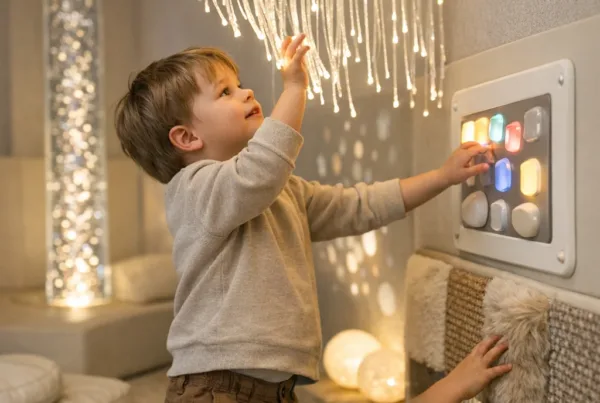
Cause-and-effect equipment is particularly valuable here. A child who is not yet speaking may press a switch and watch a light response, then learn to anticipate, request repetition, or choose between options. A therapist might hold two sensory items and ask, “Do you want the soft glow strands or the vibration cushion?” The sensory reward is immediate, which increases engagement and makes communication feel meaningful rather than forced.
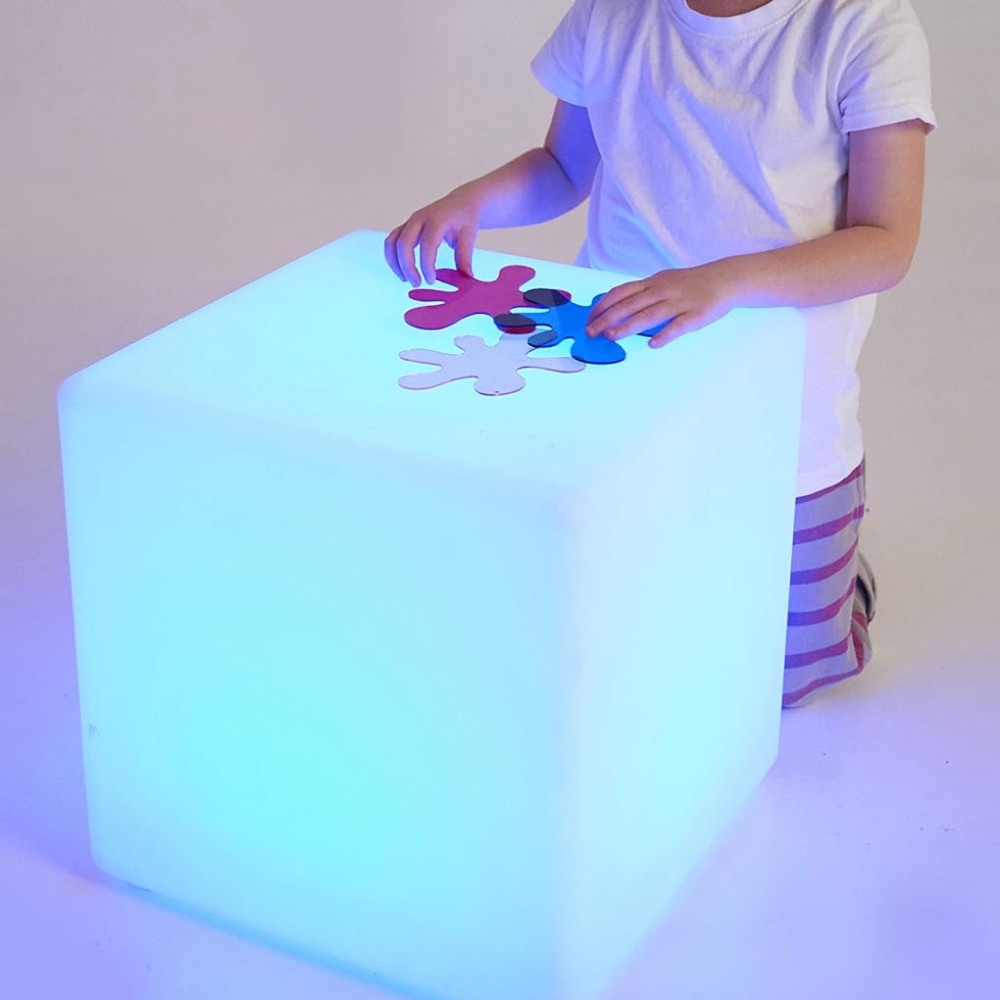
For users with autism, communication support often improves when the room is visually uncluttered and predictable. Too many flashing features, competing sounds, or crowded visuals can reduce processing capacity. A better setup uses one focal point at a time and supports shared attention. Tools such as fibre optic sensory lights or a simple colour-changing panel can help adults build turn-taking and commenting in a calmer format.
In schools, communication gains are stronger when sensory work is followed into the classroom. If a pupil uses a “more” symbol for bubbles in the sensory room, the same symbol should be used in snack time, art, and literacy. This consistency turns the sensory room into a practice environment rather than a separate world. For more background on why purposeful stimulation matters, many practitioners find this guide on the importance of sensory stimulation for individuals with sensory impairments a useful starting point.
Supporting gross motor, fine motor, and body awareness
Movement-based sensory exploration supports far more than energy release. It can improve postural control, bilateral coordination, balance, midline crossing, and motor planning. These skills affect classroom sitting, dressing, handwriting, playground confidence, and participation in therapy tasks. A sensory room that includes movement opportunities should be zoned so users can move with purpose rather than simply spin or crash without structure.
Gross motor work often starts with vestibular and proprioceptive input. Swinging, pushing, pulling, crawling, stepping over cushions, and climbing over soft shapes can all be used to target coordination and body awareness. The most effective sessions are sequenced. A user might begin with heavy work, move into a guided obstacle path, and finish with a seated regulation task. That progression helps organise the nervous system rather than overstimulate it.
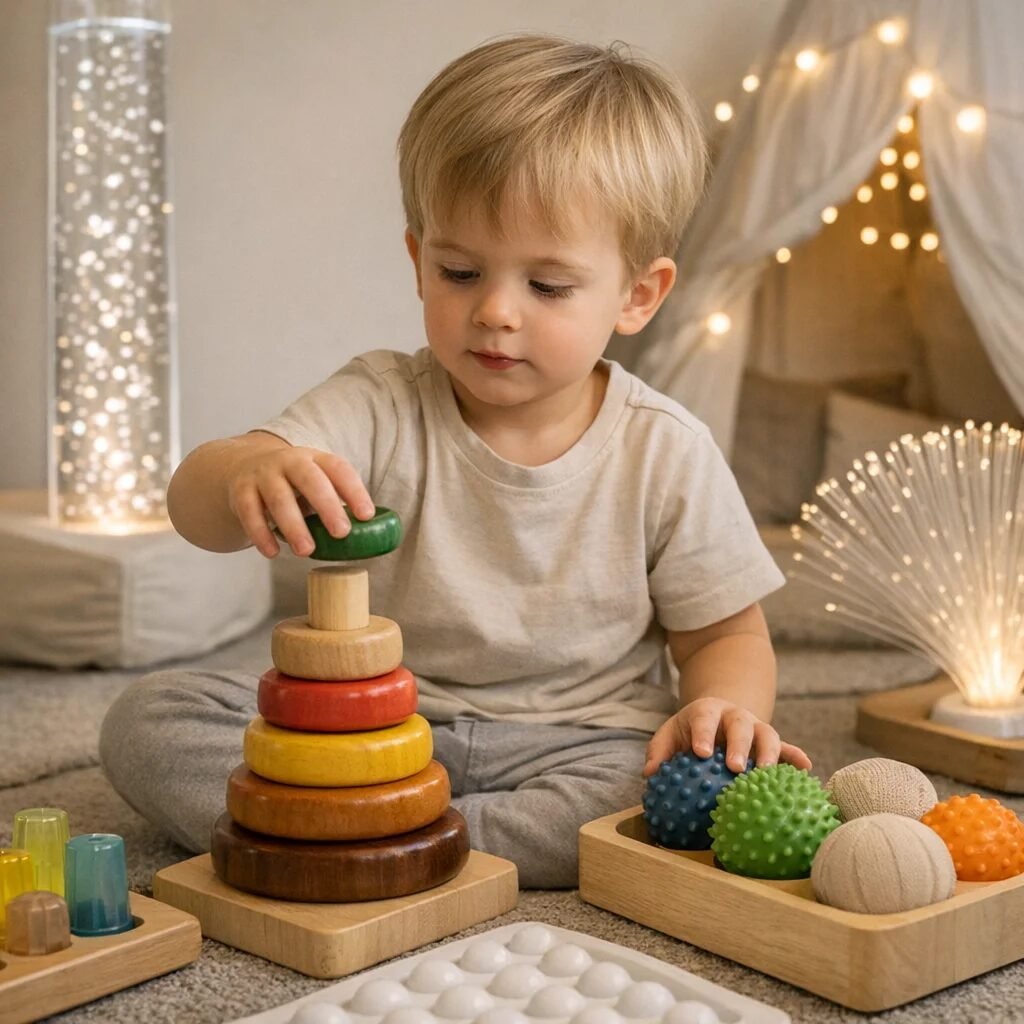
Fine motor development can also be built into sensory play. Tactile bins, putty, textured boards, fastening tasks, and light-up switch work encourage grasp strength, finger isolation, hand-eye coordination, and tactile discrimination. For home users, simple additions such as sensory fidget toys and textured manipulatives can support hand function without overwhelming the room.
A useful comparison is a room with one defined motor pathway versus a room full of scattered, exciting equipment. In the first, the user may crawl through a tunnel, push a weighted cart, reach for a light target, and finish by squeezing into a bean bag. In the second, they may run erratically between flashing features, with no therapeutic sequence or adult guidance. One develops motor organisation; the other often fuels dysregulation.
Using sensory input to improve attention, learning, and executive function
Attention is not simply a behaviour issue. For many individuals, especially those with ADHD or sensory processing challenges, attention is strongly influenced by arousal level, body state, and environmental demands. Sensory exploration can help adjust that state. Alerting input may help a tired child engage, while calming input may help an over-aroused child sustain focus.
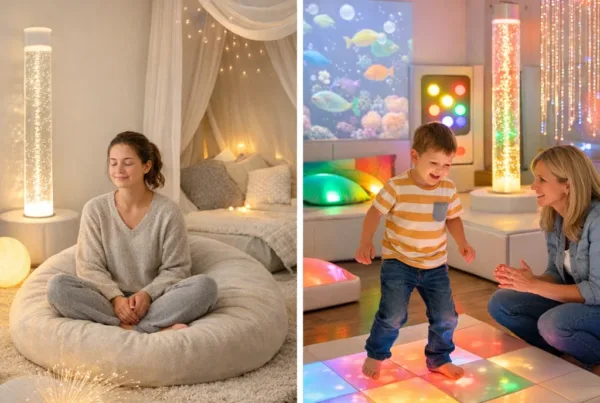
This is why many effective sensory rooms include both active and quiet zones. The active area may contain movement, resistance, and visual targets. The calm zone may use low lighting, reduced noise, and soft seating. A learner who cannot attend after a noisy transition may first need pressure input and reduced visual demand before they are ready for a sequencing task or literacy instruction.
Executive function can also be supported through sensory-based routines. For example, a child can be taught a three-step sensory sequence: choose a regulation tool, complete a movement task, then return to the table. This builds planning, task initiation, and self-monitoring. A visual timetable in the room helps the user understand what comes next and reduces dependence on adult prompting.
Many schools benefit from adding a simple regulation station using items such as weighted lap pads, resistance bands, and visual choice cards. These are not replacements for a full sensory room, but they help carry regulation into learning spaces. For broader planning ideas across educational environments, this article on the benefits of sensory rooms in schools can support decision-making.
Step-by-step: how to design a sensory room that also teaches developmental skills
Step one is to identify the primary users and their actual goals. A room for autistic pupils with communication needs will be designed differently from a dementia-friendly sensory space or a therapy room focused on motor planning. The planner should list the top three to five goals first, such as reducing distress during transitions, increasing requesting, improving core strength, or supporting memory and orientation.
Step two is to map each goal to sensory tools and adult strategies. If the goal is communication, choose cause-and-effect items and build in pauses for requesting. If the goal is regulation, create predictable zones with adjustable stimulation. If the goal is motor planning, include a clear route and movable equipment. This prevents random purchasing and keeps the room functional.
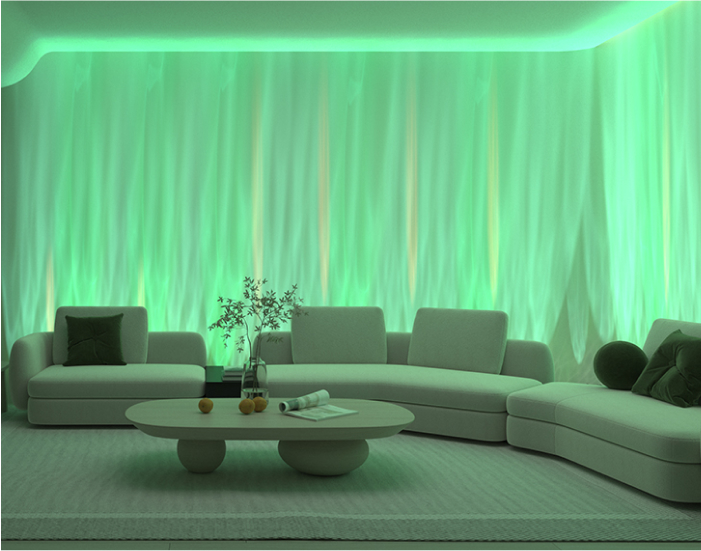
Step three is to control the environment. Use dimmable lighting, limit competing audio sources, and separate active movement areas from calm retreat spaces. Too many rooms fail because every feature is switched on at once. A better setup uses one main sensory channel at a time, with optional layering only when the user tolerates it well. Products such as sensory LED lights can be useful when brightness and colour can be adjusted rather than fixed.
Step four is to establish session routines. Users benefit when each session has a beginning, middle, and end. For example: arrival and body check, target activity, regulation finish. In a home setting, this may be as short as ten minutes before homework. In therapy, it may form the structure of a 45-minute intervention. Predictability increases safety and learning.
Step five is to review what happened. Adults should note which sensory inputs supported engagement, which increased distress, and whether the developmental target was met. If a child lay calmly under projection lights but never communicated or interacted, the room may have regulated them but not yet addressed the intended skill. Adjustments should be based on observation, not assumptions.
Adapting the approach for autism, ADHD, dementia, and sensory processing disorder
Autistic users often benefit from predictability, reduced sensory clutter, and strong control over input. The room should allow choice without demanding constant social interaction. Calming visual elements, tactile exploration, and deep pressure can work well, but tolerance varies widely. The key is individualisation. One autistic child may seek movement and bright light, while another may find both distressing.
For ADHD, the focus is often on regulating alertness and supporting transitions between movement and concentration. These users may need more opportunities for heavy work, whole-body movement, and short bursts of dynamic input before seated tasks. However, highly stimulating rooms can become distracting if every button, sound, and light competes for attention. Structure matters as much as equipment.
For sensory processing disorder, the design should reflect whether the person is under-responsive, sensory seeking, or over-responsive in specific systems. A blanket “calming room” may not meet the needs of a child who actually requires alerting proprioceptive input before they can engage. Assessment and observation are essential. This is where therapists can guide families and schools away from trial-and-error purchasing.
For dementia, sensory rooms often work best when they are soothing, familiar, and low-demand. Soft textures, gentle music, warm lighting, reminiscence objects, and clear orientation cues may be more valuable than bright novelty features. A weighted blanket may help some adults feel secure, while scent-based memory prompts or tactile cushions may support calm engagement. The best dementia sensory spaces reduce confusion rather than trying to impress visually.
Common mistakes that limit progress
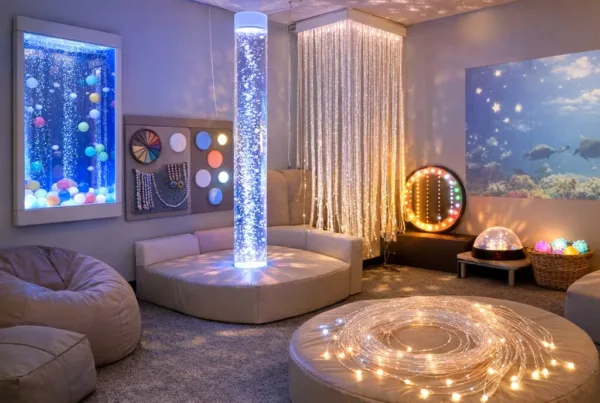
One of the most frequent mistakes is overfilling the room. When every wall glows, music is playing, tactile items are scattered everywhere, and movement equipment dominates the floor, the user has no clear sensory hierarchy. This often increases agitation, avoidance, or aimless behaviour. A sensory room should feel organised and intentional, not like a storage space for every available product.
Another mistake is using the room only reactively. If the space is reserved for meltdowns or crisis recovery, it may become associated with distress rather than growth. While sensory rooms are valuable for de-escalation, they are equally powerful when used proactively to prepare for learning, practise communication, and build regulation skills before problems arise.
A third mistake is failing to train the adults. The same room can be highly effective with one practitioner and unhelpful with another. Skilled use involves pacing, observation, timing, prompting, and knowing when to reduce input. Poor use often means turning on equipment and hoping the environment will do the work. The room supports development, but the adult shapes the experience.
There is also a common mismatch between impressive equipment and real need. Families sometimes invest in large visual products while the child’s main challenge is proprioceptive regulation. Schools may buy expensive interactive technology when pupils primarily need zoning, acoustic control, and movement sequencing. Better outcomes usually come from matching function first, aesthetics second.
Making sensory development work across home, school, and therapy
The strongest developmental progress happens when sensory strategies are consistent across settings. A child who uses deep pressure and visual choice boards in therapy should have equivalent supports available at home and school. The exact equipment may differ, but the underlying strategy should remain recognisable. This consistency reduces confusion and helps skills generalise.
At home, smaller spaces can still be effective. A corner with soft seating, dim lighting, tactile tools, and a few carefully chosen regulation items can be enough to support communication, transitions, or calming routines. Families often achieve better results with a modest, well-used setup than with a costly room that lacks structure. Consistency, not scale, drives progress.
In schools, sensory spaces should connect directly to classroom priorities. If the room helps a pupil regulate but teachers do not know how to transition them back into a lesson, the benefit is limited. Good practice includes visual schedules, staff communication, and brief records of what input worked. The room should support access to education, not become an isolated destination.
In therapy settings, the sensory room should support measurable objectives. Therapists can use sensory tools to improve engagement, but they should also be able to explain the developmental purpose clearly to families and staff. Whether the goal is social reciprocity, oral language, balance, or self-management, the room works best when every sensory experience is linked to functional change.
Frequently Asked Questions
How does sensory exploration help with developmental skills?
Sensory exploration helps developmental skills by improving regulation, engagement, and body awareness, which are the foundation for communication, attention, and movement. When used purposefully, sensory activities can also directly teach requesting, turn-taking, coordination, and self-management.
Can a sensory room support speech and language development?
Yes, a sensory room can support speech and language when equipment is used to create motivation and interaction. Cause-and-effect tools, choice-making activities, and structured pauses give users reasons to communicate through words, signs, symbols, or gestures.
What is the biggest mistake in sensory room design?
The biggest mistake is adding too much stimulation without a clear goal. Overloaded rooms with multiple sounds, lights, and textures running at once often reduce focus and increase stress instead of supporting development.
Are sensory rooms only useful for autism?
No, sensory rooms can also help people with ADHD, sensory processing disorder, dementia, learning disabilities, and anxiety-related regulation needs. The room should be adapted to the individual rather than built around one diagnosis alone.
How can parents combine sensory play with learning at home?
Parents can pair sensory activities with simple goals such as naming objects, following a two-step instruction, sorting textures, or practising calm breathing. The key is to keep the environment predictable and use the sensory activity to support a specific skill.
What equipment is best for combining sensory and developmental goals?
The best equipment depends on the user’s needs, but versatile options include lighting that supports attention, tactile tools for fine motor work, weighted items for regulation, and movement equipment for body awareness. Equipment should always be selected based on goals, not popularity.
How often should a sensory room be used for skill development?
Frequency depends on the person’s needs, but short, regular sessions are usually more effective than occasional long ones. Consistent use before transitions, learning tasks, or known stress points often produces the best outcomes.