Table of contents
Creating a sensory-rich environment in sensory rooms means designing a space that deliberately supports regulation, engagement, and comfort through light, sound, touch, movement, and layout. In my work designing sensory rooms for autistic children, pupils with ADHD, adults with dementia, and therapy clients with sensory processing differences, I’ve seen that the best rooms are never built around “more equipment” alone; they are built around the person using the space and the outcomes you want to achieve.
A well-planned sensory room can calm an overwhelmed child, help a student focus before learning, support communication in therapy, or provide soothing stimulation for someone living with dementia. The difference between a room that truly helps and one that becomes visually cluttered or underused comes down to thoughtful sensory balance, safety, and practical day-to-day usability.
Highlights
Provide a concise 40–60 word summary of the topic that directly answers the question.
- A sensory-rich environment should match the user’s sensory profile, not just include lots of equipment.
- Effective sensory rooms balance calming and alerting input through lighting, sound, texture, movement, and space planning.
- Zoning, safety, and routine use matter as much as product choice in home, school, and therapy settings.
- Poor setups often overstimulate; the best rooms are purposeful, flexible, and easy to adapt.
What is a sensory-rich environment in sensory rooms?
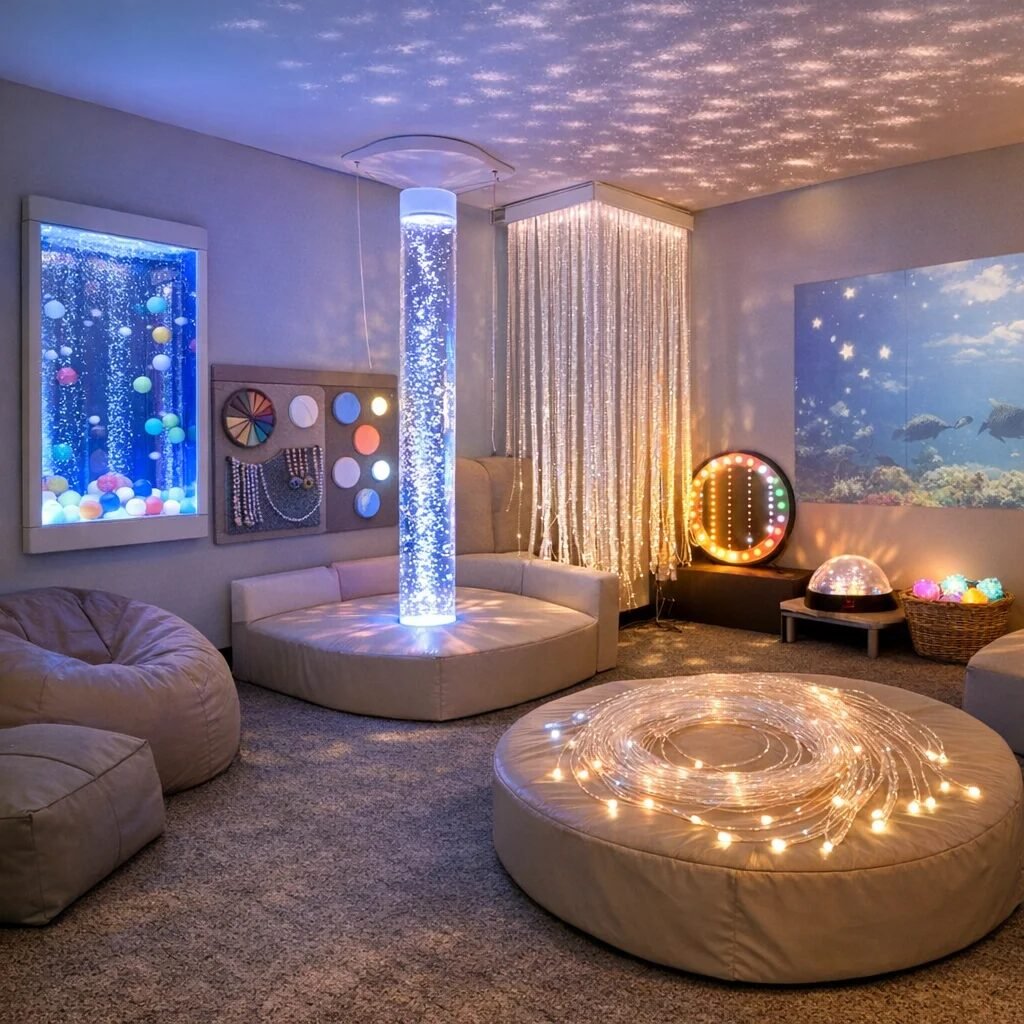
A sensory-rich environment is a space intentionally designed to provide controlled sensory input that helps a person regulate their nervous system, engage with activities, and feel safe. That input may include visual effects, tactile materials, calming sounds, proprioceptive tools, movement opportunities, and areas for retreat. “Sensory-rich” does not mean chaotic, brightly lit, or packed wall to wall with equipment. It means the room offers meaningful sensory choices in a way that matches individual needs.
This is the point I stress most often with parents and schools. I have visited rooms filled with flashing toys, noisy panels, and oversized equipment where the user became distressed within minutes. I have also seen relatively simple rooms with soft lighting, a small crash mat, tactile wall features, and one reliable piece of visual equipment transform a child’s ability to self-regulate. The richness comes from relevance and control, not volume.
For autistic users in particular, this distinction matters. The US Centers for Disease Control and Prevention reports that about 1 in 36 children has been identified with autism spectrum disorder, highlighting how many families and schools may be supporting sensory differences on a daily basis according to CDC autism data. Sensory rooms are most effective when they are tailored to those differences rather than based on trends.
Start with the person, not the products
Whenever I plan a sensory room, I begin with three questions: who will use the room, what difficulties are we trying to reduce, and what outcomes do we want to increase? Those outcomes might be calmer transitions, longer concentration, reduced meltdowns, improved communication, safer movement breaks, or more successful therapy sessions. Without those answers, it is very easy to buy attractive sensory equipment that does not solve the real problem.
A child with sensory seeking behaviour may need heavy work, movement, and tactile input. A child who is easily overwhelmed may need low lighting, predictable visuals, soft seating, and a protected quiet corner. An adult with dementia may respond well to familiar textures, gentle lighting, and calming music but become confused by fast-changing visual effects. A teenager with ADHD may benefit from a structured space with active and quiet zones rather than a purely calming room.
In schools, I often recommend creating a simple user profile before making any purchases. List triggers, preferred sensations, avoided sensations, regulation strategies that already work, mobility considerations, communication needs, and supervision requirements. This profile gives you a practical filter for every design decision, from flooring to switches.
Build sensory zones for better regulation
The most successful sensory-rich environments are usually zoned. Instead of treating the room as one open area, I divide it into purposeful sections. This helps users understand what the room offers and prevents sensory conflicts, such as a calming light corner sitting directly beside an active crash area. Zoning also makes it easier for adults to guide sessions with consistency.
A typical room may include a calming zone, an interaction zone, and a movement zone. In a home sensory room, these may be small but still distinct. In a school or clinic, the zones can be more developed with clear visual boundaries, furniture placement, or flooring changes. The goal is not to create rigid compartments; it is to support easier choice-making and safer regulation.
Calming zone
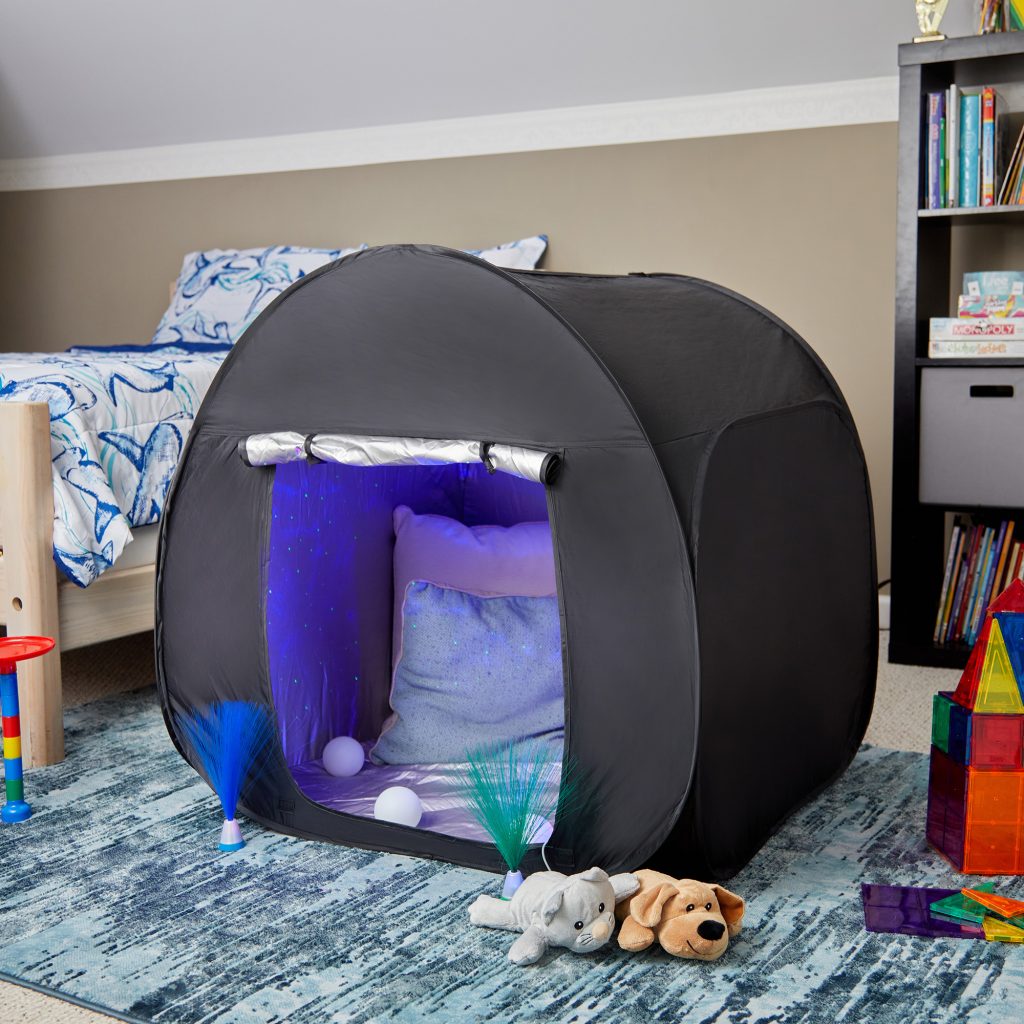
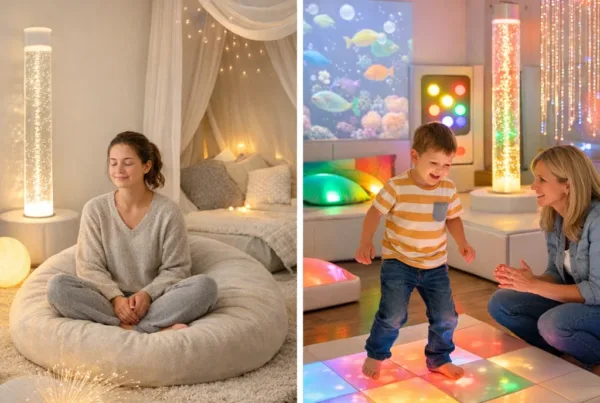
This area should reduce sensory load and offer emotional safety. I usually include soft seating, muted colours, dimmable lighting, and one or two predictable sensory options such as a weighted blanket or tactile cushions. For many users, especially autistic children or adults recovering from overload, this becomes the most important part of the room.
A common mistake is making the calming zone too stimulating. Fast colour-changing lights, multiple sound sources, and busy wall displays often work against the room’s purpose. If the person is already dysregulated, they need less competition for attention, not more.
Interactive sensory zone
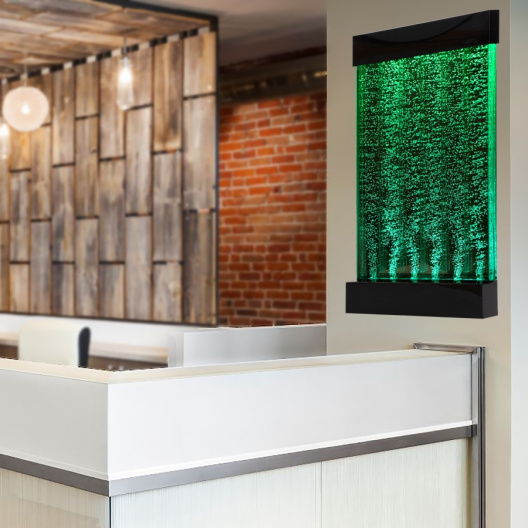
This is where I place cause-and-effect equipment, tactile panels, mirrors, visual aids, or communication-focused resources. The room should invite exploration without becoming cluttered. A single well-positioned visual feature, such as a sensory bubble tube, can support attention, visual tracking, turn-taking, and calming when used purposefully.
In therapy settings, this zone often supports language development or joint attention. In schools, it can be used as part of reward systems or for structured sensory breaks. At home, it often works best when the activities are simple and repeatable so the child knows what to expect.
Movement and proprioception zone
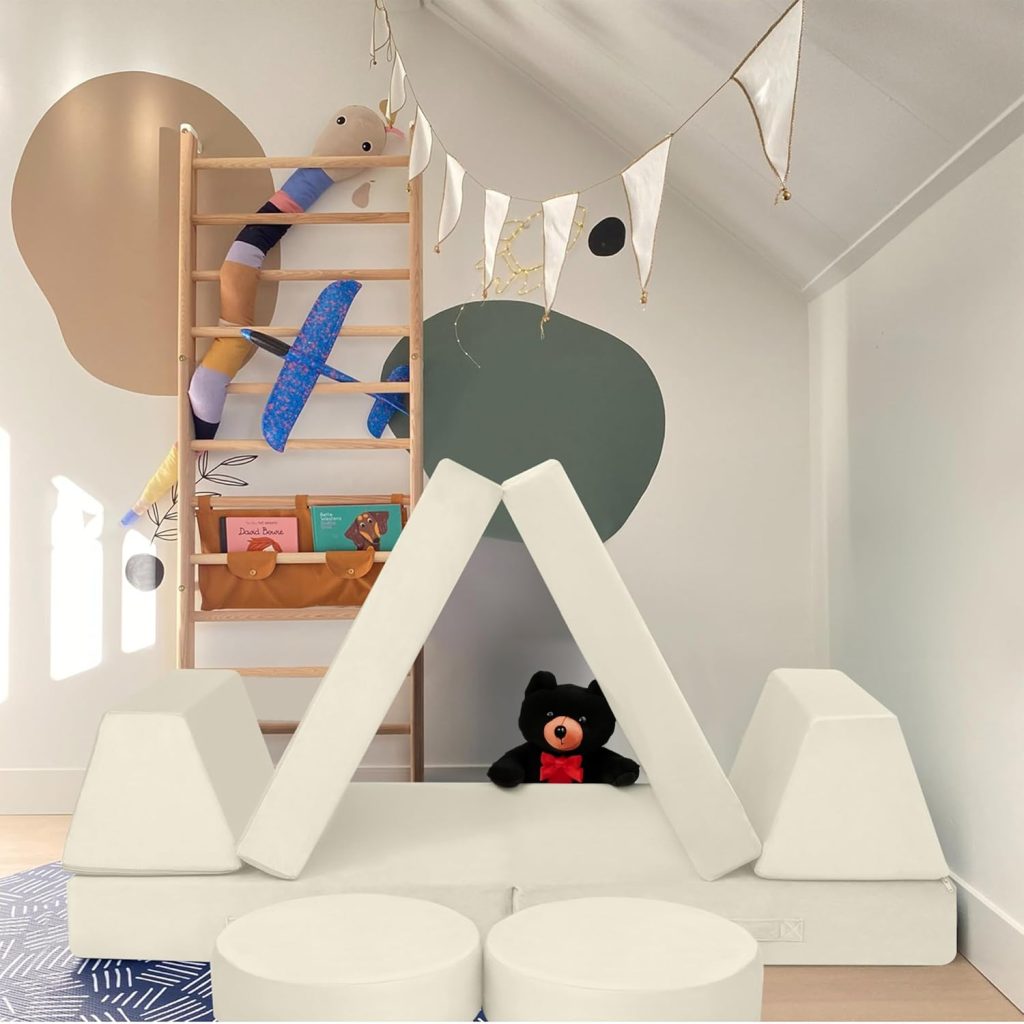
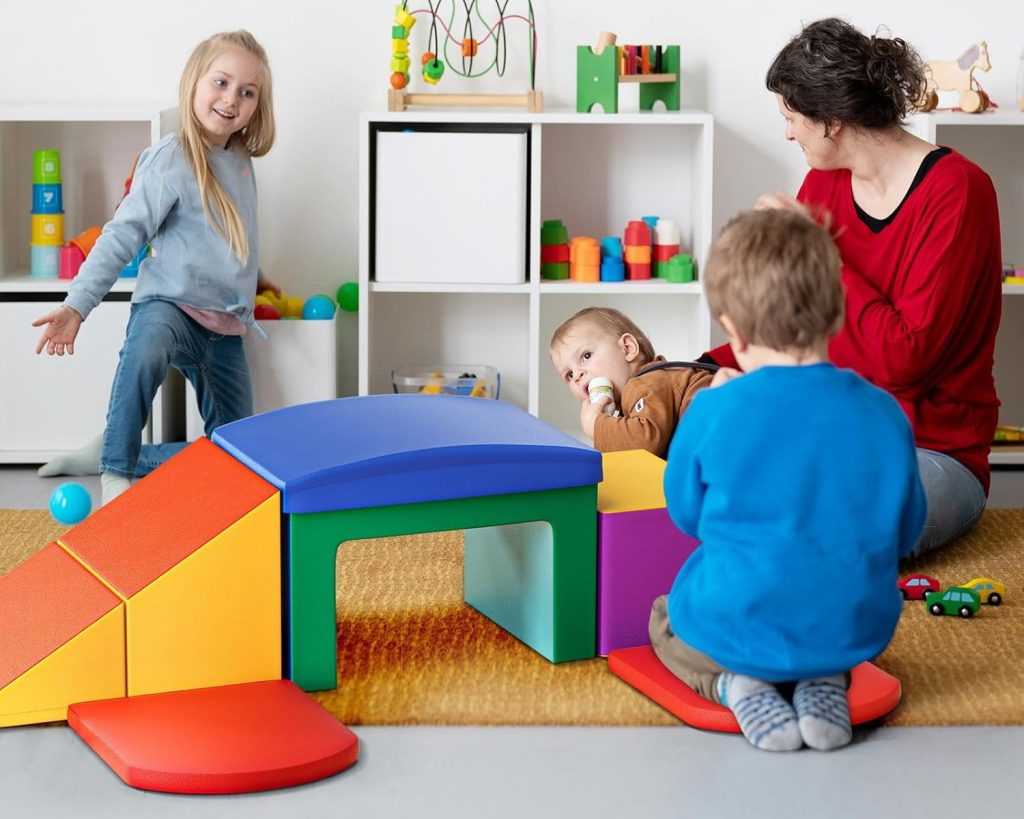
Many users need movement to regulate, not just relaxation. This area may include crash mats, rocker seating, soft play shapes, floor cushions, or wall push activities. Proprioceptive input, which comes from muscles and joints, often helps children and adults feel more grounded and organised.
I regularly see rooms underperform because they focus entirely on lights and visuals while ignoring movement needs. For children with ADHD or sensory seeking profiles, a room without a physical outlet may feel pleasant for a minute but not genuinely regulating. A beanbag, floor mat, or safe pressure-based resource can make a bigger difference than another flashing projector.
Use lighting carefully: sensory-rich should not mean sensory overload
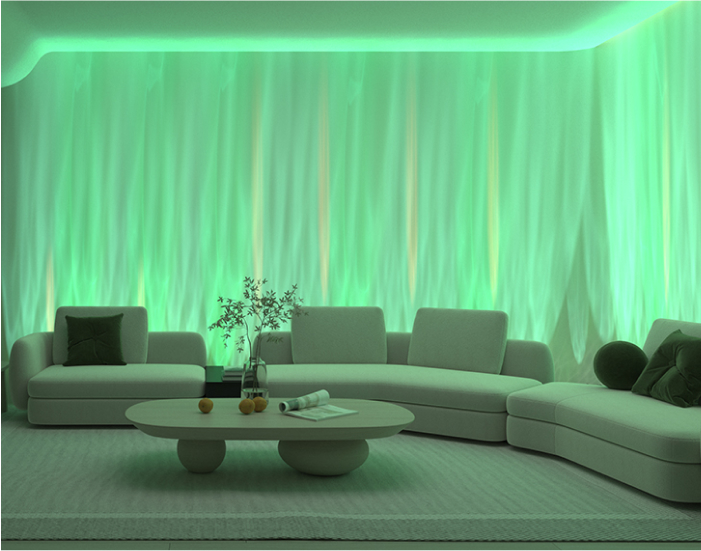
Lighting is one of the most powerful tools in sensory room design. It shapes mood, attention, comfort, and visual load almost immediately. I prefer layered lighting: a base level of soft ambient light, one or two sensory light features, and the option to dim or switch individual elements independently. This gives you flexibility for different users and different moments.
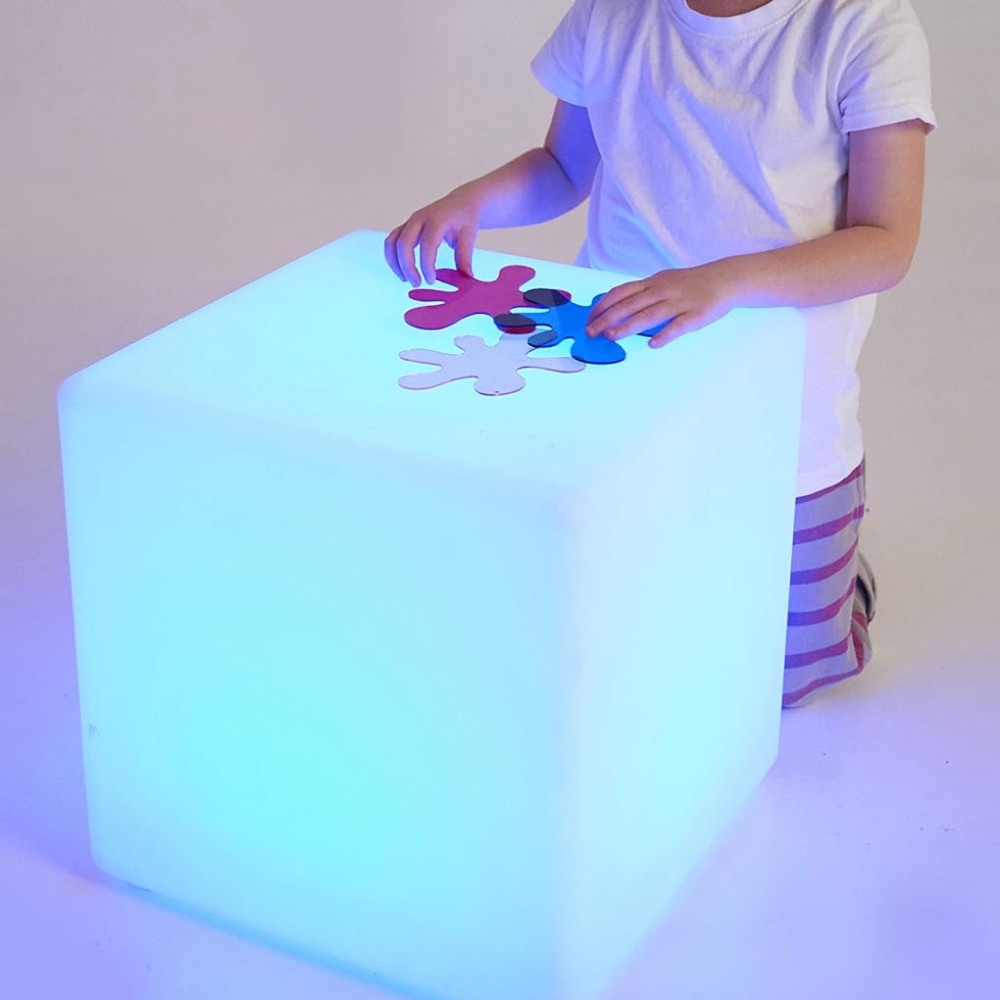
For many autistic users, harsh overhead lighting is a problem before any activity begins. Replacing or reducing strong ceiling lights can make the room instantly more usable. I often suggest soft LED strips, corner lamps, or controlled feature lighting such as sensory LED lights that can be dimmed and kept steady rather than constantly flashing.
The comparison between effective and poor lighting setups is dramatic. In an effective setup, the user can settle, focus their eyes, and choose where to look. In a poor setup, every surface competes for attention and the room becomes visually noisy. The second kind of room may look impressive in a photo, but it often performs badly in real use.
Texture, touch, and tactile exploration
Tactile input gives sensory rooms depth. Not everyone seeks touch in the same way, so I aim for variety without crowding the room. Soft fabrics, ribbed surfaces, fidget tools, tactile wall panels, faux fur cushions, smooth wooden items, and textured foot paths can all play a role. The key is to offer clear tactile contrasts and make them easy to access.
For children with tactile defensiveness, I avoid forcing contact with strong or messy textures at first. Start with preferred or neutral materials and build tolerance gradually. For tactile seekers, wall-mounted options are often useful because they encourage exploration while reducing loose clutter on the floor. In schools and clinics, tactile features that can be cleaned easily are essential.
In dementia-friendly rooms, tactile familiarity can be especially effective. Familiar blankets, soft twiddle items, and comforting upholstery may reduce anxiety more than novelty-based sensory products. According to the NHS, around 944,000 people in the UK are living with dementia, so environments designed for sensory comfort and recognition are increasingly relevant as outlined by the NHS.
Sound and acoustics: the hidden design factor
Many people focus on what a sensory room looks like, but I have learned that how it sounds often determines whether it works. Hard surfaces create echo, unpredictable noise increases stress, and equipment hum can become irritating over time. If a room feels oddly tense even when it looks calm, poor acoustics are often part of the reason.
I use soft furnishings, wall padding, rugs where safe, and upholstered seating to reduce harsh reverberation. Then I add sound intentionally rather than accidentally. Gentle music, nature sounds, or a low rhythmic audio track can be very effective for some users. Others need near silence. This is why audio should always be optional, not constant.
In schools, noise leakage from nearby corridors is a common issue. If a sensory room sits beside a busy classroom or hall, the room may need additional acoustic treatment to function properly. In these cases, sensory success depends just as much on reducing unwanted input as on providing desired input.
Step-by-step: how I set up a sensory-rich room that gets used
When a room is underused, it is rarely because people do not care about it. More often, it is because the room feels too complicated, too intense, or too inconvenient to use consistently. This is the setup process I use to keep rooms practical.
1. Define the main purpose
Choose the top one to three goals. For example: calming after overload, movement breaks for regulation, or communication work in therapy. This narrows your choices and prevents expensive distractions.
2. Assess the environment
Look at room size, natural light, plug sockets, ventilation, noise levels, and cleaning needs. A beautiful plan can fail if the room overheats, echoes badly, or has awkward cable routes. Safety planning should happen at this stage, and I always recommend reviewing safety considerations for sensory rooms before installing equipment.
3. Choose core equipment first
Start with one item for calming, one for tactile input, one for movement or pressure, and one visual feature if appropriate. A bean bag chair for kids, textured resources, and controlled lighting can create a strong foundation without overfilling the room.
4. Create zones with clear flow
Place calm activities away from active ones. Leave enough floor space for movement and safe supervision. Make sure staff, parents, or therapists can reach the user easily without stepping over equipment.
5. Test the room with one user at a time
I always do a quiet trial before calling a room finished. Observe where the person goes first, what they avoid, and whether any equipment causes stress. Their response tells you more than a catalogue ever will.
6. Adjust and simplify
If the room feels busy, remove something before adding more. In sensory design, subtraction is often the smartest improvement. Staff and families are much more likely to use a room confidently when it feels intuitive.
Common mistakes I see again and again
The biggest mistake is confusing stimulation with support. A room can be full of sensory input and still fail to help. Flashing lights, loud soundtracks, and too many visual targets often create dysregulation rather than relief. This happens especially in spaces built to “look sensory” rather than function sensory.
The second major mistake is ignoring the adults who will use the room alongside the child or client. If teachers cannot switch equipment on easily, if parents do not know what each item is for, or if therapists cannot adapt the space quickly, the room will not be used well. Clear controls, labelled storage, and simple routines matter.
I also see rooms with no plan for maintenance. Broken light features, missing tactile pieces, tangled cables, and worn seating reduce trust in the space. It helps to build in easy-clean materials, secure storage, and a regular review schedule. For practical planning support, some readers may find guidance on keeping a sensory room safe and functional especially useful.
Adapting sensory-rich spaces for home, school, and therapy settings
At home, space is usually limited, so I focus on flexibility. A sensory corner can still be highly effective if it includes soft seating, a few tactile choices, adjustable light, and one calming routine. Families often do better with a small, reliable setup than a room packed with products the child ignores. Storage matters here because visual clutter outside sessions can raise stress levels.
In schools, the room has to work for multiple pupils with different needs across the day. That means stronger zoning, clearer rules, durable materials, and a booking or usage system. A sensory room for one overwhelmed autistic pupil at 9am may need to support active regulation for a pupil with ADHD at 10am. Flexibility and staff training are essential.
In therapy settings, I design for intentional interaction. Equipment should support goals such as turn-taking, communication, emotional regulation, motor planning, or desensitisation. The room should help the therapist shape the session rather than compete with it. I often keep therapy rooms slightly more restrained visually so the human interaction remains central.
How to know if your sensory room is working
I judge a sensory room by outcomes, not appearance. Is the user calming faster? Are transitions easier? Is there more communication, more focus, or fewer distress behaviours? Does the person return to preferred activities after using the room? Those signs tell you the room is doing its job.
Simple tracking is useful. Schools can note time spent in the room, reason for use, and observed impact. Parents can keep a short diary of what worked after school or before bed. Therapists can log which equipment supported engagement and which distracted from goals. Over time, these patterns let you refine the room around real evidence.
Research also supports the wider need for sensory-informed environments. The National Autistic Society notes that many autistic people experience hyper- or hyposensitivity to sound, light, touch, taste, and smell, which can significantly affect daily life as explained by the National Autistic Society. A sensory-rich room works best when it responds to those real sensory differences in a practical, measurable way.
Frequently Asked Questions
What should be in a sensory-rich environment in sensory rooms?
A sensory-rich environment should include controlled options for light, touch, sound, movement, and relaxation. Good examples are soft seating, dimmable lighting, tactile materials, calming visuals, and safe movement equipment. The exact combination should match the user’s needs rather than follow a standard checklist.
How do I make a sensory room calming instead of overstimulating?
Use fewer, more purposeful features and make each one easy to control. Avoid constant flashing lights, competing sounds, and crowded layouts. A calm sensory room usually has soft lighting, reduced noise, clear zones, and space to retreat.
What is the best sensory room setup for autism?
The best setup for autism depends on the individual’s sensory profile. Many autistic users benefit from predictable lighting, low noise, tactile choice, and a safe calming area. Rooms work best when they reduce stress triggers and offer sensory input the person can control.
Can I create a sensory-rich environment at home without a full sensory room?
Yes, a sensory corner or small dedicated area can work very well at home. Start with soft seating, one calming light source, a few tactile tools, and a routine for using the space. Consistency and personalisation matter more than room size.
How do sensory rooms help children with ADHD?
Sensory rooms can help children with ADHD by providing movement breaks, calming input, and structured regulation opportunities. A good room may improve focus, reduce impulsive behaviour, and support smoother transitions back into learning. Movement and proprioceptive activities are often especially valuable.
Are sensory rooms useful for adults with dementia?
Yes, sensory rooms can support adults with dementia by reducing anxiety and offering gentle, familiar sensory experiences. Soft lighting, calming sounds, and comforting tactile materials are often more helpful than fast-changing or highly stimulating effects. The room should feel safe, simple, and reassuring.
How often should a sensory room be reviewed or updated?
I recommend reviewing a sensory room every few months or whenever the user’s needs change. Check what is being used, what is avoided, and whether any equipment has become too stimulating or no longer relevant. Small adjustments often improve the room more than major redesigns.
Creating a sensory-rich environment in sensory rooms is really about designing with intention. When I build these spaces around real sensory needs, practical routines, and flexible zones, they become more than attractive rooms; they become tools for regulation, learning, comfort, and connection. That is what makes a sensory room worth using every day.