Table of contents
Encouraging creativity and self-expression in sensory exploration means designing spaces, routines, and activities that let each person choose, experiment, communicate, and create through their senses. In a well-planned sensory room, creativity does not come from adding more equipment; it comes from offering meaningful sensory experiences that support autonomy, emotional safety, and imaginative play. Drawing on practical sensory room design principles used across homes, schools, and therapy settings, this article explains how to build environments that help children and adults explore ideas, feelings, and preferences in ways that suit autism, ADHD, sensory processing differences, and dementia care.
Highlights
- Creativity in sensory exploration grows when individuals can make choices, combine sensory tools, and interact without pressure.
- Lighting, sound, texture, movement, and smell should be arranged to invite expression rather than overwhelm the nervous system.
- Effective sensory spaces balance structure with flexibility across home, school, and therapy environments.
- Small changes such as open-ended resources, calmer zoning, and better observation often improve engagement more than expensive equipment.
What encouraging creativity and self-expression in sensory exploration really means
Encouraging creativity and self-expression in sensory exploration means using sensory experiences as a way for a person to communicate, imagine, regulate, and create. This might look like a child choosing colours to match a mood, a teenager using music and movement to release tension, or an older adult with dementia responding to familiar textures and scents that prompt memories and conversation. The goal is not simply stimulation. The goal is meaningful sensory engagement that supports personal expression.
That distinction matters. A sensory room filled with flashing lights and noisy gadgets may appear exciting, yet creativity often decreases when the environment is too controlling or too intense. By contrast, a thoughtfully arranged space with adjustable lighting, tactile choices, calming seating, and open-ended materials gives the user a sense of ownership. That is where imagination tends to emerge. In practice, many successful sensory spaces are less about spectacle and more about freedom, comfort, and responsiveness.
For autistic individuals, self-expression may happen non-verbally through preferred movements, object play, visual choices, or sensory patterns. For someone with ADHD, creative sensory exploration may involve movement, rhythm, and quick transitions between tasks. For people with sensory processing disorder, the environment may need more careful grading so the body can stay regulated enough to explore. For individuals with dementia, sensory exploration often works best when it is familiar, soothing, and linked to reminiscence.
Why sensory exploration supports creativity
The brain builds ideas through sensory input. Touch, sound, light, movement, smell, and visual contrast all help people understand their environment and respond to it. When these sensory channels are presented safely and flexibly, they can support experimentation, symbolic thinking, and emotional communication. Sensory creativity is often the first form of expression available to individuals who struggle with verbal language or traditional art tasks.
Research also supports the value of sensory-informed environments. The U.S. Centers for Disease Control and Prevention reports that approximately 1 in 36 children has been identified with autism spectrum disorder, highlighting how important adaptable environments are for supporting different communication and sensory profiles according to CDC data. For older adults, sensory approaches also matter. The Alzheimer’s Society notes that dementia can affect how a person experiences sights, sounds, and space, making supportive sensory design especially relevant in guidance on dementia and the senses.
Creativity also depends on emotional regulation. A person who feels overloaded, uncertain, or rushed is less likely to engage imaginatively. That is why the best sensory rooms blend regulation and expression. Calming equipment can help the nervous system settle, while open-ended tools invite exploration. This relationship is explored further in this guide to the importance of sensory stimulation for individuals with sensory impairments, which highlights why sensory input must be meaningful rather than random.
Core design principles for creative sensory spaces
Prioritise choice over performance
One of the most common design mistakes is turning the sensory room into a place where adults direct every activity. Creativity weakens when the user is expected to interact “correctly” with equipment. A better approach is to set up stations or zones where the person can choose what to engage with and for how long. This may involve offering multiple textures, two lighting options, or music controls that allow volume and style preferences.
In a school setting, for example, an educator may notice that one pupil spends several minutes watching soft colour changes while another immediately heads for movement equipment. Both responses are valid. The room is working because it allows different entry points. In a home environment, a parent may rotate just three or four items at a time rather than presenting a whole cupboard of sensory tools, which often leads to shallower engagement.
Use open-ended resources
Open-ended sensory resources can be used in many ways and do not force a single outcome. Fibre optics can become “rain”, “jungle vines”, or colour-coded storytelling props. Scarves can be movement tools, hiding materials, dance props, or tactile comfort items. Soft clay, sand, and water trays naturally support experimentation because there is no single finished product to copy.
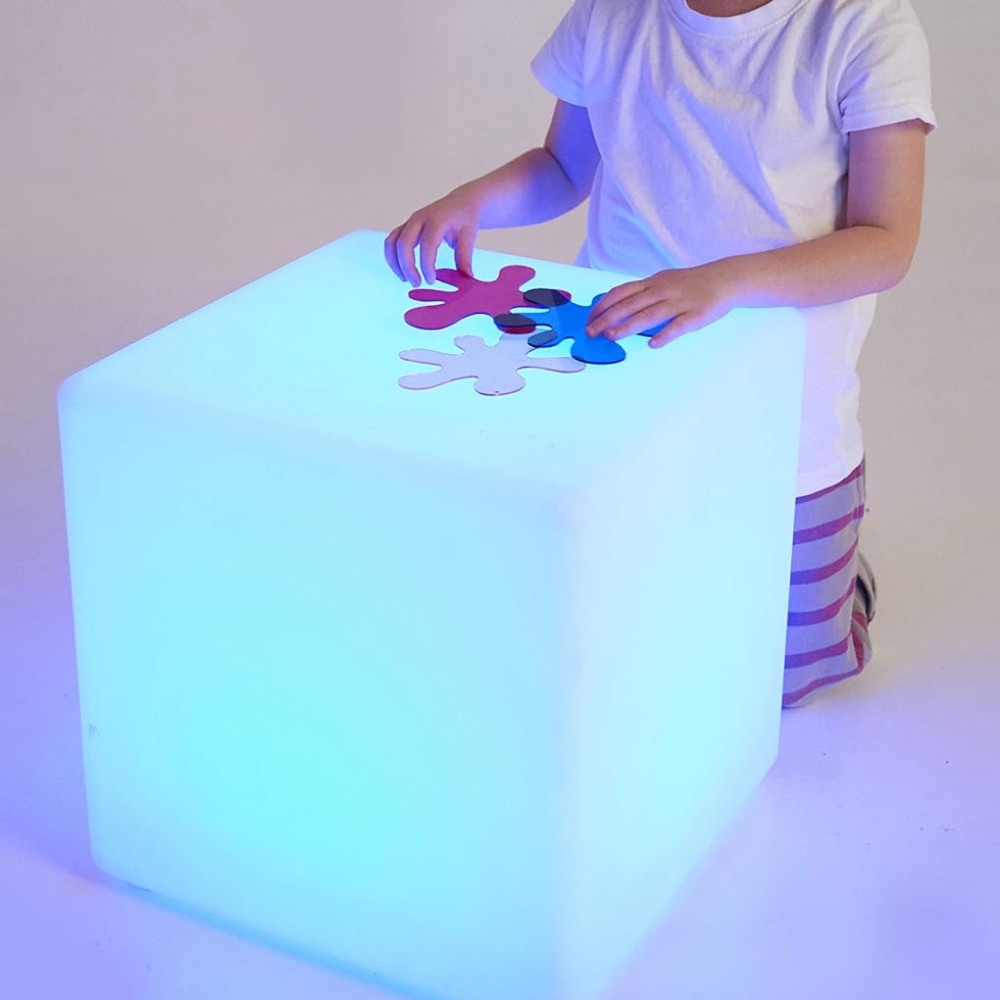
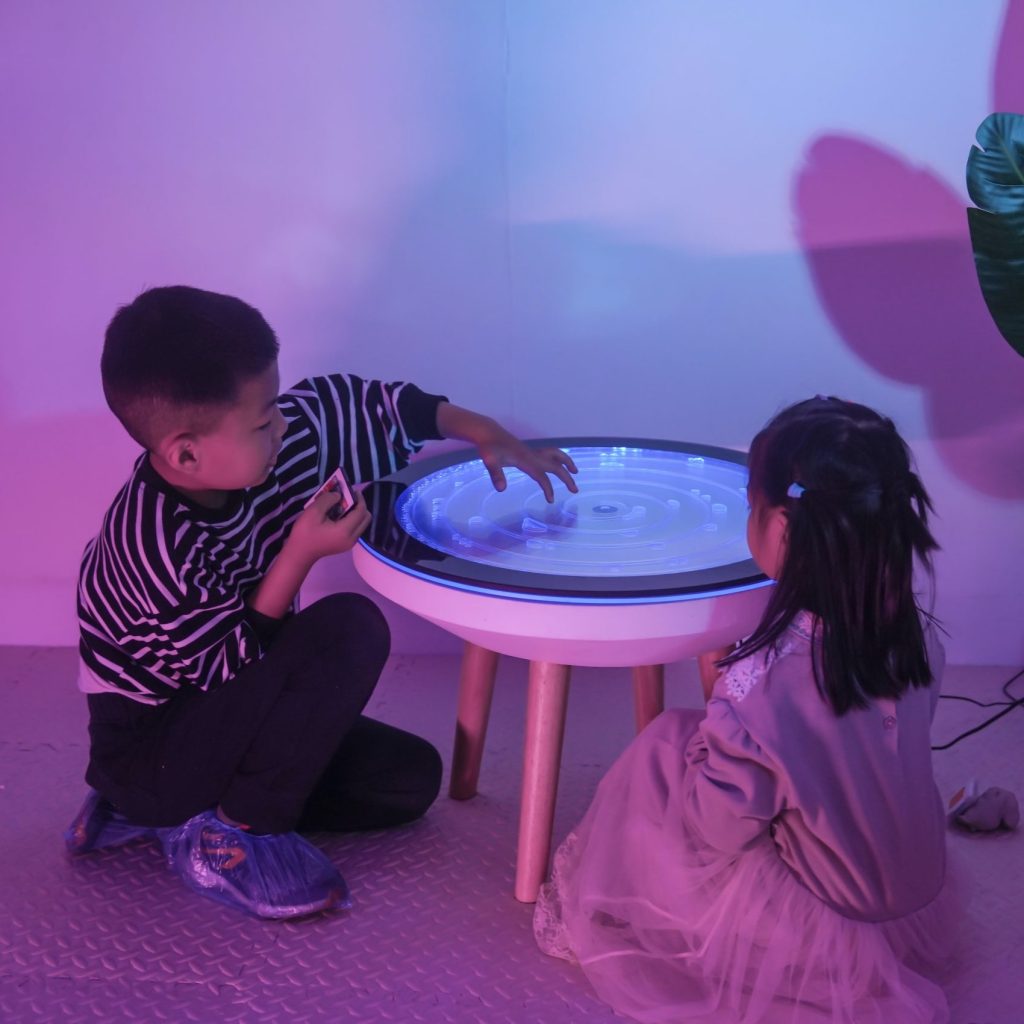
This is where sensory room design overlaps with play theory. The less rigid the material, the greater the opportunity for self-directed expression. Useful examples include sensory LED lights with adjustable colours, fidget sensory toys for tactile exploration, and liquid floor tiles that respond visually to movement.
Build emotional safety into the room
Creativity requires psychological safety as much as physical safety. A person should never feel watched, corrected, or hurried. In practical terms, this means predictable room access, clear transitions, and escape options. A comfortable retreat area, perhaps with dimmer lighting and a weighted blanket, can help users regulate before returning to more active exploration.
Emotional safety also depends on trust in the adults using the space. Therapists and teachers often get better results when they observe before intervening. If a child repeatedly taps a bubble tube base, lines up tactile objects by texture, or hums in rhythm with light changes, that behaviour may be part of a meaningful sensory narrative. Interrupting too quickly can shut down a valuable form of expression.
How to set up a sensory space that invites self-expression
Step 1: Start with a sensory profile
Before choosing equipment, identify the person’s sensory preferences, triggers, communication style, and regulation patterns. An autistic child who seeks deep pressure and visual calm will need a different setup from a pupil with ADHD who benefits from movement and alerting input. In dementia care, staff may need to explore life history as well as sensory preference, such as familiar songs, fabrics, or scents.
A practical profile should answer clear questions: What helps the person feel safe? What signals overload? Do they prefer active or passive sensory experiences? Do they enjoy novelty or repetition? This prevents a common and costly mistake: buying popular items that look impressive but are poorly matched to the user.
Step 2: Create zones with a clear purpose
Dividing the room into zones helps users understand what is available without relying heavily on verbal instruction. A calming zone may include soft seating, low lighting, and gentle visuals. An expressive zone may include music, movement props, and interactive lighting. A tactile zone may include trays, wall panels, or baskets of objects sorted by texture.
Good zoning also prevents sensory conflict. For example, a noisy musical corner placed beside a cocoon chair can undermine both activities. In a therapy room, keeping active equipment separate from quiet regulation tools improves session flow. In a classroom sensory area, even a small shelving unit or rug can create enough visual separation to reduce confusion.
Step 3: Make the environment adjustable
A creative sensory space should be easy to adapt in the moment. Dimmers, portable materials, removable covers, and music controls all help staff and families fine-tune the room according to energy levels and emotional state. Adjustable environments are especially helpful for users whose sensory thresholds change from day to day.
Simple equipment often works best when it can do more than one job. A set of fibre optic lamps can support visual tracking, storytelling, colour choice, and calming routines. A beanbag may be a reading seat one day and a deep-pressure regulation tool the next. Flexibility supports creativity because it keeps the room responsive rather than static.
Step 4: Add prompts, not instructions
Adults often assume that creativity needs teaching prompts, but in sensory work, prompts should invite rather than direct. Instead of saying, “Make a picture with these textures,” it is often more effective to say, “Which texture matches how today feels?” or “What happens if the lights change while the music gets slower?” This type of prompt leaves room for personal interpretation.
Visual supports can also work well. In school settings, simple cards showing “choose”, “mix”, “build”, “listen”, or “rest” can help users navigate the room independently. In therapy practice, a practitioner may model one idea and then step back. The principle is consistent: support engagement without taking over the process.
Practical strategies for different environments
At home
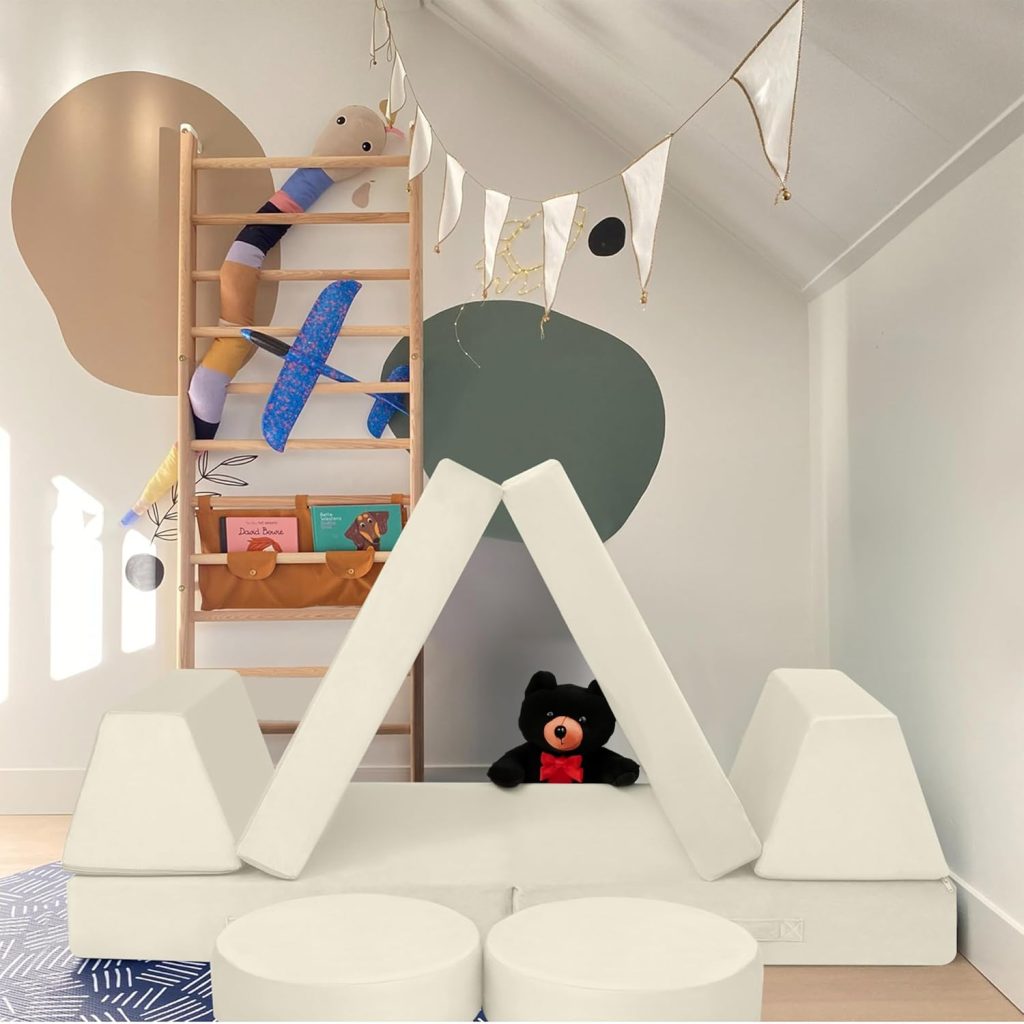
Home sensory spaces do not need a dedicated room. A corner of a bedroom, a small tent in the living room, or a calm area under stairs can become a highly effective creative sensory zone. At home, the greatest advantage is familiarity. Families can build routines around favourite songs, consistent objects, and low-pressure opportunities for expression.
The most effective home setups usually avoid clutter. A poor setup might include too many toys, bright unrelated colours, and no clear purpose. A better setup might include one soft seating area, one basket of tactile items, a light source with adjustable colour, and one movement option. Parents often find that engagement becomes deeper when fewer items are left available at once. Those planning a family-friendly setup may find useful ideas in this article on designing a sensory room for children at home.
In schools
In schools, creativity and self-expression flourish when sensory rooms are not treated solely as reward spaces or emergency calming rooms. They are most effective when integrated into the wider curriculum and used proactively. A pupil might explore poetry through colour changes, develop emotional literacy through texture choices, or rehearse turn-taking with interactive sensory games.
One frequent problem in schools is over-scheduling sensory room use into short, rushed slots. Ten minutes of tightly managed activity can be less valuable than twenty minutes of semi-structured choice. Staff training is essential. Adults need to recognise when a pupil is communicating through behaviour, sensory selection, or repeated play patterns rather than expecting conventional participation.
In therapy settings
Therapy spaces benefit from clearer intention and documentation. Here, sensory exploration can be observed to support goals around communication, co-regulation, motor planning, emotional expression, and confidence. A therapist might begin with regulation, then introduce an expressive sensory task such as choosing sounds to match feelings or using tactile materials to tell a story sequence.
Therapy environments should still avoid over-clinical rigidity. The room should feel inviting, not evaluative. When therapists record what worked, patterns emerge: a child may consistently become more verbal after vestibular input, or an adult with dementia may become more socially engaged when lavender scent and familiar music are paired. Those environmental details matter.
Effective setup versus poor setup
An effective sensory setup is calm enough to support regulation, varied enough to allow choice, and flexible enough to adapt to the individual. A poor setup usually has one of three problems: sensory overload, lack of purpose, or over-direction by adults. These rooms may look full and expensive, but they often produce fragmented engagement and quick dysregulation.
Consider two examples. In the first, a room contains flashing multicolour lights, several noisy toys switched on at once, bright wall displays, and storage piled in view. A child enters, circles quickly, covers their ears, and leaves. In the second, the same room is simplified into zones with one active light source, hidden storage, soft boundaries, and tactile materials arranged attractively. The child enters, sits by the lights, selects a tactile object, then begins a repetitive but calm pattern of play that gradually develops into interaction. The difference is not the budget. The difference is thoughtful design.
Common mistakes and how to avoid them
One common mistake is assuming more stimulation equals more creativity. In reality, overload often blocks self-expression. The fix is to scale back and make sensory input controllable. Begin with fewer resources, observe what the user returns to, and build from there.
Another mistake is choosing equipment for appearance rather than function. Bubble tubes, projectors, and light panels can be excellent, but only when they support the user’s needs and are integrated into meaningful experiences. Buying a signature item without planning lighting levels, seating position, sound levels, or supervision often leads to underuse. For wider design support, these key things to consider when designing a sensory room align closely with real-world planning issues.
A third mistake is failing to review. Sensory preferences change. A preschool child may later want more control and independence. A pupil with ADHD may need more movement before settling into tactile or creative tasks. A person with dementia may respond differently as the condition progresses. Reviewing the room every few months keeps it useful and person-centred.
Expert tips for sustaining creative sensory engagement
Rotate materials without constantly redesigning the room. Familiarity creates safety, but small novelty keeps engagement alive. Changing just one sensory feature, such as adding a new scent theme or replacing fabric textures seasonally, can refresh exploration without disrupting regulation.
Document preferences visually. A simple chart showing “liked”, “avoided”, “calming”, and “energising” helps families and teams respond more consistently. It also reveals emerging interests. If a child repeatedly chooses blue lights, ocean sounds, and water play, those patterns can be turned into richer creative themes such as sea storytelling, movement games, or visual art.
Support communication in whatever form it appears. Self-expression may be verbal, gestural, musical, movement-based, or object-based. Staff and parents who treat all forms of expression as meaningful tend to see stronger engagement over time. The sensory room then becomes more than a place to calm down. It becomes a place where identity, preference, and imagination are allowed to develop.
Frequently Asked Questions
How does sensory exploration encourage creativity?
Sensory exploration encourages creativity by giving people direct ways to experiment with colour, texture, sound, movement, and light. These experiences support imagination, problem-solving, and non-verbal communication. It is especially valuable for individuals who find traditional creative tasks difficult.
What is the best sensory room setup for self-expression?
The best setup includes adjustable lighting, a few open-ended resources, clear zoning, and opportunities for choice. It should feel safe, uncluttered, and easy to personalise. The right arrangement depends on the user’s sensory profile rather than current trends.
Can sensory rooms help autistic children express emotions?
Yes, sensory rooms can help autistic children express emotions through preferred sensory channels such as colour selection, movement, texture play, or sound. Many children communicate feelings more comfortably through sensory choices than through spoken language. The environment should be predictable and not overwhelming.
What sensory tools are good for creative play?
Good tools include adjustable lights, tactile baskets, movement props, projection effects, soft seating, music resources, and cause-and-effect items. Open-ended tools are usually more effective than single-purpose toys. The best choices are those that match the individual’s regulation and communication needs.
How can a small home space support sensory creativity?
A small home space can support sensory creativity by using one calm corner with layered textures, a soft seat, a controllable light source, and a small basket of rotating materials. Clear boundaries and reduced clutter matter more than room size. Even a simple nook can become highly effective when used consistently.
What should be avoided in a creative sensory room?
Overstimulation, clutter, constant adult direction, and equipment chosen only for appearance should be avoided. Too many active features at once can reduce regulation and shorten engagement. The room should invite exploration, not demand it.
Are sensory rooms helpful for adults and older people too?
Yes, sensory rooms can support adults with learning disabilities, ADHD, anxiety, and sensory processing needs, as well as older people with dementia. For older users, familiar sounds, soothing textures, and memory-linked sensory prompts are often especially helpful. The principles of safety, choice, and comfort remain the same across age groups.