Table of contents
Ensuring safety and cleanliness in sensory rooms means designing every element to reduce preventable risk, support regulation, and allow consistent hygiene without stripping the room of its calming purpose. The safest sensory rooms are not simply soft and attractive; they are carefully planned environments where equipment, surfaces, routines, and supervision work together for autistic users, people with ADHD, individuals with dementia, and anyone with sensory processing differences.
A well-run sensory room reflects both specialist knowledge and practical experience. In homes, schools, and therapy settings, the most effective spaces are those where lighting is controlled, equipment is checked routinely, cleaning products are chosen with sensory sensitivity in mind, and staff or carers know exactly how to respond when a room becomes overstimulating, cluttered, or unhygienic.
Highlights
- Safe sensory rooms combine thoughtful layout, robust equipment checks, secure installation, and age-appropriate supervision.
- Clean sensory rooms rely on wipeable materials, clear cleaning schedules, infection control, and low-odour products that do not trigger sensory distress.
- Different users need different safeguards, especially autistic children, people with ADHD, and those living with dementia.
- Small details such as cable management, washable soft furnishings, and zoning often prevent the most common incidents.
What safety and cleanliness mean in a sensory room
A sensory room is a controlled environment designed to help a person regulate sensory input through light, sound, touch, movement, and visual focus. In practical terms, safety in a sensory room means preventing falls, entrapment, overheating, trips, choking hazards, overstimulation, infection spread, and misuse of specialist equipment. Cleanliness means maintaining hygienic surfaces and tools without introducing strong smells, residue, noise, or routines that make the room less accessible.
That distinction matters because many people assume safety only refers to physical injury. In sensory practice, emotional and sensory safety are just as significant. A room may look tidy and padded yet still be unsafe if lighting flickers, if a fan hums unpredictably, if weighted products are used without guidance, or if toys are shared between users without cleaning. For autistic children and adults in particular, an environment that feels unpredictable can quickly stop being therapeutic.
There is strong evidence that environment affects wellbeing and behaviour. The UK Health Security Agency and NHS guidance on infection prevention stress the value of effective cleaning and hand hygiene in communal settings, especially where equipment is shared. At the same time, the National Autistic Society highlights how sensory differences can affect daily experiences and responses to spaces, making room design and upkeep central rather than optional. For broader context, autism affects more than 1 in 100 people in the UK according to the National Autistic Society, which underlines how often schools and families need these spaces to work safely for varied profiles. National Autistic Society guidance on autism offers useful background on sensory differences.
Planning a safe sensory room from the start
The safest sensory rooms are built through planning, not patched together after problems appear. Before purchasing any equipment, the room should be assessed for user age, diagnosis, mobility, communication style, supervision level, and likely patterns of use. A room for a nonspeaking autistic child who seeks movement will need different safeguards from one designed for an older adult with dementia who benefits from calming visual stimulation and clear orientation cues.
One effective approach is to begin with a written risk-and-use profile. This should identify who will use the room, what activities will happen there, who supervises, and what incidents are most likely. For example, in a primary school, common risks may include climbing on non-climbing equipment, mouthing loose items, overuse during busy timetables, and poor cleaning between classes. In a home setting, the bigger issues may be sibling access, storage, and inconsistent maintenance because the room doubles as a play area.
Step-by-step setup for safer use
First, measure the room and map clear movement routes. There should be enough floor space to move between features without stepping over cables, beanbags, or baskets. Second, divide the space into zones such as calming, movement, tactile exploration, and adult support. Third, choose equipment that matches users’ regulation goals rather than filling the room with every sensory product available.
Fourth, secure anything mounted to walls or ceilings using appropriate fixings and professional installation where required. Fifth, test the room at low stimulation before introducing more immersive elements. Sixth, create a written cleaning and inspection routine before the room opens. This order matters: many unsafe sensory rooms fail because cleaning and maintenance are treated as afterthoughts rather than core design decisions.
Teams designing rooms for therapy contexts may also benefit from reviewing how sensory environments support intervention goals. A strong example is this guide on using sensory rooms within occupational therapy practice, which aligns room choices with purposeful outcomes rather than visual appeal alone.
Physical safety: layout, equipment, and supervision
Physical safety begins with the floor plan. Soft flooring can reduce injury risk, but excessively thick or unstable surfaces can make movement harder for users with balance difficulties or mobility aids. The best choice is usually a firm, cushioned, easy-clean floor that supports both grounding and stability. Walkways should remain open at all times, and larger equipment should never block exits or obscure adult sight lines.
Cables are one of the most common avoidable hazards in sensory rooms. Projectors, speakers, bubble features, lamps, and switch-adapted tools often mean multiple power sources in a small area. In effective setups, cables are routed behind guards, clipped securely, and kept away from hands, feet, and chew-seeking users. In poor setups, extension leads sit under blankets or behind cushions where overheating, snagging, and hidden damage become more likely.
Lighting also requires careful judgment. Flashing or rapidly changing lights may delight one user and distress another. Safer practice is to use adjustable, predictable lighting that can be dimmed or simplified quickly. A product such as the Fokky Projector Control Brightness Sensory can work well when it is positioned securely, brightness is moderated, and the user has the option for it to be turned off immediately if the visual input becomes too much.
Supervision should reflect user needs, not room aesthetics. A beautifully designed room is still unsafe if adults cannot observe all areas, if users can lock themselves in, or if staff assume a sensory room is a place to leave a child alone to “calm down.” Some individuals do benefit from low-demand quiet time, but supervision policies must be explicit. In schools and clinics, a sign-in system, occupancy limit, and stated supervision level can prevent confusion and reduce incidents.
Cleanliness without sensory overload
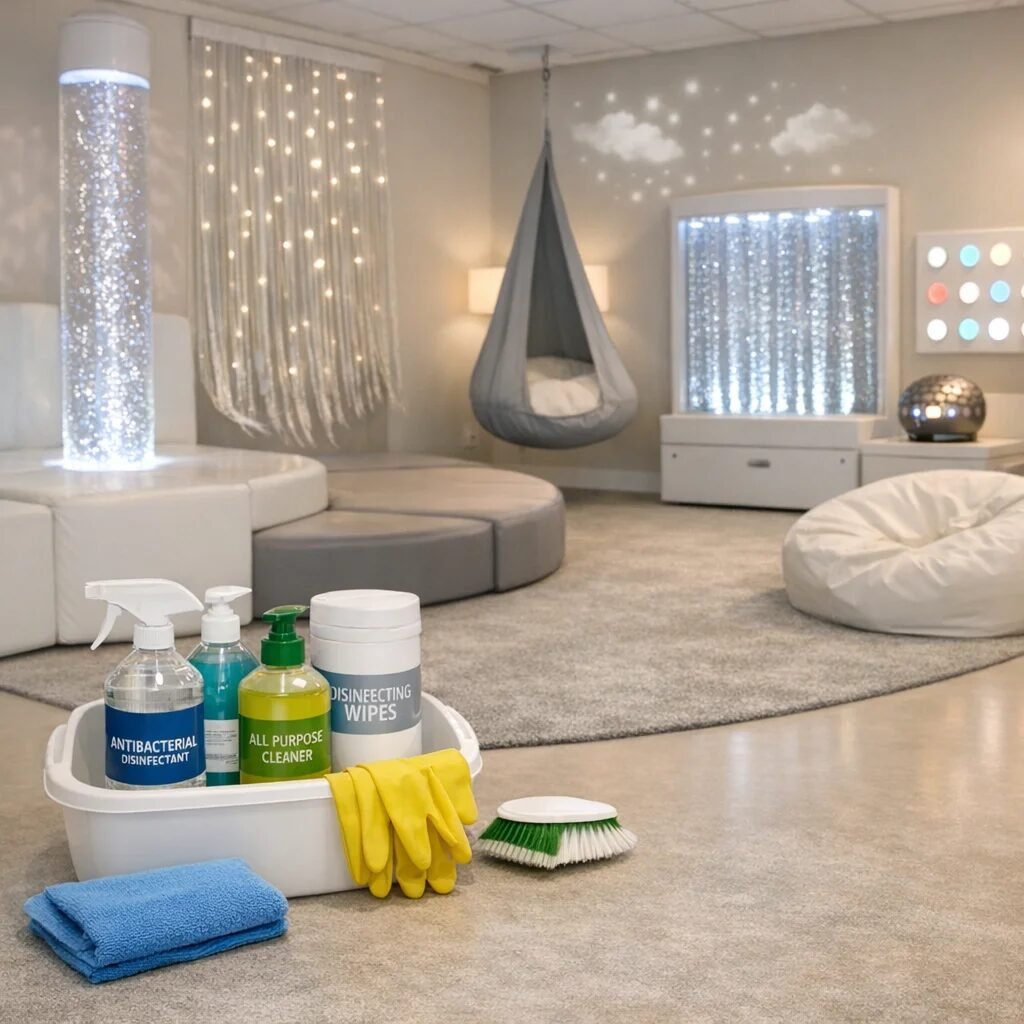
Cleaning a sensory room is not the same as cleaning a standard classroom or lounge. Many users are highly sensitive to smell, texture, visual disorder, and noise. A room can be technically disinfected but functionally unusable if the spray leaves a sharp fragrance, sticky residue, or loud crackling wipes that trigger distress. The goal is hygienic, low-sensory cleaning that preserves the room’s purpose.
Materials make a major difference. Wipe-clean vinyl, sealed plastic, washable covers, and machine-washable soft items are easier to maintain than absorbent fabrics and unfinished wood. Any item that cannot be cleaned properly should be reconsidered, especially in shared settings. This is where many well-meaning rooms fall short: they include fluffy cushions, hard-to-launder canopies, and novelty tactile bins that trap dust, saliva, and debris.
Creating a cleaning routine that works
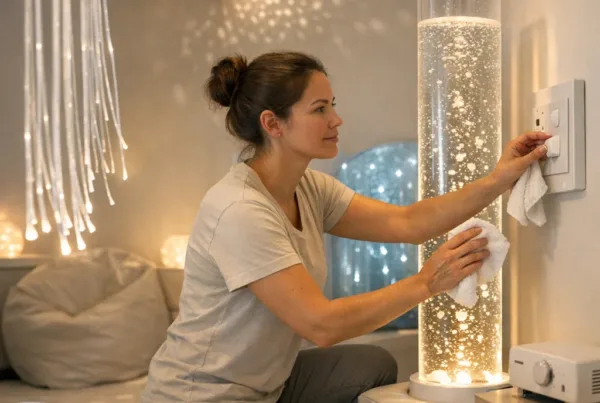
An effective system usually includes three levels. First, quick cleaning between users: wipe high-touch surfaces, check for visible soiling, and replace mouthed items. Second, daily cleaning: floors, switches, seating, door handles, and shared tools. Third, deep cleaning weekly or according to use level: laundering covers, disinfecting storage bins, checking hidden dust around vents and cables, and rotating out damaged items.
Schedules should be visible and specific. “Clean sensory room regularly” is too vague. “Wipe bubble tube buttons after each session; wash weighted lap pad cover every Friday; inspect oral-motor tools after each use” is actionable. In therapy centres and schools, assigning roles to named staff members prevents the all-too-common situation where everyone assumes someone else has cleaned the room.
Where shared equipment is used, hand hygiene matters as much as surface hygiene. The NHS continues to identify handwashing as one of the simplest and most effective ways to reduce the spread of infections. In a sensory room, this can be supported with a quiet transition routine before and after sessions rather than sudden demands that interrupt regulation. NHS handwashing guidance is a sound baseline for families and schools.
Matching safety measures to different sensory needs
Different users interact with sensory rooms in very different ways. An autistic child who seeks deep pressure and visual focus may spend long periods with one feature and ignore verbal warnings. A young person with ADHD may move rapidly between zones and need clearer boundaries around climbing, jumping, and shared equipment. A person with dementia may be less able to interpret depth, mirrors, or dark corners, so the room should prioritise orientation, contrast, and ease of supervision.
For users with sensory processing disorder, the room should avoid mixed messages. A calming zone with dim lights does not work well beside an active spinning toy with bright flashing colour changes. Separation and selectivity are safer than sensory excess. A highly effective room often feels simpler than expected because each input has a purpose. Poor setups, by contrast, try to stimulate every sense at once and then wonder why the room increases dysregulation.
At home, flexibility is often the priority. Parents may need storage that keeps favourite sensory aids available but protected from pets, siblings, and dust. In schools, durability and turnover matter more because multiple pupils may use the same room every day. In therapy settings, equipment should support goals such as attention, motor planning, arousal regulation, or communication. The environment changes slightly depending on whether the room is being used for free exploration, co-regulation, or structured intervention.
Common mistakes that compromise safety and hygiene
One frequent mistake is overcrowding the room. Too many items make cleaning harder, supervision weaker, and overstimulation more likely. A sensory room should not become a storage area for every soft toy, projection gadget, and fidget donated over time. If an item is rarely used, hard to clean, or consistently dysregulating, it should be removed.
Another mistake is buying equipment based on appearance rather than risk profile. Hanging chairs, weighted products, projectors, or small tactile tools can all be appropriate, but only when chosen for the specific user group and installed or used correctly. A school once equipped a room with several loose LED accessories and decorative stones because they looked calming. Within weeks, pieces were being mouthed, hidden, and scattered across the floor, creating both choking and trip hazards. The room looked appealing online but functioned poorly in daily use.
Neglecting maintenance is equally common. Even high-quality equipment becomes unsafe when cracked, unstable, or partially broken. A foam mat with split seams can harbour dirt and bacteria. A projector with a frayed cord becomes a direct hazard. A visual checklist completed weekly is far more effective than waiting until something fails.
Effective setup versus poor setup
An effective sensory room for a small SEND classroom might include one calm visual feature, one wipe-clean crash pad, labelled storage, dimmable lights, protected sockets, and a cleaning log by the door. Adults can see the whole room, users know what each zone is for, and there are clear limits on numbers.
A poor setup in the same space might include stacked beanbags in the exit path, multiple flashing devices left on at once, unwashed chew tools in an open tub, and extension cords under soft mats. The second room may seem more exciting initially, but it is harder to clean, harder to supervise, and more likely to escalate behaviour or cause injury.
Daily checks, maintenance, and staff training
Consistency keeps sensory rooms safe over time. A short daily check before the first session can prevent most avoidable issues. This check should include lighting function, cable position, cleanliness of high-touch surfaces, condition of soft furnishings, temperature, ventilation, and removal of any item that has become damaged or contaminated.
Monthly maintenance should be more detailed. Staff or carers should review fixtures, wash removable covers, inspect batteries, check sensory liquids or sealed items for leaks, and assess whether current contents still match user needs. Rooms evolve. A setup that suited one child at age five may be unsafe or ineffective at age eight, particularly if the child now seeks stronger movement input or uses equipment in new ways.
Training matters just as much as equipment. Adults should know how to introduce the room, when to reduce stimulation, how to clean shared items, what signs indicate dysregulation, and which products require direct supervision. This is especially relevant in multidisciplinary spaces where teachers, therapists, teaching assistants, and family members may all use the same room slightly differently. Shared protocols reduce both accidents and mixed sensory messaging.
Practical product choices that support safer, cleaner rooms
Products should earn their place by being durable, easy to sanitise, and useful for regulation. Decorative clutter rarely improves outcomes. Lighting, seating, and tactile resources are often the most effective categories when selected carefully, but each should be assessed for cleanability and safe storage.
For example, a projector can offer soothing visual focus without adding floor clutter when mounted or placed securely away from reach. Seating should ideally have wipeable or washable surfaces rather than trapping dust and spills. Tactile items should be grouped by cleaning method so staff do not waste time deciding what can be wiped, washed, or quarantined. Families often manage this well with labelled lidded boxes: “wash after use,” “wipe only,” and “single-user items.”
Where budgets are limited, fewer better-quality items usually outperform many cheap ones. One reliable visual feature, one easy-clean crash area, and a small set of sanitised sensory tools can create a far safer room than a crowded collection of difficult-to-maintain accessories.
Frequently Asked Questions
How often should a sensory room be cleaned?
A sensory room should be spot-cleaned between users if equipment is shared, cleaned daily for high-touch areas, and deep-cleaned weekly or according to usage. Rooms in schools and clinics usually need more frequent cleaning than home spaces because more people use them.
What is the biggest safety risk in a sensory room?
The biggest risk is usually a combination of poor layout and poor supervision rather than one single item. Trip hazards, unsecured equipment, overcrowding, and unsupervised access are among the most common causes of preventable incidents.
Are sensory rooms suitable for autistic children?
Yes, sensory rooms can be highly effective for autistic children when they are individualised and not overstimulating. The room should match the child’s sensory profile, communication needs, and regulation goals rather than relying on generic “calming” features.
How can a sensory room be kept hygienic without strong chemical smells?
Using low-odour, appropriate cleaning products, washable covers, wipeable surfaces, and routine laundering helps maintain hygiene without overwhelming sensitive users. Good ventilation and cleaning outside active session times also reduce sensory disruption.
Should soft toys and fabric cushions be used in sensory rooms?
They can be used sparingly, but only if they are washable and genuinely helpful for regulation. In shared settings, too many fabric items often create cleaning problems, trap allergens, and increase clutter.
Do sensory rooms need adult supervision?
Most sensory rooms do require some level of adult supervision, especially for children, users with limited danger awareness, or anyone using specialist equipment. The level of supervision should depend on the user, the equipment present, and the setting.
What makes a sensory room calming rather than overstimulating?
A calming sensory room uses fewer inputs, better zoning, adjustable lighting, and clear purpose for each item. Overstimulating rooms usually have too many active features competing at once, with little way to reduce input quickly.