Table of contents
Sensory rooms often use a blend of lighting, sound, projection, tactile devices, interactive systems, and calming technology to help people regulate, focus, explore, and communicate. The best examples of technology used in sensory rooms are not simply impressive gadgets; they are tools chosen to match a person’s sensory profile, goals, and environment. Drawing on best practice across autism support, special education, and therapeutic design, this guide explains which technologies work, when to use them, and how to set them up effectively.
Highlights
- Sensory room technology includes interactive lighting, bubble tubes, projectors, sound systems, switches, weighted seating, and calming audio tools.
- The most effective setup matches the user’s needs, whether for autism, ADHD, dementia, or sensory processing differences.
- Good design prioritises regulation, safety, flexibility, and simple control over novelty or excessive stimulation.
- Home, school, and therapy sensory rooms need different technology choices, layouts, and staff guidance.
What is sensory room technology?
Sensory room technology refers to any electronic, digital, or powered equipment used to shape sensory input in a controlled environment. That can include visual tools such as fibre optics and projectors, auditory tools such as speakers and white-noise devices, tactile technology such as vibrating cushions, and interactive equipment that responds to movement, touch, or switches.
In practice, the term covers far more than specialist equipment. A sensory room may use consumer technology such as tablets, Bluetooth speakers, dimmable smart bulbs, or noise machines alongside dedicated sensory products. What makes the technology “sensory room technology” is the intention behind it: to support regulation, engagement, learning, communication, and emotional safety.
This distinction matters because poor sensory rooms are often built around products rather than people. A room filled with flashing lights and loud effects can overwhelm an autistic child, distract a pupil with ADHD, or confuse a person living with dementia. An effective sensory space uses technology selectively, with clear outcomes such as calming before learning, encouraging visual tracking, or offering a safe retreat during overload.
Interactive lighting systems
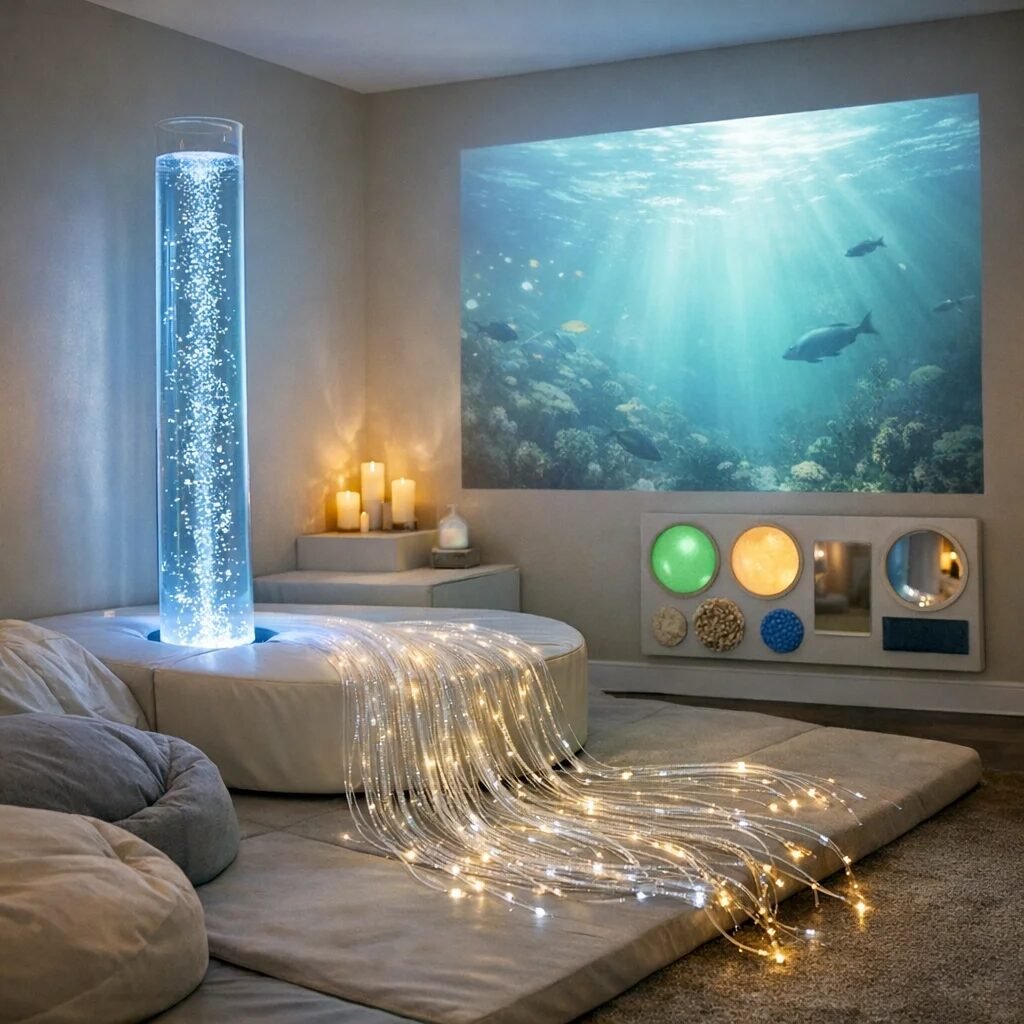
Lighting is one of the most recognisable examples of technology used in sensory rooms, and for good reason. Light can quickly change the emotional tone of a space, support visual attention, and provide predictable cause-and-effect experiences. Common options include colour-changing LED panels, bubble tubes, fibre optic strands, wall washers, and controllable lamps.
For autistic users, controllable lighting often works best when brightness, speed, and colour can be adjusted. Slow colour transitions are generally more regulating than rapid flashing. In a school sensory room, a teacher may use blue or green low-level lighting during transition time, then shift to brighter neutral lighting for an alerting movement break. In a therapy room, the therapist may use one light source at a time to avoid visual clutter and keep the session purposeful.
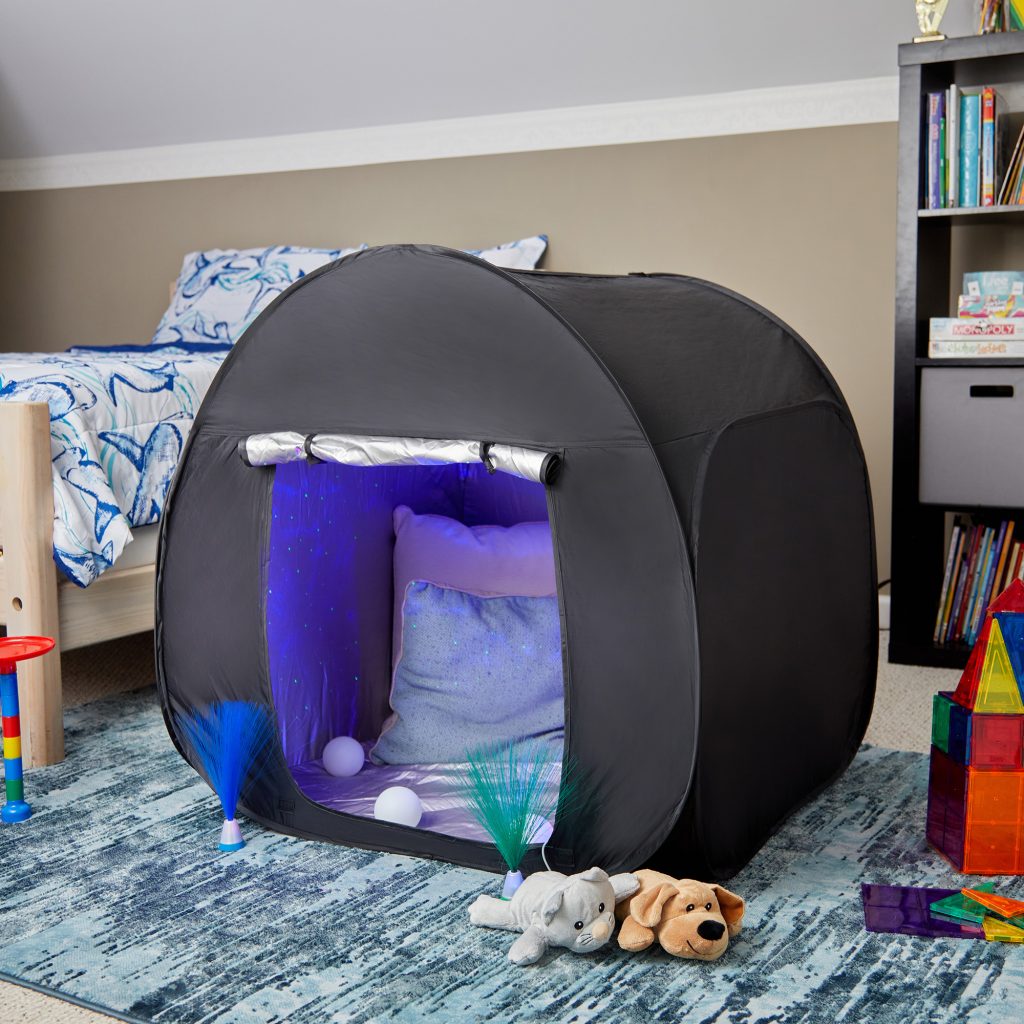
One of the most useful setup strategies is zoning. Rather than treating the whole room as one visual experience, lighting can define separate areas: a calm corner with dimmable warm lighting, an interactive exploration zone with coloured LEDs, and a focus station with plain, even light. This works especially well in mixed-use spaces where one area is used for regulation and another for structured sensory activities.
A common mistake is choosing bright, cheap LED products that flicker, hum, or cycle colours too quickly. Some autistic people and those with sensory processing difficulties are particularly sensitive to flicker and glare. For that reason, product testing matters more than appearance. Sensory professionals often recommend trialling any visual technology for short periods before installing several similar devices.
Parents planning a home sensory corner sometimes start with simple controllable lights rather than full specialist systems. A dimmable star projector such as the Rossetta Star Projector can provide gentle visual input when used at low brightness on a static setting, although it should be avoided for users who are triggered by moving patterns.
Projection, visual effects, and immersive display technology
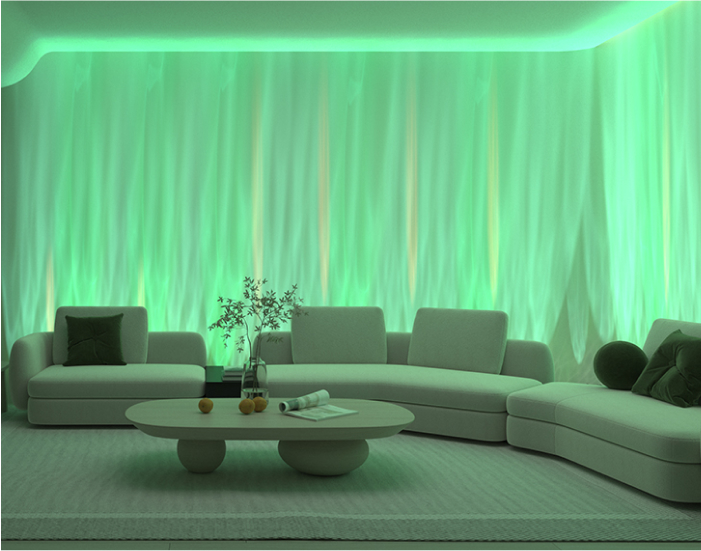
Projectors, moving images, and wall-based visual effects can transform a sensory room from a passive space into an immersive experience. Examples include aurora projectors, wall projections of underwater scenes, interactive floor projection systems, and simple visual loops displayed on a screen. These are particularly useful for visual engagement, motivation, storytelling, and supporting joint attention.
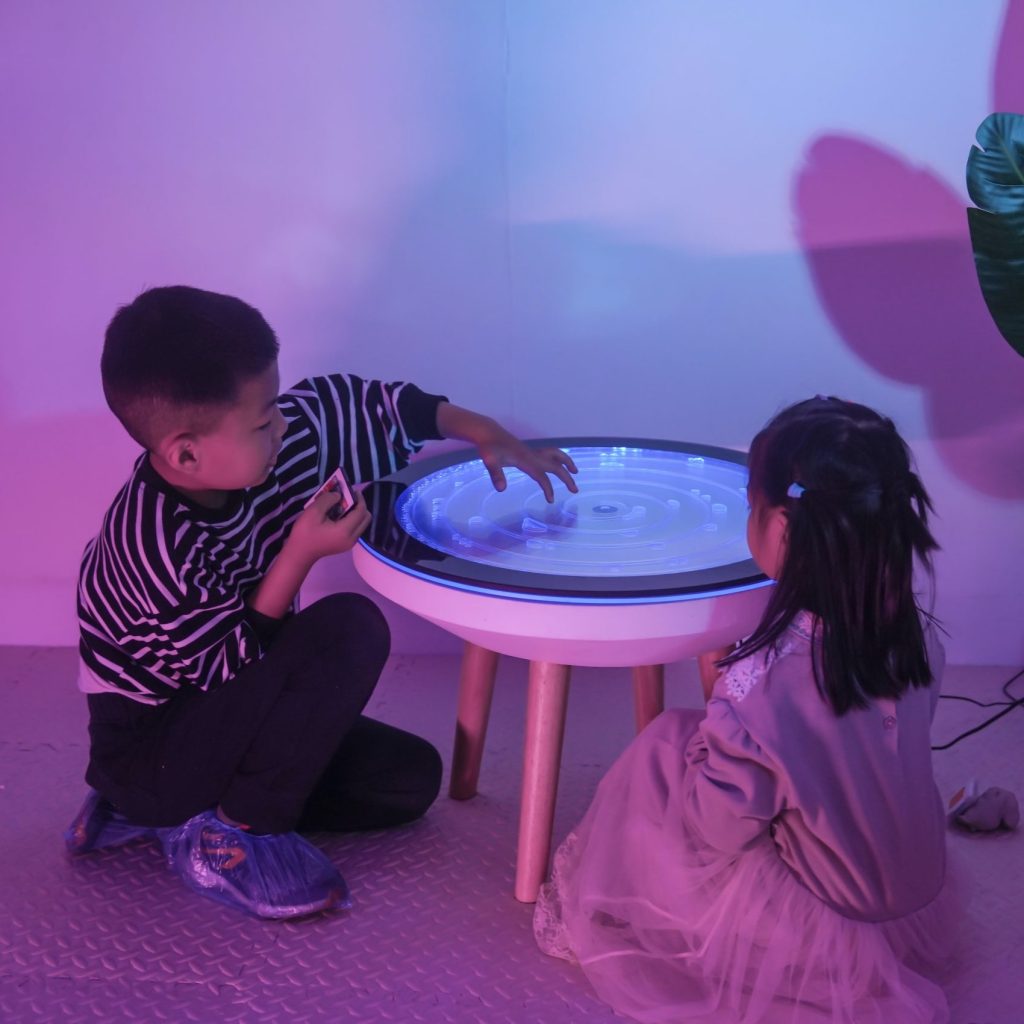
Interactive projection is often effective in schools and therapy centres because it encourages movement with a clear purpose. A child who avoids table tasks may willingly step, reach, crawl, or follow lights when visual effects respond immediately. This turns gross motor activity into a sensory-regulation tool and can build participation without direct verbal pressure.
The contrast between good and poor use is easy to see. An effective setup uses one clear visual theme, low ambient distraction, and a defined aim such as relaxation or motor planning. A poor setup layers moving projections, flashing bubble tubes, music, and tactile toys all at once. That creates sensory competition rather than support. More technology does not create a better room; coherence does.
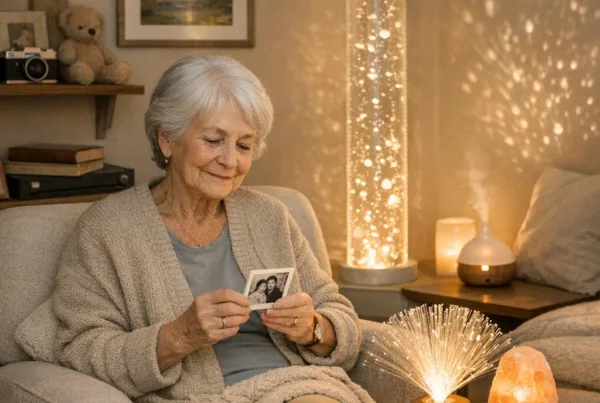
For users with dementia, projections may need extra care. Realistic, slow-moving nature scenes are usually more grounding than abstract patterns. Familiar imagery can support reminiscence and reduce agitation, while complex moving visuals may increase disorientation. Guidance from the NHS on dementia-friendly environments consistently emphasises clarity, comfort, and reducing distressing sensory input rather than creating novelty for its own sake via the NHS.
Audio technology and sound control
Sound can regulate the nervous system just as powerfully as light. In sensory rooms, audio technology may include Bluetooth speakers, sound panels, white-noise machines, calming music systems, vibration-and-sound loungers, microphones, and voice-output tools. The right audio setup depends on whether the room needs to calm, alert, mask environmental noise, or support communication.
For many autistic users, the most valuable audio technology is not a music player but a system that improves sound control. Reducing echo, keeping speaker placement consistent, and ensuring the room does not suddenly produce loud startup tones can make the difference between a room that feels safe and one that is avoided. In schools, a sensory room near a corridor or hall often benefits from basic acoustic treatment before any specialist equipment is added.
White noise and nature sounds can help some users settle, particularly where external noise is unpredictable. A product such as the LectroFan Evo White Noise Machine can be useful in home or clinic settings where consistent background sound helps mask sudden noise. It should still be introduced gradually, since some people find constant sound irritating rather than calming.
A practical setup method is to create three audio presets: calm, focus, and alert. Calm may use soft rainfall at low volume. Focus may use no sound at all or a subtle neutral background. Alert may use rhythmic music for movement activities. This gives adults a structured way to choose audio based on the goal rather than pressing random playlists and increasing unpredictability.
Research from the U.S. Centers for Disease Control and Prevention estimates that around 1 in 36 children has been identified with autism spectrum disorder according to the CDC. Given how common sensory differences are in autism, sound management should be treated as a core design feature, not an optional extra.
Switches, controllers, and cause-and-effect technology
Cause-and-effect technology is central to many high-quality sensory rooms. This includes accessible switches, large push buttons, wireless controllers, touch panels, and interactive systems that allow a user to change lights, sounds, vibrations, or visuals independently. For children and adults with complex needs, this type of technology can increase agency and communication far more effectively than passive observation.
When a learner presses a switch and sees a bubble tube change colour or hears music begin, the room becomes a communication environment. This is especially useful for pupils with profound and multiple learning disabilities, emerging communicators, or those working on intentional interaction. In therapy settings, switch-based activities also support hand use, motor planning, anticipation, and turn-taking.
The key expert tip is to make responses immediate and obvious. If pressing a button leads to a delayed or unclear reaction, the connection is lost. One switch should ideally control one effect at first. Complex multi-step systems may impress adults but can be frustrating for users who need simple predictability. Once the person understands the link, choices can gradually expand.
This principle also supports autistic users who seek control when overwhelmed. Predictable technology reduces anxiety. A child who knows they can press one familiar controller to dim the room or start calming music is more likely to use the room proactively rather than only entering after a meltdown has escalated.
Tactile, vibration, and movement-based technology
Not all sensory room technology is visual or auditory. Vibration cushions, rocking seating, air pressure devices, and movement-responsive equipment can help users who need proprioceptive and vestibular input. These forms of technology are often overlooked, yet they can be the most regulating tools in the room for people with ADHD, sensory seeking profiles, or high baseline anxiety.
For example, a child who paces constantly in the classroom may benefit more from a movement station with a rocking seat and calming sound than from another light-up toy. A teenager with autism who struggles to settle at bedtime may respond well to a vibrating cushion used in a low-light home sensory nook. In older adults with dementia, gentle movement and vibration can increase body awareness and comfort, but intensity should remain low and carefully monitored.
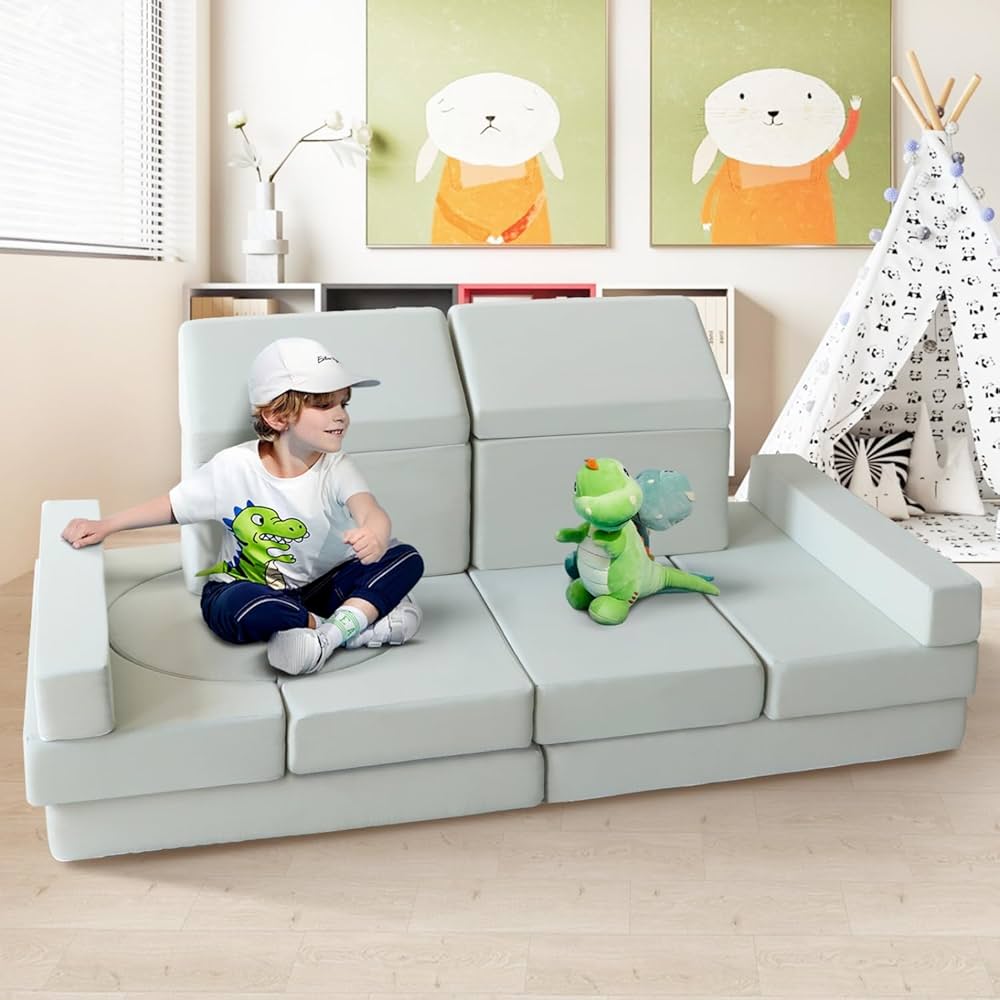
Seating also matters. Beanbags, crash mats, cocoon chairs, and supportive loungers create physical containment, which many users find calming. A sensory room that includes technology but no comfortable regulation seating often remains underused because there is nowhere to process the input safely. Professionals designing therapeutic spaces usually select seating before choosing decorative devices, because posture and body support affect every other sensory experience.
For home setups, a weighted or deep-pressure element may complement electronic tools. A product such as the Brentfords Weighted Blanket can work well during quiet time if it is appropriate for the individual’s size, health, and comfort. Weighted items should never be used without supervision guidelines and should not be treated as universal solutions.
Technology for communication, routine, and emotional regulation
Some of the most useful sensory room technology is not traditionally labelled “sensory equipment” at all. Tablets, visual timers, AAC devices, and smart home controls can make the room more understandable and easier to use. For many autistic children and for people with ADHD, predictability reduces stress. Technology that clarifies what is happening can therefore be just as regulating as a light or sound effect.
A visual timer may show exactly how long a calming break will last. A tablet-based choice board may let the user select “lights,” “music,” or “quiet.” A smart speaker can run a verbal routine such as “five minutes of calm time” followed by a transition cue. These tools are particularly effective in schools, where sensory rooms sometimes fail because they are used inconsistently or become reward spaces with unclear boundaries.
Step-by-step setup works best here:
- Define the room’s primary purpose: calm, alert, therapy, break, or communication.
- Choose two or three repeatable activities linked to that purpose.
- Add a visual or auditory cue for entering, using, and leaving the room.
- Train all adults to use the same sequence and language.
- Review whether the person leaves more regulated than they entered.
Families and schools wanting to make sensory spaces more meaningful can also explore broader design principles around engagement and creative exploration in resources such as encouraging creativity and self-expression in sensory exploration.
How technology choices differ by setting
Home sensory rooms need simplicity, durability, and easy daily use. Parents usually benefit most from a few reliable tools that can be used quickly during transitions, after school, or before bed. Dimmable lights, a projector, a sound machine, and supportive seating often achieve more than a room full of specialist equipment that takes too long to operate.
School sensory rooms need flexibility, storage, staff training, and clear timetables. A room used by multiple pupils should not rely on one sensory profile. Portable technology, wipe-clean controls, and preset scenes are especially helpful. Staff also need to know whether the room is meant for regulation, curriculum-linked sensory learning, or de-escalation, because each purpose requires different sensory intensity.
Therapy settings can justify more advanced interactive technology because sessions are structured and supervised. Here, projectors, switches, programmable lights, and sound-responsive systems can be used to target communication, motor skills, emotional regulation, or sensory integration goals. Even so, the therapist should still strip back the environment between activities. Too many active devices reduce therapeutic clarity.
Where more room-design guidance is needed, practical planning information from sensory room design resources can help users think beyond products and focus on purposeful sensory experiences.
Common mistakes when adding technology to a sensory room
The first mistake is over-stimulation. This happens when several technologies compete for attention at once: moving lights, background music, textured flooring, and vibrating equipment all running together. A sensory room should allow selective input, not constant input. Professionals often begin sessions with the room almost neutral, then add one element at a time based on the person’s response.
The second mistake is copying popular rooms without considering the user. A setup that suits a sensory-seeking teenager with ADHD may be completely wrong for an autistic child who is visually overwhelmed. Off-the-shelf inspiration images can be useful, but they should never replace observation, trial, and adjustment.
The third mistake is ignoring maintenance and safety. Bubble tubes, light projectors, and interactive panels need regular checks. Loose cables, inaccessible controls, and hard surfaces near movement zones create unnecessary risk. For dementia or complex-needs users, controls should also be intuitive and not dependent on reading small labels in low light.
The final mistake is expecting technology to do the work of adults. Even the best sensory room equipment is only effective when staff and caregivers understand co-regulation, pacing, and observation. Technology supports emotional safety; it does not replace relational support.
For simple tactile support alongside room technology, some families add handheld items such as the Small Fish Sensory Fidget Toys Pack. These are most useful when stored deliberately for specific regulation routines rather than scattered around the room as visual clutter.
Expert advice for choosing the right technology
The most reliable way to choose sensory room technology is to start with observable needs. Does the user seek movement, avoid sound, stare at lights, become disoriented in busy spaces, or need help transitioning? These patterns should guide purchases. A room for sensory recovery needs very different technology from a room designed for exploration and active play.
It also helps to think in pairs: one technology for calming and one for engagement within each sensory channel. For visual input, that might mean dimmable LEDs for calming and an interactive projector for engagement. For sound, it might mean white noise for calming and rhythmic music for movement. This approach builds balance into the room and prevents every item from pushing arousal in the same direction.
Professionals often pilot rooms with a low-cost core setup before investing in specialist systems. A sensible starter combination might include dimmable lighting, one controllable visual feature, one audio option, one supportive seat, and one way for the user to make a choice. A home-based calming corner can be highly effective with something as simple as the Govee Smart LED Strip Lights if brightness and colour scenes are carefully managed.
According to the National Autistic Society, many autistic people experience significant sensory differences that affect daily life as outlined by the National Autistic Society. That is why the strongest sensory room designs are individualised, adjustable, and reviewed regularly rather than fixed around one idea of what a sensory environment should look like.
Frequently Asked Questions
What technology is most commonly used in sensory rooms?
The most common sensory room technologies are bubble tubes, fibre optic lights, LED mood lighting, projectors, speakers, white-noise machines, and accessible switches. These are popular because they can be adapted for calming, engagement, and cause-and-effect learning.
Are sensory room lights good for autistic children?
Sensory room lights can be very effective for autistic children when they are adjustable and used thoughtfully. Slow colour changes, low brightness, and predictable control usually work better than flashing or rapidly moving effects.
What is the best sensory room technology for a home setup?
For most homes, the best starting technology is simple and easy to control: dimmable lighting, a calm sound source, a projector or visual feature, and comfortable seating. This creates a practical regulation space without making the room overly busy or difficult to manage.
Can sensory room technology help people with ADHD?
Yes, sensory room technology can help people with ADHD by supporting arousal regulation, movement breaks, and focused calming routines. Movement-based equipment, rhythmic sound, and clear visual timers are often particularly useful.
How much technology should be in a sensory room?
A sensory room only needs enough technology to meet the user’s goals safely and consistently. Fewer well-chosen items usually work better than a large number of competing devices.
Do sensory rooms need expensive specialist equipment?
No, a useful sensory room does not always require expensive specialist products. Many effective spaces use a mix of consumer technology and a few targeted sensory tools, provided the setup is tailored to the individual and not overstimulating.
What is the biggest mistake when choosing sensory room technology?
The biggest mistake is choosing technology based on appearance instead of sensory needs. A room that looks impressive can still fail if the equipment overwhelms, confuses, or does not support regulation.