Table of contents
Choosing technology for sensory rooms starts with one principle: the equipment must match the user’s sensory profile, communication style, safety needs, and the room’s purpose. The best sensory room technology is not the most expensive or the most visually impressive; it is the technology that delivers predictable, meaningful, and adjustable sensory input for the people using it.
Well-designed sensory rooms are shaped by practical experience with autism, ADHD, sensory processing differences, dementia, and complex learning needs. In homes, schools, and therapy settings, the most successful spaces are built around regulation, accessibility, durability, and ease of use rather than novelty alone. Technology should support calm, attention, movement, engagement, and emotional regulation without overwhelming the user.
Highlights
- Choose sensory room technology based on the user’s needs, not on appearance or trends.
- Prioritise adjustable lighting, sound, interaction, and safety features to prevent overstimulation.
- Consider who will use the room, how often it will be used, and who will manage the equipment daily.
- Plan for durability, maintenance, staff training, and simple controls from the start.
- Effective sensory rooms use fewer well-matched tools rather than too many competing devices.
Understanding what sensory room technology should do
Sensory room technology refers to the equipment and digital systems used to provide controlled sensory experiences. That can include lighting, sound systems, projections, interactive panels, bubble tubes, switch-activated devices, vibroacoustic tools, and calming visual displays. In a well-planned room, these technologies are selected to help a person either up-regulate, down-regulate, focus attention, improve engagement, or support therapeutic goals.
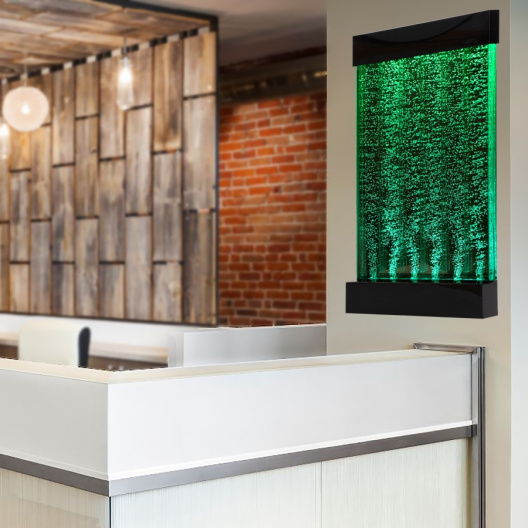
The first factor to consider when choosing technology for sensory rooms is function. A bubble tube may look attractive, but if it is placed in a room for a child who is highly visually sensitive and becomes distressed by movement and colour changes, it may work against the room’s purpose. By contrast, a dimmable light panel with a slow and predictable colour transition may offer the same visual interest in a far safer and more usable way.
Different users need very different outcomes. A child with autism who seeks vestibular and visual input may benefit from interactive colour-changing equipment and movement-based devices. An adult with dementia may respond better to familiar music, soft lighting, and simple cause-and-effect technology. A pupil with ADHD may need technology that supports brief periods of intense focus followed by movement breaks. The equipment must be chosen for the individual, not just the diagnosis.
This is one reason many professionals favour a zoned approach. Instead of treating the room as one immersive experience, the room is divided into calming, alerting, and interactive areas. Technology can then be matched to each zone, reducing the risk that every device competes for attention at once. For those planning broader developmental use, combining sensory exploration with other developmental skills can help shape more purposeful choices.
Match the technology to the user’s sensory profile
Consider sensory thresholds and triggers
One of the most common mistakes in sensory room design is assuming that more sensory input creates better outcomes. For many autistic users, the opposite is true. Bright projections, flashing LEDs, moving images, sounds, and tactile feedback can quickly become too much when layered together. According to the National Autistic Society, many autistic people experience hyper- or hypo-sensitivity to sensory input, which can strongly affect comfort, behaviour, and participation through sensory differences.
A careful sensory profile helps determine whether the user seeks, avoids, or struggles to filter visual, auditory, tactile, proprioceptive, or vestibular input. For a sensory avoider, technology should offer low-demand options such as dimmable wall lights, gentle music, and predictable movement. For a sensory seeker, the room may need switch-activated features, movement-responsive projections, or devices that reward interaction.
Real-world setup decisions often hinge on small details. A school might install a large projector because it seems engaging, only to find that the fan noise irritates one pupil and the constantly changing visuals dysregulate another. In the same space, replacing fast-moving projection content with slower visual scenes and reducing brightness can make the room usable for a wider group.
Think beyond autism alone
Although many sensory rooms are designed with autistic users in mind, choice of technology should also reflect co-occurring or alternative needs. A child with ADHD may need technologies that encourage active engagement, such as responsive floor tiles or switch-access activities. Someone with sensory processing disorder may need highly specific tactile or visual modulation. People with dementia often benefit from simple, familiar, and non-threatening sensory technology rather than highly stimulating equipment.
In therapy settings, users may include children with cerebral palsy, adults with profound and multiple learning disabilities, or older adults in memory care. Technology should therefore be assessed for accessibility, communication demands, and physical interaction requirements. A touchscreen may work well for one group, while a large accessible switch or voice-controlled system may be essential for another.
Choose adjustable and controllable technology
The most valuable feature in sensory room technology is adjustability. Brightness, volume, colour, speed, intensity, and duration should all be controllable. Rooms that rely on fixed-output equipment are far harder to adapt to changing needs, especially in schools and clinics where multiple users share the space.
Dimmable LED systems, programmable scenes, and simple remote or tablet controls allow staff and families to reduce stimulation before distress appears. This matters because self-regulation can change from day to day. A child who enjoys moving coloured lights after school may find the same effects unbearable after a noisy assembly. Technology must be able to meet the user where they are on that day, not where they were last week.
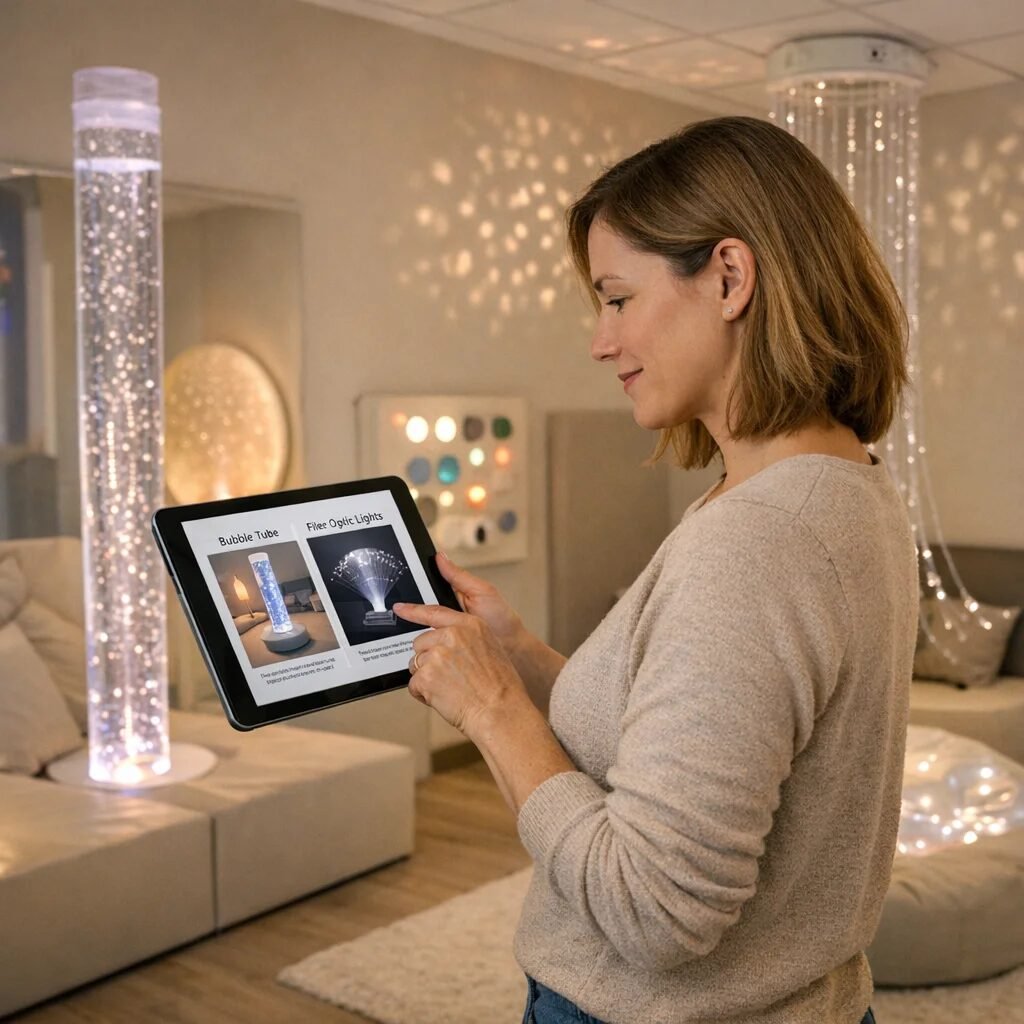
An effective setup might include dimmable sensory LED lights, a controllable speaker system, and one central visual feature such as a bubble tube or projector. A poor setup often includes several devices that can only be switched fully on or off, forcing staff to either flood the room with stimulation or avoid using it altogether.
Ease of control matters just as much as technical capability. If teachers need fifteen minutes to connect apps, reset Wi-Fi systems, and pair Bluetooth devices, the room will be underused. In busy settings, simple control panels and pre-set scenes are usually more effective than complex, feature-heavy systems.
Safety, durability, and maintenance should shape every purchase
Physical safety is non-negotiable
Technology in sensory rooms must be physically safe for the intended users. Cables should be concealed, equipment securely fixed, surfaces easy to clean, and controls positioned accessibly. Any floor-based or wall-mounted interactive technology should be chosen with slipping, impact, and collision risks in mind. Devices that heat up, contain fragile parts, or require constant close supervision are rarely ideal for mainstream school use.
For users who mouth objects, climb, or engage in repetitive forceful behaviour, standard consumer devices often fail quickly. Screens crack, connectors break, and lightweight lamps are pulled down. In those environments, commercial-grade sensory equipment or securely installed alternatives are often a better investment than cheaper gadgets that need frequent replacement.
Where calming pressure and body awareness are needed, low-tech support can work well alongside digital equipment. For example, a weighted blanket may complement visual technology in a quiet regulation area, provided it is used appropriately and according to professional advice for the individual user.
Plan for cleaning, servicing, and lifespan
Maintenance is often overlooked at purchasing stage. Bubble tubes need upkeep. Projectors need lamp replacement or filter care. Touch surfaces need cleaning routines. Soft furnishings near technology can collect dust, and some devices become unreliable if used for long periods each day. A room that looks excellent on installation day can become frustrating within months if maintenance demands are ignored.
A strong purchasing decision includes practical questions: Who will check the equipment weekly? Are replacement parts available? Is the supplier reliable? Can staff troubleshoot basic faults? In many schools, sensory rooms fall into disuse because one key item breaks and no one has budgeted for repair or replacement.
For home users, maintenance may mean choosing fewer devices with more dependable performance. For example, a simple sound machine, dimmable lamp, and tactile seating area may be used consistently, while a more complex integrated system may become difficult to manage. Families often get better long-term value from technology that works reliably every time.
Consider interaction level: passive, active, or cause-and-effect
Technology for sensory rooms can be passive, active, or cause-and-effect based. Passive technology delivers sensory input without requiring user response, such as a bubble tube or slow-moving projection. Active technology encourages movement, exploration, or direct participation. Cause-and-effect technology responds immediately when the user presses a switch, moves, vocalises, or touches a surface.
This distinction matters because different users regulate differently. A passive room may be highly calming for someone recovering from overload, but deeply unsatisfying for a child who needs control and feedback. Cause-and-effect technology is particularly useful for communication development, engagement, and early learning because it helps users understand that their actions change the environment.
For example, a therapy room supporting children with complex needs may benefit from switch-access equipment, allowing one press to activate lights or music. This can build motivation, anticipation, and agency. In contrast, a secondary school calm room for overwhelmed pupils may work better with passive options and minimal response demands.
For tactile and seated regulation, some rooms also benefit from a sensory bean bag chair that creates a clear retreat space within the room. Technology works best when paired with physical cues that help the user understand how the space is meant to be used.
Think carefully about environment: home, school, and therapy settings differ
The same technology will not suit every setting. In a home sensory room, ease of use, available space, family routines, and budget usually shape decisions. Parents often need equipment that can be used quickly during difficult moments, such as after school dysregulation, bedtime struggles, or sensory overload. Compact and intuitive devices are generally stronger choices than large installations that dominate the room.
In schools, sensory technology must cope with heavy use, multiple users, and varying staff confidence. A room may be visited by one pupil for self-regulation, then by a small group for sensory circuits, then by another child for movement breaks. Equipment therefore needs robust controls, clear routines, and enough flexibility to support different goals without long reset times.
Therapy settings usually require the greatest adaptability. Occupational therapists, speech and language therapists, and specialist teachers may use the same room differently depending on the session aim. Interactive panels, switch-access options, projection tools, and sound control can all be useful, but only if they support measurable outcomes rather than acting as background entertainment.
Where a room supports multiple developmental areas, insights from sensory integration room design can help align technology choices with movement, motor planning, and regulation needs rather than focusing on visual effects alone.
Step-by-step advice for choosing the right sensory room technology
A practical buying process prevents expensive mistakes. Rather than ordering equipment piece by piece based on appearance, it helps to work through the room systematically.
Step 1: Define the room’s purpose
Start by deciding whether the room is mainly for calming, sensory exploration, therapy, emotional regulation, movement, or multi-use access. One room cannot effectively do everything unless zoning is planned carefully. If the purpose is unclear, purchases quickly become inconsistent.
Step 2: Identify who will use it
List the age range, diagnoses or needs, mobility considerations, communication styles, and known triggers of users. A room for autistic primary pupils will need different technology from one used by adults with dementia or teenagers with anxiety and ADHD.
Step 3: Prioritise the sensory channels that matter most
Choose whether visual, auditory, tactile, proprioceptive, or interactive technology should lead the design. If visual input already overwhelms users, spending most of the budget on projectors and light effects is unlikely to help. The technology should fill a gap, not amplify a problem.
Step 4: Select one anchor feature and build around it
An anchor feature might be a bubble tube, projection system, interactive wall, or calming audio setup. Once that is chosen, the remaining equipment should support it without competing. A room with one strong focal point usually feels more organised than a room with five unrelated attention-grabbers.
Step 5: Test controls, transitions, and staff use
Before finalising the setup, check whether adults can operate the room quickly and whether transitions between scenes are smooth. Sudden sound changes, colour shifts, or startup delays can create distress, especially for autistic users who depend on predictability.
Step 6: Review after real use
After several weeks, observe what is actually used. Rooms often reveal a pattern: one or two technologies become central, while others are ignored. This is useful information. It shows what genuinely supports regulation and where future spending should go.
Common mistakes when choosing sensory room technology
One frequent mistake is buying for visual impact rather than therapeutic value. A supplier demonstration may make flashing walls and animated projections look exciting, but excitement is not always regulation. In practice, many users benefit more from quiet lighting, soft boundaries, and simple interaction than from immersive spectacle.
Another mistake is failing to provide enough control over sensory intensity. Fixed-colour LEDs, loud speakers, and rapid projection loops can quickly turn the room into a source of stress. The room should reduce uncertainty, not create it.
A third mistake is overlooking the needs of staff and caregivers. If technology is difficult to operate, too fragile, or takes too long to reset between users, it becomes underused. According to the U.S. Centers for Disease Control and Prevention, ADHD affects attention, impulse control, and activity levels in ways that often require structured environments and practical support for ADHD management. Technology should therefore support routine and clarity rather than adding complexity.
There is also a tendency to overfill small rooms. A better sensory setup is often quieter and more deliberate. A small room with adjustable light, calming sound, a soft seat, and one interactive tool can outperform a larger room packed with underused devices. For users needing movement and tactile regulation as part of a broader strategy, resources that explore how sensory work supports other developmental areas can help guide balanced planning.
Cost, value, and when to choose simple over high-tech
High cost does not guarantee suitability. Some of the most effective sensory rooms rely on a small number of carefully chosen technologies used consistently and well. A portable speaker, controlled lighting, vibration cushion, and sensory seating may deliver better outcomes than a large digital system that overwhelms the user or confuses the adults supporting them.
This is especially true in home settings and smaller schools. Budget should be directed first toward equipment that is safe, adjustable, durable, and likely to be used daily. The question is not “What looks most impressive?” but “What will reliably help this person regulate, engage, or recover?”
For example, a simple white noise machine may be more valuable for one child than a complex sound-reactive light system. Likewise, blackout control, visual clutter reduction, and improved seating can transform a room before any major technology is added. The best rooms are designed with restraint and purpose.
Where budgets are larger, it still helps to phase purchases. Start with the core regulation tools, monitor use, gather feedback, and expand only when clear gaps remain. This creates rooms that evolve with real need rather than with catalogue ambition.
Frequently Asked Questions
What is the most important factor when choosing technology for sensory rooms?
The most important factor is how well the technology matches the user’s sensory needs and the room’s purpose. Adjustable, predictable, and easy-to-use equipment is usually more valuable than highly stimulating or complicated devices.
Should a sensory room have lots of lights and interactive equipment?
Not necessarily. Too many competing devices can overstimulate users, especially autistic children or those with sensory processing differences. A smaller number of well-chosen tools often creates a calmer and more effective space.
Which sensory room technology works best for autism?
There is no single best option because autistic people have very different sensory profiles. Dimmable lighting, controllable sound, predictable visuals, and cause-and-effect tools are often useful because they can be adapted to individual preferences and sensitivities.
How can schools choose sensory room equipment that will last?
Schools should prioritise commercial-grade, easy-clean, securely mounted, and simple-to-control equipment. It also helps to choose items with available replacement parts and to train staff in daily use and basic maintenance.
Is expensive sensory technology always better?
No. Expensive equipment can still be inappropriate if it is too stimulating, difficult to use, or poorly matched to users. Good value comes from equipment that is used regularly, safely, and effectively over time.
What type of technology is best for a small home sensory room?
Small home sensory rooms often work best with compact, multi-use items such as dimmable lights, calming audio, soft seating, and one focal sensory feature. Simple technology is usually easier for families to use consistently during daily routines.
How often should sensory room technology be reviewed?
It should be reviewed regularly, especially after the first few weeks of use and whenever the user’s needs change. Observing which items help, which are avoided, and which create stress is the best way to refine the room over time.