Table of contents
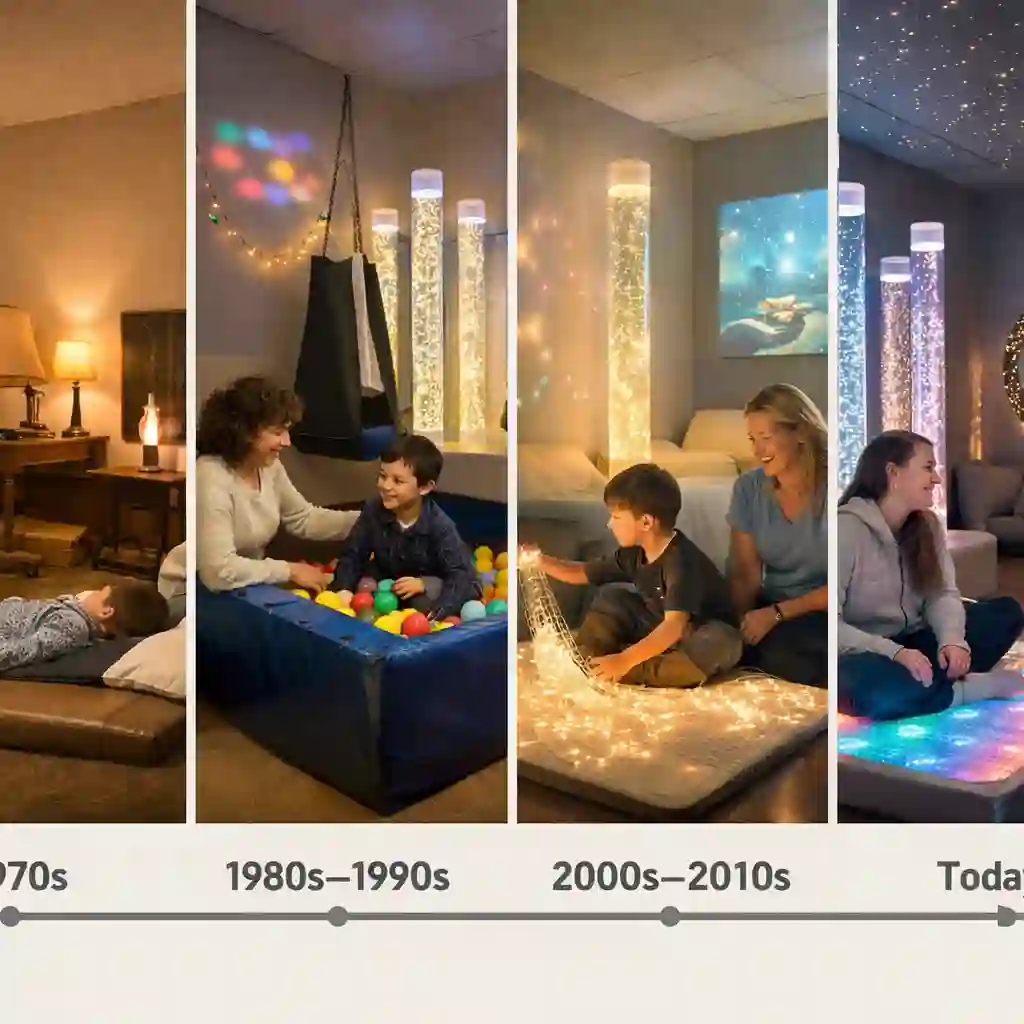
Sensory rooms began as carefully designed therapeutic environments to help people regulate arousal, attention, and emotional state, and they have evolved into highly adaptable spaces used in homes, schools, hospitals, care settings, and clinics. From my perspective as a sensory room designer working with autistic children, learners with ADHD, adults with dementia, and people with sensory processing differences, the history and evolution of sensory rooms is really the story of moving from “specialist equipment in specialist settings” to person-centred design that supports everyday life.
The modern sensory room is no longer just a dark room with lights and fibre optics. It is a responsive environment shaped around individual sensory needs, functional goals, and real-world use. I have seen the biggest improvements happen when families, educators, and therapists understand where sensory rooms came from, why older models sometimes failed, and how today’s best spaces balance calming, alerting, movement, communication, and independence.
Highlights
- Sensory rooms originated in therapeutic and specialist care settings, with early multisensory environments designed to support regulation, engagement, and wellbeing.
- They evolved from fixed “white room” concepts into flexible spaces for autism, ADHD, dementia, sensory processing disorder, and wider additional needs.
- Modern sensory room design prioritises individual need, function, safety, and daily usability over expensive equipment alone.
- The most effective sensory rooms now appear in homes, schools, and clinics, using both high-tech tools and simple practical strategies.
Where sensory rooms began
When people ask me about the history of sensory rooms, I usually start with a simple definition: a sensory room is a purpose-designed environment that uses controlled sensory input to support regulation, attention, relaxation, communication, movement, or therapeutic goals. That definition matters because it separates a genuine sensory room from a playroom with colourful lights. The original idea was never entertainment alone. It was therapeutic access through sensory experience.
Many of the earliest multisensory spaces developed in Europe in the late 20th century, particularly in settings supporting people with profound and multiple learning disabilities. These rooms were designed to offer gentle visual, tactile, auditory, and sometimes olfactory stimulation in a way that could be controlled and repeated. The goal was to create an environment where an individual could explore sensory experiences safely and meaningfully, often with support from staff who observed reactions closely.
The earliest rooms were often low-stimulation compared with many modern versions. In practice, they typically included soft lighting, projected visual effects, simple tactile materials, music, and opportunities for cause-and-effect interaction. Even then, the core principles were strong: predictability, safety, engagement, and responsiveness. Those principles still guide my work today, especially when I design for autistic users who may become overwhelmed by cluttered environments or inconsistent sensory input.
The rise of multisensory environments in specialist care
As sensory rooms gained recognition, multisensory environments became more common in special schools, hospitals, and therapy settings. Staff began to see that learners who struggled in noisy classrooms or clinical spaces often responded more positively in a controlled sensory environment. A child who avoided eye contact might visually track moving lights. A person with limited verbal communication might show clear preference through touch, sound, or gaze. The room became a place where professionals could notice subtle communication cues that were easy to miss elsewhere.
One reason these environments spread was the growing understanding that sensory processing affects behaviour, participation, and distress. Research has shown that sensory features of environments can strongly influence autistic people’s comfort and functioning. For example, the National Autistic Society explains how sensory differences can affect everyday experiences and behaviour in profound ways through its guidance on sensory differences. In my own projects, this understanding has changed how rooms are planned: instead of asking, “What equipment should we buy?” I ask, “What sensory demands is this person facing, and what will help them regulate?”
Early specialist sensory rooms did valuable work, but they were not always used well. I have visited older rooms that had excellent equipment but no purpose. Bubble tubes ran constantly, projectors flashed, music played, and staff brought children in without a clear objective. That setup often produced passive viewing rather than meaningful sensory support. A better approach is to use defined routines: five minutes for settling, one cause-and-effect activity, one tactile choice, and one calm transition out. Good sensory room history includes learning from those mistakes.
How sensory rooms evolved for autism and sensory processing needs
The biggest shift I have seen over time is the move toward individual sensory profiles. In the past, many rooms were designed around the assumption that more sensory input was automatically beneficial. We now know that this is not true. An autistic child who is sensory avoidant may need dim, quiet, and minimal input, while a child with ADHD may benefit from controlled movement, resistance, and intermittent visual focus points. A one-size-fits-all sensory room usually serves nobody especially well.
As awareness of autism and sensory processing disorder grew, sensory rooms became more nuanced. Designers and therapists started to talk about calming versus alerting input, vestibular needs, proprioceptive feedback, and sensory thresholds. I think this changed the field for the better. Instead of filling a room with every possible feature, we began creating zones and purposes. A corner with a weighted blanket and low light might support regulation after school, while a movement area with crash mats and resistance tools could support body awareness before seated learning.
A practical comparison helps here. A poor autism sensory setup might include bright colour-changing lights, noisy wall toys, mirrored surfaces, and no retreat area. It looks impressive but often causes dysregulation. An effective setup might use adjustable lighting, a predictable layout, a clear calm zone, tactile options that can be introduced gradually, and visual boundaries around equipment. The difference is not budget. It is understanding the user.
The expansion into schools, homes, and community spaces
Once sensory rooms showed value in specialist care, they began appearing in mainstream schools, early years settings, libraries, airports, and family homes. This was a major stage in their evolution because it shifted sensory support from “special occasion intervention” to “everyday accessibility”. In schools, I often encourage teams to think beyond a single designated room. A sensory room can be useful, but so can a sensory corner, regulation station, or withdrawal space near the classroom. If a child is expected to walk across a busy school when already dysregulated, the room may be functionally too far away.
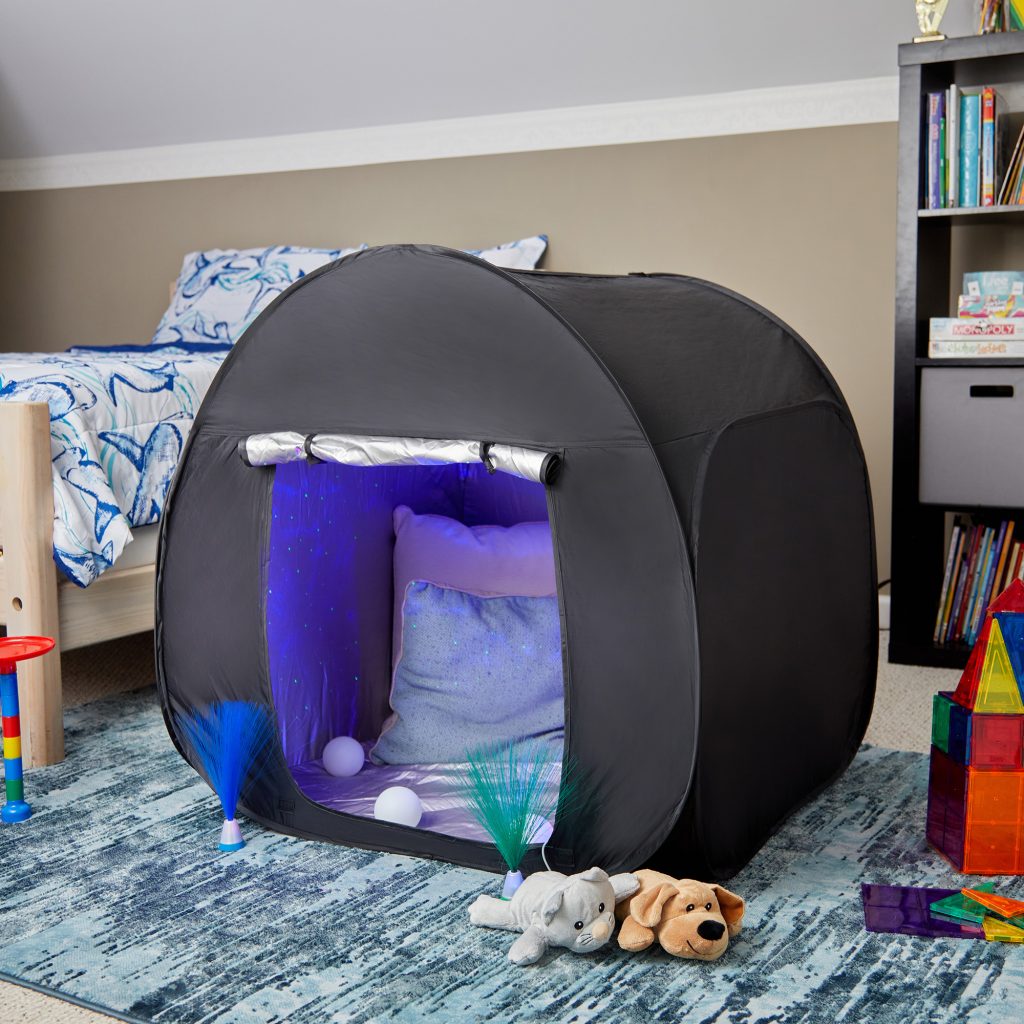
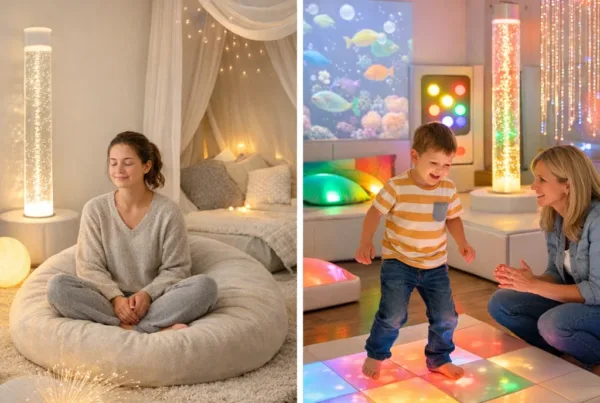
At home, the sensory room evolved even further. Most families do not have a spare therapy suite, so the modern version may be a converted bedroom corner, under-stairs retreat, garden pod, or section of a lounge. The best home sensory spaces are practical, durable, and easy to reset. I have worked with parents who achieved excellent results using blackout curtains, floor cushions, a simple projector, and a set of sensory LED lights rather than buying multiple large units that became visually overwhelming.
Community settings also changed the purpose of sensory rooms. In museums, shopping centres, and public venues, these spaces often function as decompression rooms rather than activity rooms. That distinction matters. A decompression room is designed for reducing input and restoring regulation. It should not feel like an arcade. This evolution reflects a wider cultural shift toward inclusion: adapting environments so people can stay, recover, and participate rather than leave altogether.
How technology changed sensory room design
Technology has transformed sensory rooms, but not always in helpful ways. Early multisensory equipment was often simple and robust. Today, digital controls, wireless switches, interactive projections, and app-connected systems allow much more personalisation. In the right hands, that is extremely powerful. A therapist can pair a preferred colour with communication work, use cause-and-effect software for engagement, or create a consistent transition routine for a child who struggles with unpredictability.
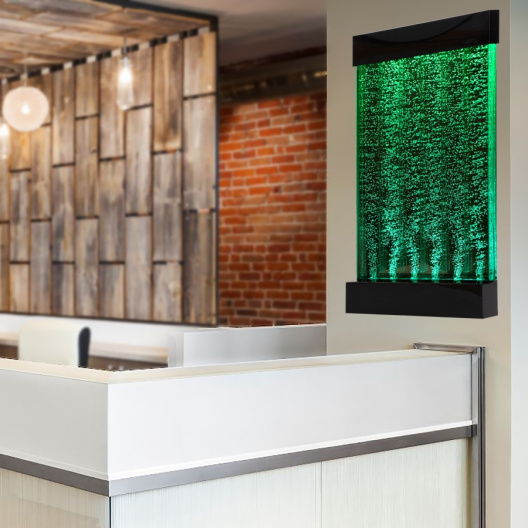
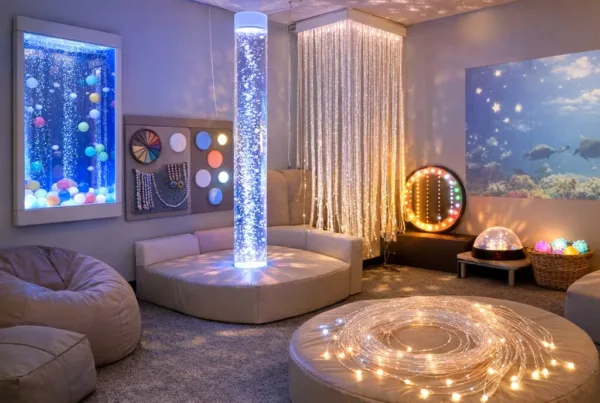
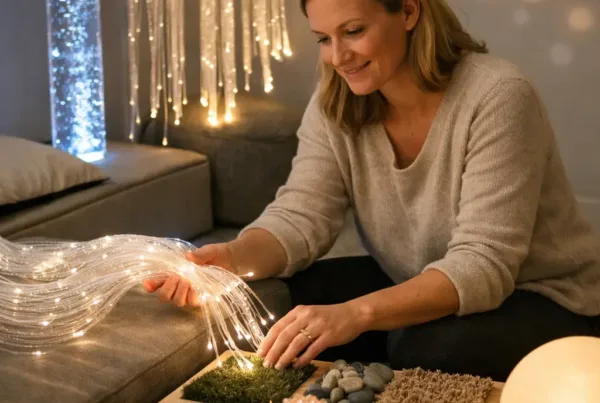
At the same time, I often advise clients not to confuse technology with effectiveness. Some of the most successful rooms I have designed use a mix of high-tech and low-tech tools. A sensory bubble tube can be excellent for visual tracking and calm focus, but only if it is positioned where the user can engage without glare, crowding, or competing noise. Likewise, a fibre optic lamp may support tactile exploration and visual attention, but it should not be treated as a cure-all.
Technology also helped sensory rooms become more measurable. In schools and clinics, teams now track outcomes such as time to regulate, attention span after use, frequency of distress behaviours, and transition success. This is a significant improvement in the evolution of the field. Rather than saying “the room seems useful”, we can ask “what changed, for whom, and under what conditions?” That leads to better planning and more efficient spending.
Sensory rooms beyond childhood: dementia, mental health, and adult support
Another major stage in sensory room history is their use beyond paediatrics. Many people still imagine sensory rooms as spaces only for children, but I have worked on adult and older-adult environments where sensory design had enormous value. For people living with dementia, familiar music, tactile objects, soft lighting, and reduced environmental noise can improve comfort and orientation. The Alzheimer’s Society highlights how sensory changes can affect people with dementia and shape their experience of daily environments in its information on senses and dementia.
For adults with profound disabilities or acquired brain injury, sensory rooms can support alertness, comfort, communication, and relational interaction. For teenagers and adults with autism, the room often works best when it feels age-respectful. That might mean swapping cartoon visuals for clean lighting, neutral colours, noise reduction, and seating that offers security without appearing childish. A supportive bean bag chair can be ideal in these settings if chosen for posture, cleanability, and room size.
Mental health settings have also adapted sensory room principles, particularly for de-escalation and emotional regulation. In these spaces, the design usually leans toward grounding rather than stimulation. Soft textures, breathing cues, heavy items, muted light, and visual simplicity matter more than spectacle. This reflects one of the most useful lessons from the evolution of sensory rooms: the room must match the goal.
What modern sensory rooms do better
The best sensory rooms today are not defined by their equipment list. They are defined by intentional design. Modern practice is much better at identifying who the room is for, when it should be used, and what success looks like. I use a simple planning framework: user, trigger, goal, environment, equipment, routine. If a school cannot answer those six points, I know the room may end up underused or misused.
Modern rooms are also better at balancing stimulation and refuge. In older designs, everything was often visible at once. Now I prefer layers: one main visual focus, one tactile area, one movement option if appropriate, and one retreat space. This gives the user some control. For autistic users especially, control over exposure is often more regulating than the sensory input itself.
We also understand transitions better. A sensory room should not start and stop abruptly. If a child enters from a loud corridor into a dark room with flashing lights, that is not a smooth transition. Equally, if they leave the room highly relaxed and go straight into a noisy task, the benefit may disappear. I recommend visual schedules, short settling periods, and an exit routine with lower-intensity cues. If you need ideas for practical use once the room is built, this guide to common sensory room activities is a helpful starting point.
Step-by-step: how I apply the lessons of sensory room history in a new setup
When I design a sensory room now, I treat the history of the field as a checklist of what to preserve and what to avoid. The therapeutic roots remind me to stay purposeful. The over-stimulating phase reminds me not to overload the space. The move toward person-centred design reminds me to begin with the user rather than the catalogue.
Step 1: Start with the person, not the products
List the individual’s sensory preferences, triggers, and regulation patterns. Are they seeking movement? Avoiding sound? Requiring deep pressure? Becoming distressed during transitions? A child who covers their ears and hides needs a different room from a child who crashes into furniture and cannot settle.
Step 2: Define the room’s main function
Choose one primary aim and one secondary aim. For example: primary aim, calming after overload; secondary aim, supporting communication choices. If you try to make the room simultaneously a trampoline room, light show, therapy gym, and homework zone, you will dilute its effectiveness.
Step 3: Build the environment in layers
Control light first, then sound, then seating, then equipment. Lighting has a huge influence on comfort. The NHS notes that autistic people may experience heightened sensory sensitivity, including responses to environmental stimuli such as light and sound in its autism guidance. I usually begin with dimmable lighting or blackout options before adding anything interactive.
Step 4: Add only equipment with a clear purpose
Each item should answer a question. What is it for? Who will use it? How often? Under what level of supervision? This is where many sensory rooms go wrong. A light wall may look exciting, but if nobody uses cause-and-effect activities or visual tracking, it may become expensive decoration.
Step 5: Test, observe, and adapt
Run short sessions and record responses. Did the person stay longer? Settle faster? Request an item? Avoid a corner? Modern sensory room design is not static. The room evolves with the user, which is one of the strongest legacies of the field’s development.
Common mistakes that still appear in sensory rooms
The most common mistake I still see is sensory overload disguised as support. Too many lights, too many colours, too many sounds, and too many competing focal points can make a room unusable. This is especially challenging in schools, where staff may feel pressure to fill every wall. Leaving visual space is not wasted design. It is a regulation tool.
Another mistake is poor zoning. If a calming bean bag sits next to a vibrating toy and a bright projector, the body receives mixed messages. I prefer to separate calm input from active input, even in small rooms. A soft mat, enclosed corner, or change in wall colour can create enough distinction to guide use.
The third mistake is lack of staff or family training. Even the best room can fail if adults use it only after a crisis has escalated, or if they introduce every item at once. The room should be part of a wider sensory strategy, not a last resort.
Frequently Asked Questions
When were sensory rooms first developed?
Sensory rooms were first developed in specialist therapeutic and care settings in the late 20th century. Early multisensory environments were created to support people with profound learning disabilities through controlled sensory experiences. Over time, they expanded into schools, homes, and healthcare settings.
What is the original purpose of a sensory room?
The original purpose of a sensory room was to provide a safe, structured environment for sensory engagement, regulation, and therapeutic interaction. These spaces were designed to help users explore sensory input in a controlled way. They were never meant to be entertainment rooms alone.
How have sensory rooms changed over time?
Sensory rooms have evolved from fixed multisensory rooms with general stimulation into personalised environments based on individual sensory needs. Modern rooms focus more on function, regulation, and measurable outcomes. They are also used in far more settings, including homes and dementia care.
Are sensory rooms only for autistic children?
No, sensory rooms are used by many different groups, including people with ADHD, sensory processing disorder, profound disabilities, dementia, anxiety, and acquired brain injuries. The design should always be tailored to the user. What helps one person may overwhelm another.
What makes a modern sensory room effective?
An effective modern sensory room has a clear purpose, controlled sensory input, and equipment chosen for specific goals. It should match the user’s sensory profile and include calm transitions in and out of the space. The best rooms are simple, flexible, and easy to use consistently.
Can I create a sensory room at home without a large budget?
Yes, many successful home sensory spaces use simple tools such as adjustable lighting, soft seating, blackout curtains, tactile items, and a calm corner layout. You do not need a dedicated room or expensive interactive systems to create a useful sensory environment. The key is matching the setup to the person’s needs.
What is the difference between a sensory room and a calm room?
A sensory room can include calming, alerting, tactile, visual, and movement-based experiences depending on its purpose. A calm room is more specifically designed to reduce input and support de-escalation or rest. Many modern sensory rooms include a calm zone within them.
The history and evolution of sensory rooms shows a clear pattern: the more closely we design around real people, real contexts, and real sensory needs, the more effective these spaces become. The strongest rooms I have seen are not the most expensive or the most dramatic. They are the ones that understand the person using them and translate that understanding into an environment that genuinely helps.