Table of contents
Designing a sensory room at home on a budget starts with matching the space to the person’s sensory needs, then choosing a few high-impact, low-cost items instead of trying to copy a full clinical setup. A successful budget sensory room uses controlled lighting, safe seating, tactile options, and clear zones for calming or movement, all without needing expensive fixed installations.
Professionals who plan home sensory spaces for autistic children, learners with ADHD, people with sensory processing differences, and older adults with dementia tend to follow the same principle: function first, features second. The most effective low-cost rooms are rarely the flashiest. They are carefully chosen, easy to use, and tailored to the person who will rely on them most. For a broader foundation, families and practitioners often benefit from understanding what a sensory room is and how it works before buying equipment.
Highlights
- A budget sensory room works best when it is built around specific sensory needs, not trends or gadgets.
- Low-cost lighting, soft seating, tactile tools, and a simple calm zone can transform a spare corner or bedroom.
- Safety, dimmability, storage, and overstimulation control matter more than filling the room with equipment.
- Starting small and observing how the user responds prevents wasted money and creates a room that actually helps.
What a budget sensory room should actually do
A sensory room is a controlled environment designed to support regulation, engagement, rest, focus, or sensory exploration. In a home setting, that may mean helping an autistic child recover after school, giving a child with ADHD a safe movement outlet, supporting a person with sensory processing disorder during overwhelm, or creating a reassuring quiet area for someone living with dementia.
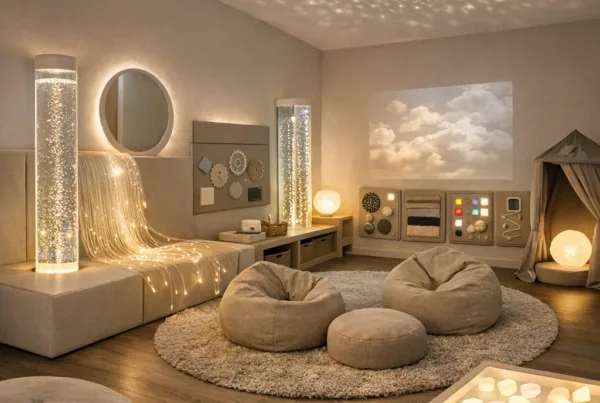
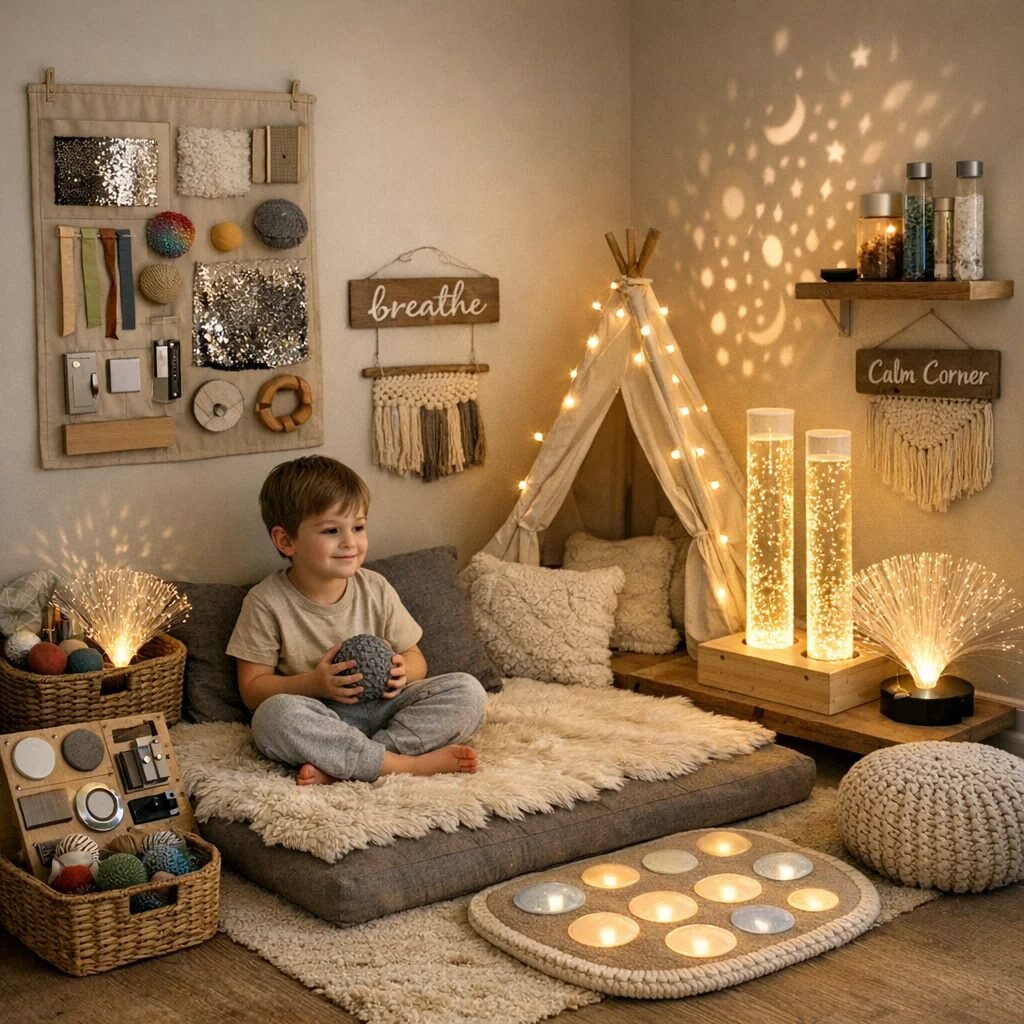
That definition matters because many low-budget setups fail for one simple reason: they are built for appearance instead of purpose. A room filled with bright colour-changing gadgets can look impressive online, yet feel chaotic and unusable in real life. By contrast, a modest corner with blackout curtains, a beanbag, one calming projector, and a basket of tactile tools can become the most used space in the home.
Good sensory design answers practical questions. Does the person need to calm down or wake up? Do they seek movement, pressure, touch, light, or sound? Are they easily overwhelmed by flashing lights or noise? Once those answers are clear, spending becomes easier to control because the room only includes what serves a real need.
Research supports this targeted approach. The UK’s National Autistic Society explains that many autistic people experience both hypersensitivity and hyposensitivity to sensory input, which can affect everyday regulation and comfort according to the National Autistic Society. That is why individualisation matters more than a fixed shopping list.
Start with assessment before buying anything
Identify regulation goals
The first step is to define what the sensory room needs to achieve. For one child, the goal may be calming before bedtime. For another, it may be safe sensory play after school. In a therapy or home-education setting, the room may need to support short bursts of attention between tasks. A parent or practitioner who writes down two or three core goals will make far better choices than someone who starts by browsing products.
A useful way to approach this is by observing the person across a week. Note when dysregulation appears, what triggers it, and what seems to help. Common patterns include covering ears in noisy environments, seeking pressure by squeezing into cushions, pacing, crashing onto furniture, staring at moving lights, or becoming distressed by clutter. These clues reveal what the room should include and what it should avoid.
Consider sensory profile and age
A toddler, a school-age child, a teenager, and an adult will not use the room in the same way. A young child may benefit from floor-based play, climbing cushions, and tactile baskets. A teenager may prefer privacy, dim lighting, headphones, and heavier calming input. Someone with dementia may need familiar objects, soft lighting, and simple uncluttered choices rather than novelty.
Budget design also means planning for longevity. Buyers often overspend on age-limited toys instead of choosing adaptable staples. A soft floor mat, a projector, storage baskets, visual calm cues, and a cocoon-like corner remain useful for years, while many novelty items lose value quickly.
Choose the right space, even if it is small
A home sensory room does not have to be a dedicated spare room. Some of the most practical setups are created in a bedroom corner, under a staircase, in a section of the living room, or inside a pop-up den. The key requirement is not size but controllability. The area should allow light, sound, and clutter to be managed easily.
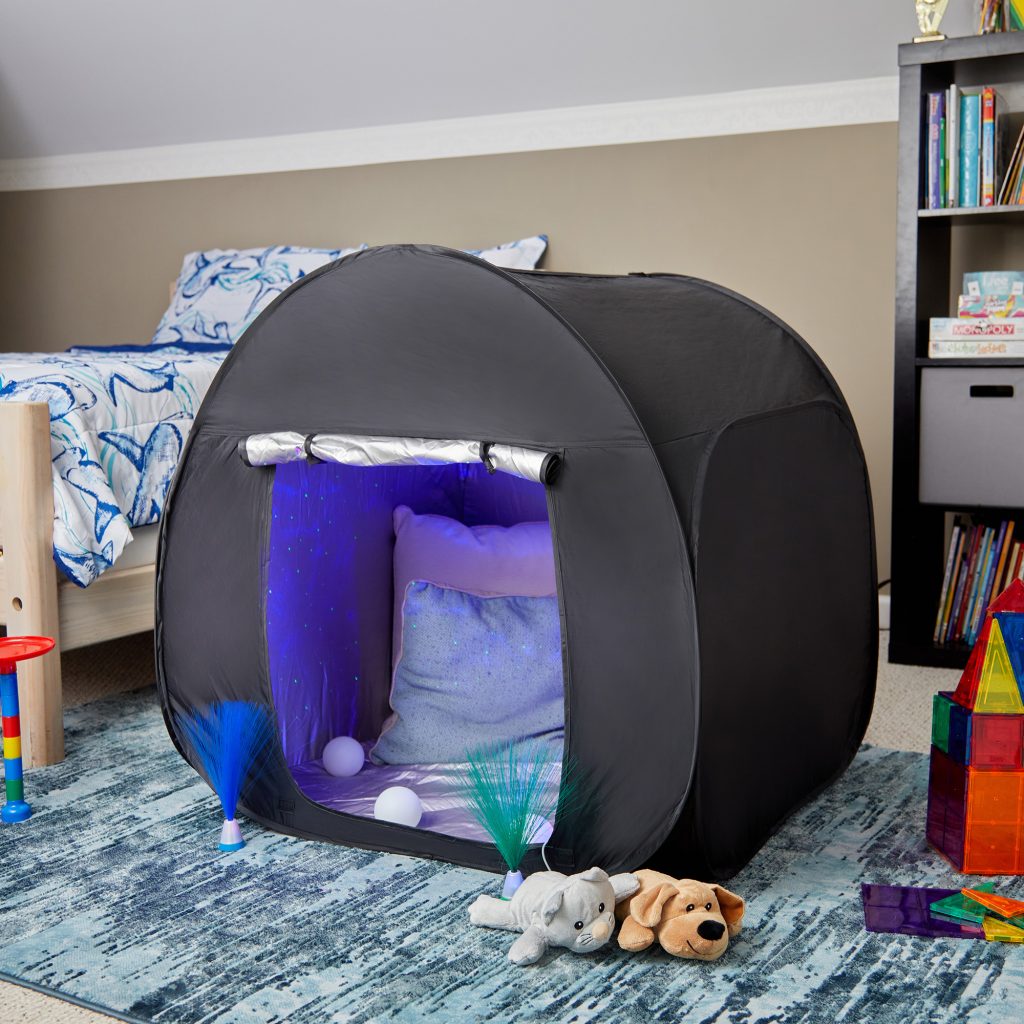
When budgets are tight, the best space is usually the one that already feels naturally calm. A box room with a door may work well, but so can a corner screened with curtains or a small tent. For children who need a sense of enclosure, using a Sensory Tent can be a cost-effective way to create a dedicated retreat without renovating a whole room.
An effective setup allows for two contrasting states: calm and activity. Even in a very small room, one side can be the winding-down area with soft seating and gentle lights, while the other can hold movement tools such as floor cushions, stepping stones, or a therapy ball. Poor setups blur everything together, leaving no clear signal to the user about what the space is for.
Clutter is one of the most common hidden problems. Open shelves packed with bright toys can make a sensory room feel busier than the rest of the house. Closed storage, labelled baskets, and rotating only a few items at a time keeps the room usable and reduces visual overload.
Build the room in layers, not all at once
Layer 1: light control
Lighting usually delivers the biggest sensory impact for the lowest cost. Overhead lights are often too harsh, especially for autistic users and those with sensory sensitivities. Switching to softer, indirect light can immediately improve the room. Blackout curtains or even temporary window coverings can reduce visual stress and allow calming lights to stand out properly.
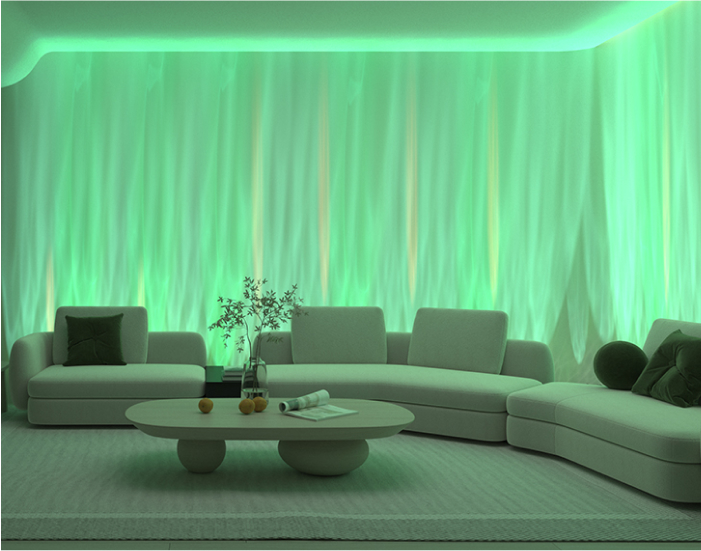
Projectors and ambient lighting are often more budget-friendly than large specialist installations. A ceiling-based effect from a Galaxy Projector can create a calm visual focus for far less than wall-integrated systems, and it can be moved from room to room if needed.
The mistake to avoid is buying lights with fast flashing sequences, loud built-in music, or colours that cannot be dimmed. Calming sensory lighting should be adjustable and predictable. A room that changes too quickly may trigger distress rather than regulation.
Layer 2: soft landing and seating
A sensory room needs at least one reliable place to sit, curl up, or be still. This does not require specialist seating. Floor cushions, foam mats, a beanbag, or a modular children’s sofa can all work. The best low-cost seating supports multiple uses: lounging, deep pressure from surrounding cushions, building dens, or creating boundaries within the room.
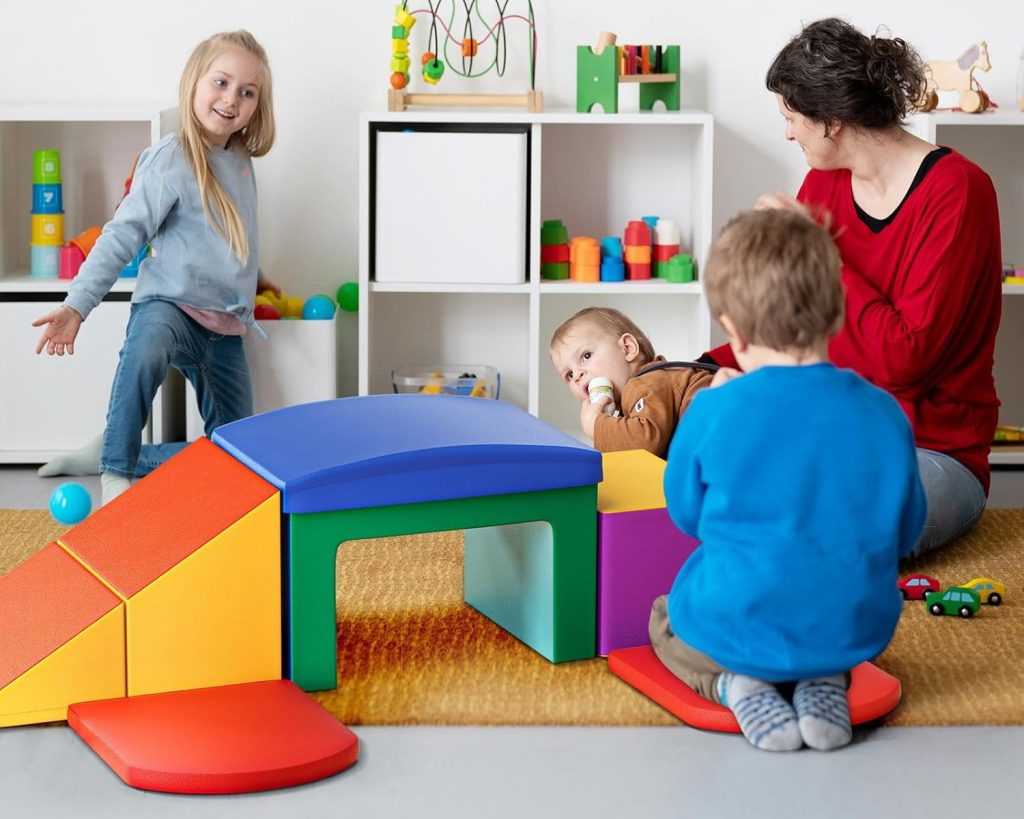
For families wanting flexibility, a Kids Modular Play Sofa often provides better value than several separate pieces because it can become a seat, tunnel, crash pad, or den base. That is especially useful in home sensory rooms that need to adapt for siblings or changing needs.
Homes with movement seekers should place soft flooring under active equipment. NHS guidance around falls prevention and safer home environments for vulnerable users repeatedly reinforces the value of reducing trip hazards and impact risks through practical home safety measures. In sensory rooms, that means securing cables, anchoring unstable items, and giving active users a safe landing area.
Layer 3: tactile and hand-based tools
Tactile input is often the cheapest sensory category to add. A basket containing a few carefully chosen tools can do more than an expensive shelf of random items. Include contrasting textures such as soft, smooth, stretchy, bumpy, or resistant. Rotating tools every few days keeps novelty high without additional cost.
Small regulation tools are especially useful when the room is not available, because they can travel to school, the car, or appointments. A compact item such as the Schylling NeeDoh Nice Cube can support hand squeezing, focus, and self-regulation without taking up space or budget.
Step-by-step: how to set up a budget sensory room
Creating the room in a fixed order prevents overspending and helps each purchase earn its place.
- Clear the space completely and remove anything visually busy, noisy, or breakable.
- Test the lighting at different times of day and block excess natural light if needed.
- Add soft flooring or a soft base area first.
- Place one main calming seat or retreat space.
- Introduce one visual feature, such as a projector or bubble lamp.
- Add a small basket of tactile tools and one movement option if needed.
- Observe use for one to two weeks before buying anything else.
This slow-build approach mirrors what experienced therapists do in treatment spaces: they watch for response before increasing sensory load. If a child spends twenty minutes every evening inside a tent with a projector and cushion, that setup is already successful. There is no need to keep adding equipment just because floor space remains.
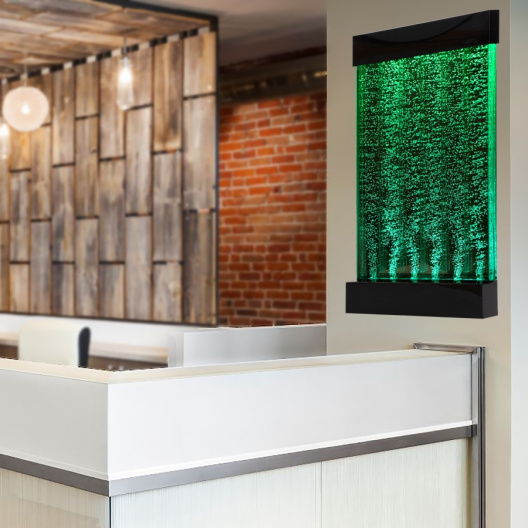
A visual feature can be especially helpful when the goal is sustained calm attention. A moving water effect from a Bubble Tube Tank Vortex Tower can offer steady visual feedback without requiring constant interaction, making it useful for quiet regulation periods in home, school, or therapy spaces.
Step-by-step setup also makes budgeting easier. Many families begin with under £100 by using existing cushions, a corner of a bedroom, and one carefully chosen light feature. Additional movement tools or wall activities can then be added gradually as needs become clearer.
Budget ideas for different sensory needs
For autism and sensory overload
Autistic users often benefit from predictability, reduced glare, and access to retreat. Useful low-cost choices include neutral wall colours, consistent routines for room use, low sound, and enclosed seating. A tent, soft rug, weighted blanket if appropriate, and one dimmable light source often work better than multiple competing effects.
A poor setup for this profile would include flashing strips, strong synthetic scents, loud musical toys, and open bins of mixed textures. An effective setup gives clear control: lights can be turned off, tools are organised, and there is a defined escape spot. The difference is not price. It is sensory respect.
For ADHD and sensory seeking
Children with ADHD or high movement needs may need more active input. Budget-friendly additions include floor markers, stepping stones, a tunnel, body sock, or a crash corner made from old sofa cushions. The room should still include a calm-down zone, but it should not be entirely passive.
For this profile, a room that only contains seated calming objects may be underused. Movement seekers often regulate through action first, then settle. A bounce-friendly peanut ball, a tunnel pathway, and heavy cushions to push or carry can make the space far more effective than decorative lighting alone.
For dementia or older adults
When a sensory room supports someone with dementia, low budget should never mean confusing design. Simplicity matters. Use warm lighting, familiar music if tolerated, tactile blankets, memory objects, and straightforward seating with easy access. Strong visual clutter, mirrored distortions, or rapidly changing colour effects can be disorienting.
The Alzheimer’s Society notes that dementia currently affects around one million people in the UK according to Alzheimer’s Society. For many families, a home sensory space is less about stimulation and more about reassurance, comfort, and reducing distress.
Common mistakes that waste money
The most expensive mistake is buying too much too early. A room filled in one shopping session often ends up containing duplicate sensory experiences, low-quality gadgets, or items the user actively dislikes. This is particularly common when families buy “sensory bundles” without checking whether the person seeks or avoids those inputs.
The second mistake is confusing stimulation with regulation. More lights, more textures, and more sound do not automatically improve a sensory room. For hypersensitive users, they can make the room unusable. A calm room is not an empty room, but it does need clear sensory boundaries.
Another common issue is ignoring safety and durability. Lamps that overheat, unsecured cords, unstable shelves, and glass-based visual items can quickly turn a supportive room into a risky one. Families should also think about chewing, throwing, climbing, and toileting needs when choosing materials and placement.
Finally, many people forget maintenance. Bubble features need cleaning, fabric items need washing, and fidgets go missing. A realistic low-budget room uses equipment that can be managed easily in everyday life rather than creating a maintenance burden that leads to disuse.
How to make the room work long term
The best sensory rooms evolve. A setup that works for a five-year-old may not suit a ten-year-old, and a child’s sensory profile may change with stress, sleep, school demands, or therapy progress. For that reason, budget rooms should be modular. Portable lights, movable seating, stackable storage, and loose sensory tools make updates simple.
Practitioners often recommend reviewing the room every few months. Which items are used repeatedly? Which items are ignored? What triggers still happen outside the room? Those answers help refine the setup. In some homes, the room gradually becomes less about equipment and more about routine, predictability, and a safe emotional reset point.
It also helps to teach the room’s purpose. A sensory room should not become a place of punishment or isolation. It works best when introduced as a supportive option: a place to feel better, get calm, move safely, or take a break. Adults modelling calm use of the room often improves acceptance and independence over time.
Frequently Asked Questions
How much does it cost to build a sensory room at home on a budget?
A simple home sensory room can be started for a relatively modest amount if existing furniture is reused. Many families begin with soft seating, controlled lighting, and a few tactile tools, then add more over time rather than buying everything at once.
What is the cheapest way to make a sensory room?
The cheapest approach is to convert a corner of an existing room using cushions, a rug, storage baskets, and one calming light source. A small enclosed space, reduced clutter, and clear sensory purpose matter more than expensive specialist equipment.
What should be in a budget sensory room?
A budget sensory room should include a calm place to sit or lie down, soft lighting, a few tactile items, and safe storage. If the user seeks movement, one active element such as a tunnel, ball, or crash cushion area can also be included.
Can a sensory room fit in a bedroom or small home?
Yes, a sensory room can work in a bedroom corner, landing area, or part of a living room if the space can be controlled. Small, well-zoned setups are often more effective than larger rooms that are cluttered or overstimulating.
Are sensory rooms only for autistic children?
No, sensory rooms can support autistic children, people with ADHD, sensory processing disorder, anxiety, learning differences, and dementia. The design should always be matched to the user’s individual sensory profile rather than a diagnosis alone.
What colours are best for a home sensory room?
Soft, muted colours usually work best because they reduce visual stress and help calming features stand out. Very bright patterns or highly contrasting décor can be overstimulating, especially for users who are visually sensitive.
How can a parent tell if the sensory room is working?
A sensory room is working if the user chooses it regularly, stays there comfortably, and shows signs of better regulation before or after use. Reduced meltdowns, easier transitions, calmer bedtime routines, or improved focus are all useful indicators.