Table of contents
Sensory integration can be facilitated in sensory rooms by designing the space to deliver the right type, intensity, and timing of sensory input for the individual using it. In my experience designing sensory environments for autistic children, pupils with ADHD, adults with dementia, and people with sensory processing difficulties, the most effective sensory rooms are never just collections of equipment—they are carefully planned spaces that help the nervous system organise, regulate, and respond more effectively to touch, movement, sound, light, proprioception, and body awareness.
When I create or review a sensory room, I focus on one core question: does this room help the person feel calmer, more alert, more organised, and more able to engage? That is the practical heart of sensory integration. A well-designed room can support regulation, transitions, communication, attention, and emotional safety, but only when every feature has a clear purpose and works together as part of a sensory plan.
Highlights
- Sensory integration in a sensory room works best when equipment is chosen to match the user’s sensory profile rather than filling the room with stimulating products.
- Balanced input across movement, touch, vision, sound, and deep pressure can improve regulation, focus, and participation at home, in schools, and in therapy settings.
- Zoning the room into calm, active, and transition areas helps prevent overload and makes sessions more predictable and effective.
- The best results come from observing responses, adjusting the setup, and using the room with clear goals rather than as unstructured free time.
What sensory integration means in a sensory room
Sensory integration is the brain’s ability to receive, organise, and interpret sensory information so a person can respond in a functional way. That includes not only what we see, hear, touch, taste, and smell, but also vestibular input from movement and balance, and proprioceptive input from muscles and joints. In a sensory room, my role is to make those inputs easier to process by controlling how much stimulation is presented, how it is delivered, and what the user is expected to do within the space.
This matters because many people who use sensory rooms are not simply seeking stimulation. They may be over-responsive to noise, under-responsive to movement, constantly seeking pressure, or struggling to shift from one state to another. An autistic child might need deep pressure and low lighting to reduce overload after school. A pupil with ADHD may benefit from structured movement and body-based input before seated work. A person with dementia may need gentle visual cues and soft music to reduce agitation. Sensory integration support is effective when the room meets those needs precisely.
I often explain it this way to parents and teachers: a sensory room should act like a sensory translator. Instead of bombarding the nervous system, it should deliver input in a manageable form that helps the brain organise itself. If you want a broader overview of purpose, what a sensory room does for a child is closely linked to how sensory integration is supported in practice.
Start with the sensory profile, not the equipment list
The biggest mistake I see is starting with products instead of needs. People often buy bubble tubes, projectors, bean bags, and LED strips because they look like sensory room essentials. Sometimes they are useful, but only if they match the sensory profile of the person using the room. Before I specify any equipment, I look at patterns: what calms the person, what triggers stress, how they respond to movement, what they seek repeatedly, and which environments help them function best.
For example, a child who covers their ears, avoids bright spaces, and becomes distressed by visual clutter usually needs a low-arousal room with predictable lighting, minimal sound bleed, and tactile input introduced gently. By contrast, a child who crashes into furniture, fidgets constantly, and struggles to stay engaged may need more active proprioceptive and vestibular opportunities, such as resistance activities, structured movement, and deep-pressure seating. These are two very different sensory setups, and treating them the same often leads to poor outcomes.
In schools and therapy spaces, I recommend building a short sensory profile sheet before setting up the room. Include preferred inputs, aversions, signs of overload, signs of under-arousal, communication cues, and session goals. That document becomes the foundation for the room layout and also helps staff stay consistent.
Design the room in sensory zones
One of the most effective ways I facilitate sensory integration is by zoning the room. A single undifferentiated space often becomes confusing: lights flash in one corner, music plays from another, and movement equipment sits beside a calming den. That arrangement tends to dysregulate rather than organise sensory processing. Zoning creates structure and tells the nervous system what each part of the room is for.
Calm regulation zone
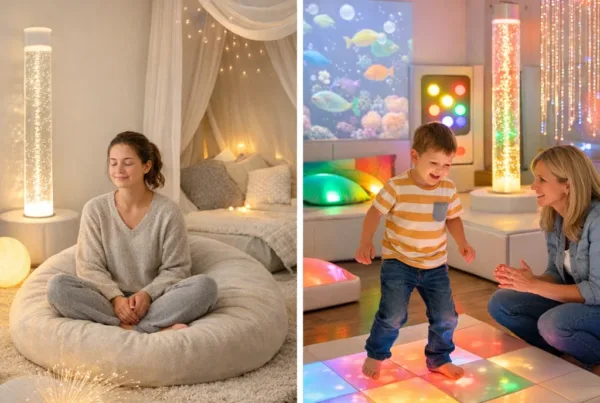
This area is for down-regulation and recovery. I usually keep colours muted, lighting soft, and sound optional. Deep-pressure items, enclosed seating, and slow-moving visual elements work well here. A weighted blanket or cocoon-style bean bag can be very effective for children and adults who need body awareness and emotional containment.
This zone should not compete with active features. I avoid fast-changing projectors, loud speakers, and highly reflective surfaces here. If a person enters the room already overloaded, the calm zone needs to reduce demands immediately. That first minute matters.
Active sensory-motor zone
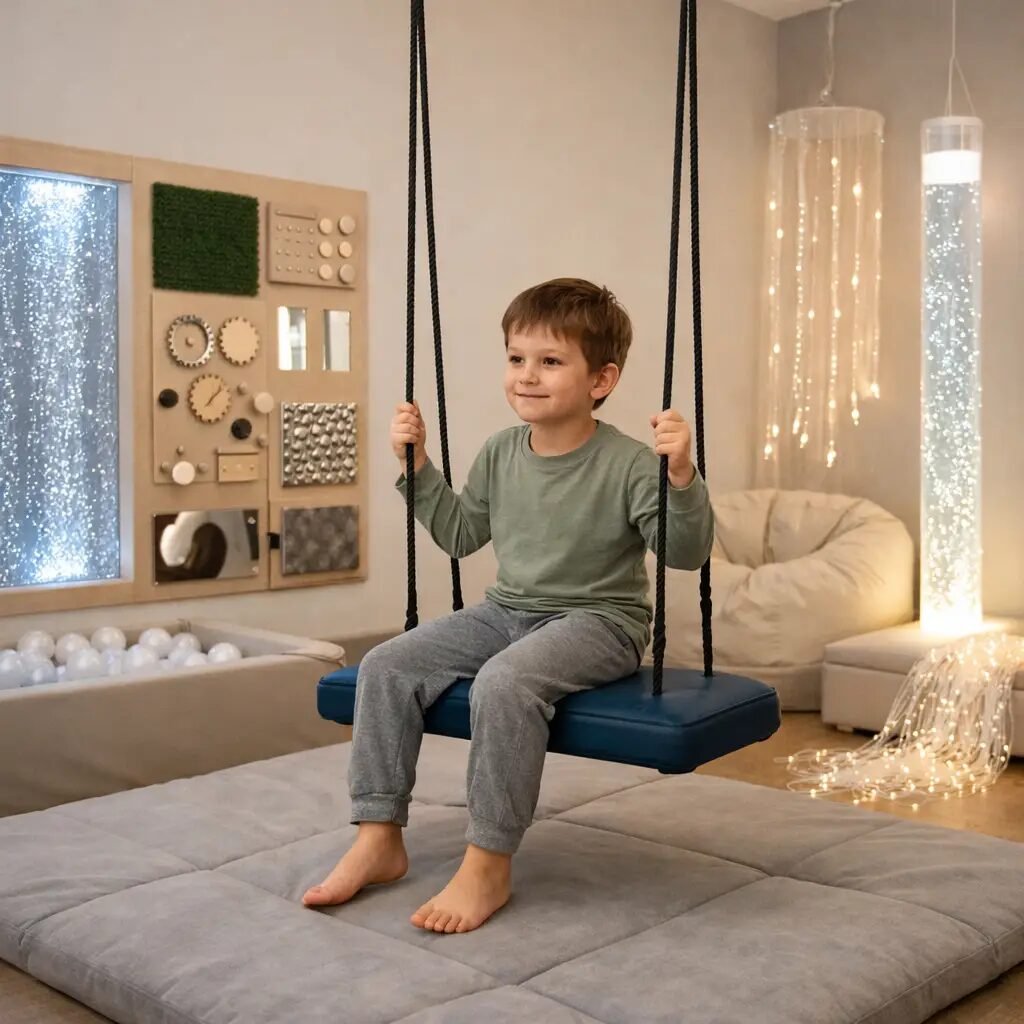
This is where I place equipment for movement, heavy work, tactile exploration, and interactive play. Depending on the space, that might include crash mats, wall push activities, stepping stones, resistance bands, tactile boards, or a small platform swing. The goal is not random activity; it is purposeful input that helps the person become more organised and ready for learning, communication, or rest.
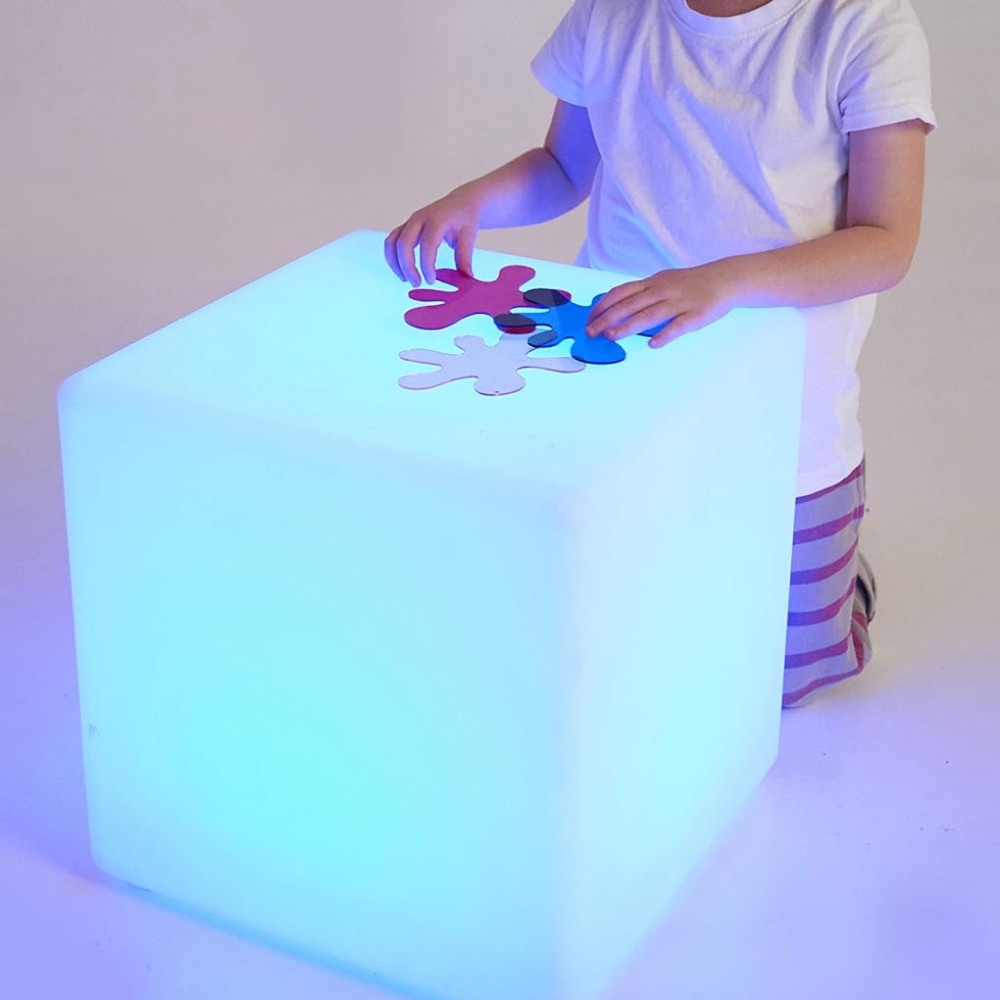
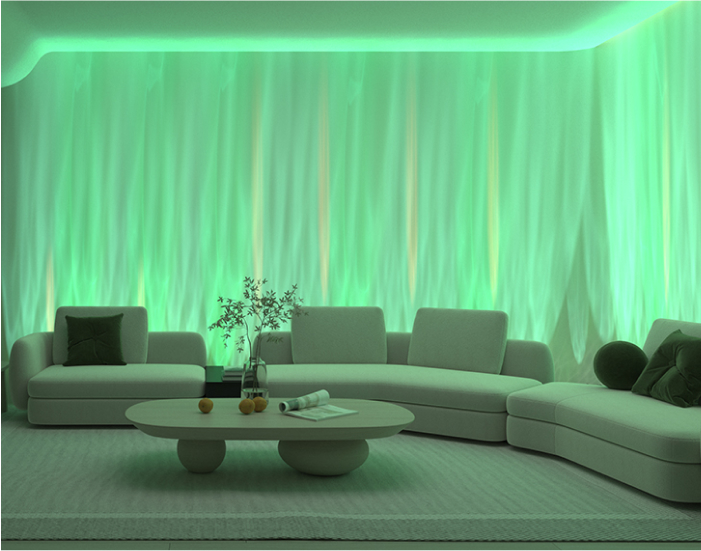
For users who seek visual input in a regulated way, I may include sensory LED lights with controllable brightness and colour, rather than fixed, intense lighting. Adjustable equipment gives you far more control over the sensory load.
Transition zone
This is the area many rooms forget, but it is essential. Transitioning into and out of sensory input can be hard, especially for autistic users and those with anxiety. I like to include a simple visual schedule, a consistent entry routine, and one grounding activity near the door, such as wall pressure, a breathing prompt, or a tactile object basket.
Without a transition zone, users can move straight from a noisy corridor into a highly stimulating room, or from deep relaxation back into a demanding classroom, and that sudden shift can undo the benefit of the session.
Use sensory input strategically, not all at once
A sensory room facilitates integration best when input is layered carefully. Too much simultaneous stimulation is one of the main reasons rooms fail. I regularly walk into spaces with moving lights, background music, projected images, scented diffusers, and tactile bins all operating together. For some users, that does not support integration at all—it creates competition between sensory channels.
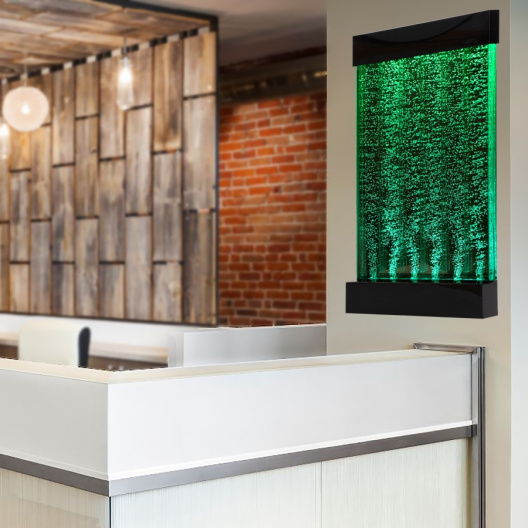
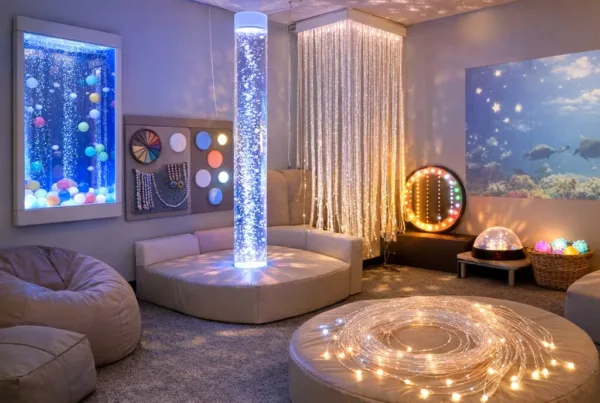
I prefer to introduce one primary input at a time, with one secondary support if needed. For a child who is dysregulated after lunch, I might begin with proprioceptive input through pushing, pulling, or deep pressure. Once the body is more organised, I may add a slow visual focus point such as a sensory bubble tube to support attention and calm breathing. This sequencing often works better than starting with visual stimulation first.
Comparison matters here. An effective sensory setup is controlled, predictable, and responsive to feedback. A poor setup is impressive to look at but difficult to tolerate. If the user becomes more agitated, avoids the room, or leaves in a more dysregulated state, the room is not facilitating integration, no matter how expensive the equipment is.
Support the full range of sensory systems
When people think about sensory rooms, they often focus on lights and sounds. In reality, the most powerful integration support often comes from vestibular and proprioceptive input because these systems strongly influence body organisation, balance, posture, and self-regulation. I rarely design a room around visual features alone. The body has to feel safe and organised before most users can benefit from visual or auditory input.
Proprioceptive input
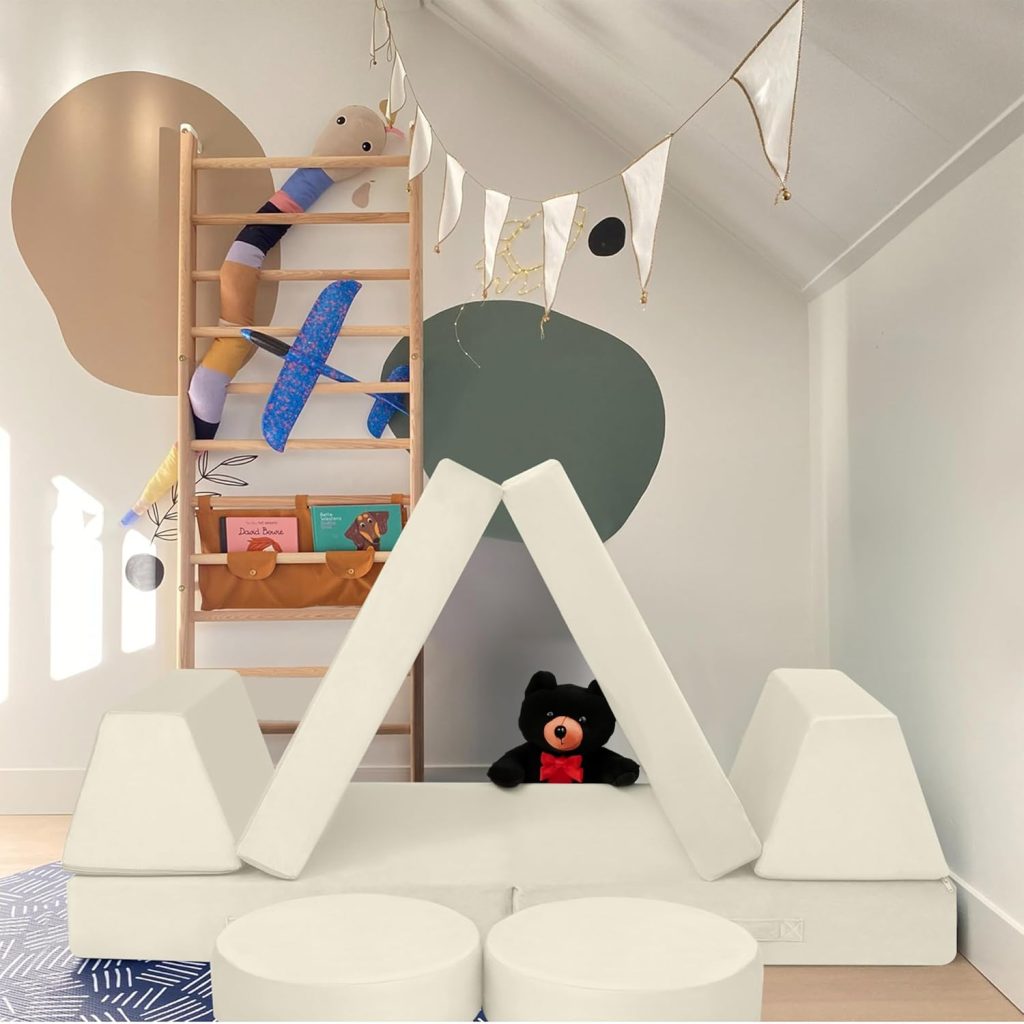
Proprioception is the sense that tells us where our body is and how much force we are using. Deep-pressure and heavy-work activities are often calming because they give clear feedback to the nervous system. I use weighted lap pads, resistance exercises, crash cushions, floor work, and compressive seating to support this system. A bean bag chair for children can provide grounding and gentle pressure if chosen in the right size and fabric.
For school settings, I recommend integrating proprioceptive stations into the room routine rather than leaving them as optional extras. Three minutes of wall pushes, animal walks, or resistance pulls before seated calming can dramatically improve attention and reduce restlessness.
Vestibular input
The vestibular system helps with balance and movement processing. This input can be regulating, but it must be used carefully because it can either calm or overstimulate depending on the person and the speed or direction involved. Slow, linear movement is usually easier to tolerate than fast spinning. I am cautious with rotational equipment unless the person’s responses are well understood.
For autistic children and children with ADHD, vestibular work is often most effective when it is predictable and paired with proprioception. For older adults with dementia, movement input should be gentler and safety-led, often through rocking chairs, supported swaying, or slow rhythm-based activities rather than suspended equipment.
Tactile, auditory, and visual input
Tactile input should be varied but not chaotic. Include contrasting textures, but offer them in an organised way: soft, rough, smooth, flexible, cool. Auditory design should prioritise control over volume, source, and predictability. Visual input should be adjustable, not constant. The principle I follow is simple: sensory choice supports integration better than forced stimulation.
Research also supports the value of tailored sensory environments. The National Autistic Society explains that autistic people may experience hyper- or hypo-sensitivity across multiple senses, making environmental adjustments central to support sensory differences guidance. The CDC estimates that about 1 in 36 children has been identified with autism spectrum disorder in the United States, underlining how relevant sensory-aware environments have become across education and care settings CDC autism data.
How I set up a sensory room session step by step
A room alone does not facilitate sensory integration; the way it is used does. When I train staff or advise families, I encourage a simple session structure that can be adapted for home, school, or therapy.
Step 1: Check the current state
Before the user enters, identify whether they are overloaded, under-responsive, anxious, angry, fatigued, or dysregulated by transition. This changes the starting point. A child who is lethargic and disconnected may need alerting body input. A child who is distressed and covering their ears needs low-demand calming first.
Step 2: Choose one primary goal
Decide what the session is for: calming, alerting, transition support, attention-building, communication readiness, or emotional regulation. If you try to target everything at once, the session becomes unfocused. One clear goal leads to better sensory choices.
Step 3: Begin with body-based input
I usually start with proprioceptive or movement-based activities because they help organise the nervous system quickly. That might be pushing against the wall, carrying weighted items, crawling through a tunnel, or using compression seating. Once the body is more settled, you can add visual, tactile, or auditory elements.
Step 4: Add one calming or focusing feature
This could be dimmed lighting, slow music, a bubble tube, a soft tactile tray, or a breathing game. Watch the user’s signs carefully. If eye contact improves, breathing slows, movement becomes more purposeful, and vocalisations reduce, the room is likely supporting integration well.
Step 5: End with a deliberate transition
Do not stop abruptly. Give a countdown, reduce stimulation gradually, and finish with a grounding activity before leaving. This is especially helpful in schools, where pupils need to return to structured work without losing the benefit of the room.
Common mistakes that undermine sensory integration
The most common mistake is overdesign. People assume more equipment means more therapeutic value, but sensory integration depends on selectivity and coordination. A crowded room with every wall covered in colour and every corner making noise can be difficult for almost anyone to process. Simplicity often performs better.
Another mistake is using the same room in the same way for everyone. A home setup for an autistic teenager who craves solitude should not be copied into a primary school nurture room. A therapy room for a child with sensory seeking behaviour should not be planned like a dementia calming suite. The environment must reflect age, mobility, cognition, and sensory profile.
I also see rooms used only after a crisis. While they can absolutely help in moments of distress, sensory integration is supported best when the room is used proactively. Short, planned sessions before predictable stress points—before homework, after lunch, before transitions—are often more effective than waiting for dysregulation to peak.
Adapting the room for home, school, and therapy settings
At home, the key is practicality. Most families do not have a dedicated large room, so I often create a sensory corner, a calm den, or a modular setup that can be packed away. Low lighting, a comfortable seat, a weighted item, a tactile basket, and one controllable visual feature can be enough. If you are planning this type of setup, Sensory Room Planner can help you think through layout and function more strategically.
In schools, consistency matters more than novelty. Staff need a shared understanding of what the room is for, who uses it, and what each piece of equipment is meant to do. I recommend simple protocols, visual guides, and brief recording sheets so the room does not become an unstructured reward space.
In therapy settings, the room should support clinical goals without becoming distracting. I often build flexibility into these spaces so the same room can support regulation, interaction, motor planning, and communication work. The therapist should be able to reduce or increase sensory load within seconds.
For dementia care, I focus on familiarity, softness, and emotional reassurance. Evidence from the NHS highlights that sensory-based approaches can help reduce distress and support wellbeing for people living with dementia when tailored appropriately NHS dementia guidance. In these spaces, sensory integration is less about novelty and more about orientation, memory cues, and comfort.
Expert tips from real-world sensory room use
If I had to give one practical tip, it would be this: observe before you adjust. The person’s response tells you whether the room is working. Look for breathing changes, posture, pace of movement, facial tension, vocal volume, and ability to engage after the session. Those signs are more useful than any fixed equipment checklist.
My second tip is to keep controls accessible. If lights, sounds, and visual equipment cannot be dimmed or switched off instantly, you lose flexibility. Adjustable environments are safer and far more effective. I want staff and parents to be able to reduce sensory demand within seconds, not after navigating multiple devices.
Finally, review the room every few months. Sensory needs change with age, stress, health, and experience. A child who once needed strong movement may later benefit more from quiet proprioceptive input. A room that worked brilliantly last year can become less effective if it is never updated around the person using it.
Frequently Asked Questions
How does a sensory room help with sensory integration?
A sensory room helps by providing controlled sensory input that the brain can process more easily. When designed well, it supports regulation, attention, body awareness, and calmer responses to everyday demands.
What is the best sensory room setup for autism?
The best setup depends on the individual, but most autistic users benefit from predictable lighting, controlled sound, deep-pressure options, and clear zoning. A low-clutter space with adjustable sensory input usually works better than a highly stimulating room.
Can sensory rooms help children with ADHD?
Yes, sensory rooms can help children with ADHD when they include purposeful movement, proprioceptive input, and structured routines. They are especially useful before transitions, after unstructured times, or before tasks that require sustained attention.
What should be avoided in a sensory room?
Avoid excessive stimulation, cluttered layouts, loud background noise, and equipment with no clear purpose. Using too many sensory elements at once can overwhelm the nervous system rather than support integration.
Do sensory rooms need expensive equipment?
No, effective sensory rooms do not need to be expensive. A well-planned space with controlled lighting, comfortable seating, tactile materials, and a few carefully chosen regulation tools can work extremely well.
How long should a sensory room session last?
Many effective sessions last between 10 and 20 minutes, although this depends on the person and the goal. Short, targeted sessions are often more helpful than long, unstructured periods in the room.
Are sensory rooms useful for adults and older people?
Yes, sensory rooms can benefit adults with autism, learning disabilities, mental health needs, and dementia. The design should be adapted to age, mobility, cognition, and emotional needs rather than copied from children’s spaces.