Table of contents
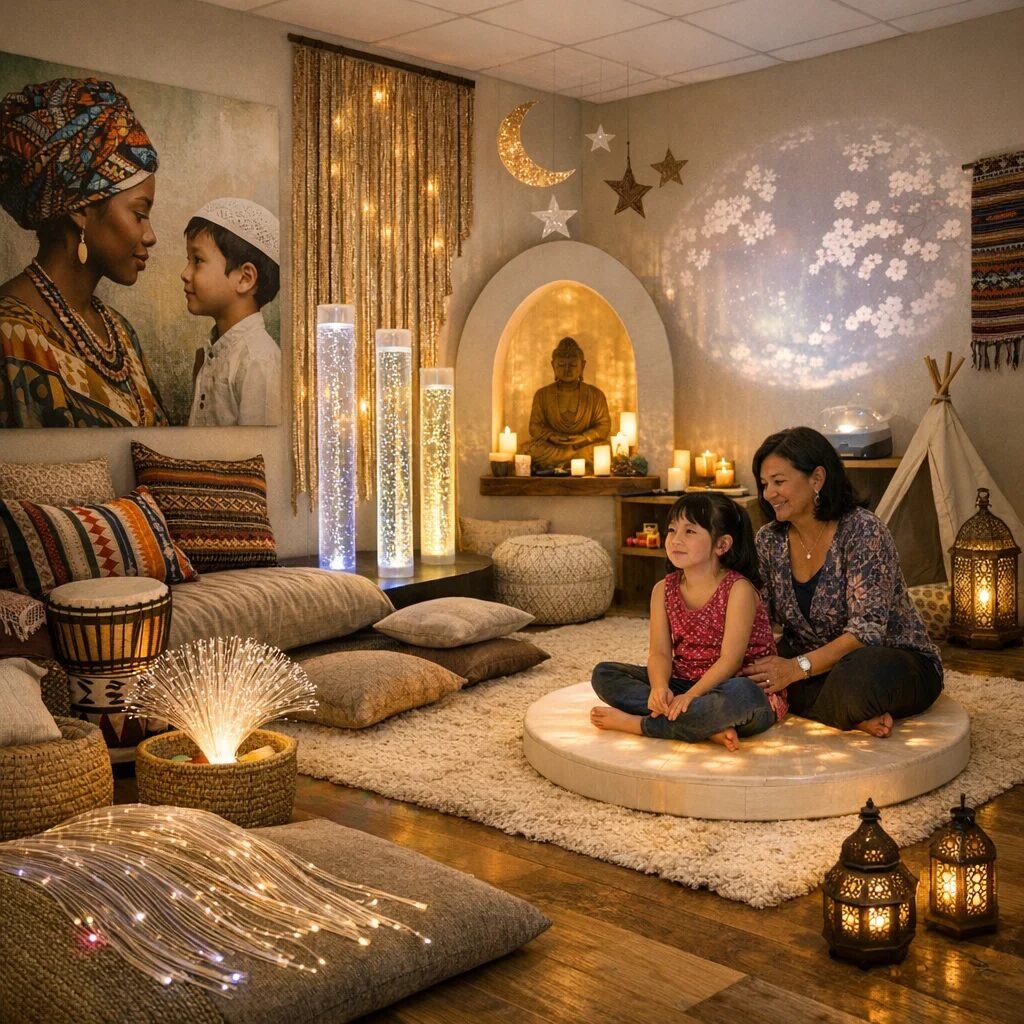
Incorporating cultural and diversity considerations in sensory rooms means designing spaces that feel safe, familiar, and respectful for the people who use them, not just meeting sensory needs in a generic way. A well-designed sensory room should reflect differences in language, family values, religion, age, disability, and lived experience so that autistic children, adults with dementia, people with ADHD, and individuals with sensory processing differences can regulate in an environment that truly supports them.
Years of practical sensory room design have shown that culturally responsive spaces are more effective because users engage more readily with sensory input that feels meaningful rather than confusing or alien. For parents, educators, and therapists, the goal is not to decorate a room with token cultural references, but to build a sensory environment where identity, comfort, and regulation work together.
Highlights
- Cultural and diversity considerations in sensory rooms improve emotional safety, trust, and engagement.
- Effective rooms adapt colours, sounds, imagery, routines, and sensory tools to the user’s background and preferences.
- Consultation with families, staff, and users prevents stereotypes and helps avoid poor sensory design choices.
- Inclusive sensory rooms work best when they balance sensory regulation needs with cultural familiarity and accessibility.
What cultural and diversity considerations mean in a sensory room
A sensory room is a structured environment designed to support regulation, engagement, and wellbeing through controlled sensory input. When cultural and diversity considerations are built into that environment, the room does more than calm or stimulate; it also reduces the stress that can come from unfamiliar symbols, inappropriate sounds, unsuitable imagery, or sensory materials that conflict with someone’s beliefs, routines, or personal history.
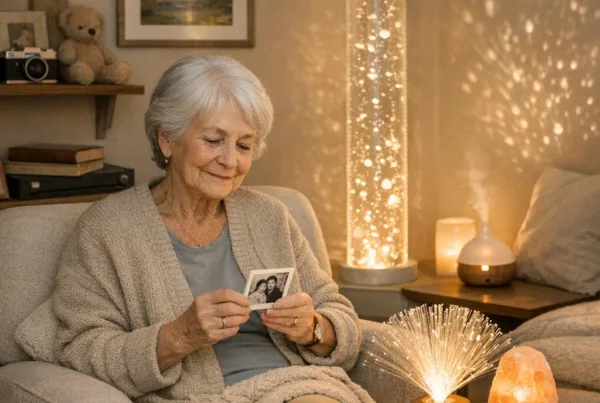
That distinction matters. A technically impressive room with fibre optics, projectors, and soft seating can still fail if the person using it feels disconnected from the space. A child may avoid a relaxation corner because the music is unfamiliar and unsettling. An older adult with dementia may respond poorly to décor that bears no resemblance to their cultural background or life story. An autistic pupil may become more vigilant, not less, if the room presents images, scents, or objects that clash with family expectations or communication style.
Diversity in sensory room design includes ethnicity, language, religion, neurotype, age, family structure, disability, trauma history, and socioeconomic factors. It also includes a person’s daily routines and what “comfort” looks like in their household or community. For some users, calm means low lighting and silence. For others, calm may involve rhythmic music, familiar textile textures, or visual references that feel rooted in home life.
Research supports the value of person-centred environments. The National Autistic Society explains that autistic people often experience sensory differences that can strongly affect comfort, behaviour, and participation, which makes environmental adaptation essential rather than optional according to the National Autistic Society. The most effective sensory rooms therefore combine sensory knowledge with cultural responsiveness.
Why inclusive sensory rooms are more effective
A sensory room should lower stress, improve regulation, and promote participation. Inclusive design strengthens all three outcomes because users are less likely to spend energy interpreting or defending themselves against an environment that feels foreign. Cultural familiarity can improve emotional settling time, reduce resistance to entering the room, and support stronger therapeutic relationships.
This is especially relevant in schools and therapy settings, where the room may be shared by users from different backgrounds. One pupil may respond positively to bright, celebratory colour palettes, while another may find the same environment overstimulating or culturally mismatched. A therapist working with a multilingual family may discover that visual supports only become useful when symbols, labels, and routines are adapted to the language used at home.
Inclusive rooms also increase trust. Families are far more likely to support sensory interventions when they can see their values respected. In practice, that may mean offering alternatives to touch-based materials, avoiding imagery that conflicts with religious beliefs, or including familiar music and storytelling elements. It may also mean asking whether shoes are usually removed indoors, whether floor seating is preferred, or whether certain scents should be avoided completely.
Good inclusion is not about making every room themed around heritage. It is about making thoughtful decisions so a room does not accidentally exclude. This is similar to the broader planning principles discussed in factors to consider when choosing technology for sensory rooms, where the best solutions depend on the user’s actual needs rather than equipment trends.
How to assess cultural and diversity needs before setting up the room
Start with a user profile, not a product list
One of the most common mistakes in sensory room planning is buying equipment first and asking questions later. A better approach starts with a sensory and cultural profile for each intended user group. This profile should cover sensory triggers, preferred calming strategies, communication needs, cultural routines, language preferences, mobility considerations, and any known aversions linked to religion, trauma, or past experiences.
In a home setting, this process can be informal but still structured. Parents can note which sounds calm the child, which fabrics are tolerated, whether visual clutter causes distress, and what family practices shape comfort. In schools and clinics, a short intake form works well. Questions should be specific: Which sounds are comforting? Are there any colours, scents, images, or objects that should be avoided? Does the user respond better to floor seating, upright seating, or movement-based regulation? Is there a preferred language for visuals and choice boards?
Involve families, carers, and the users themselves
The strongest sensory rooms emerge from consultation rather than assumption. Families often provide details that transform the room’s usefulness. For example, a therapist may plan to use lavender diffusers for calming, only to learn that the family associates strong scent with headache triggers or prayer spaces where fragrance has a specific meaning. A teacher may choose animal-themed visuals, not realising the pupil engages much better with nature scenes linked to familiar landscapes from family visits abroad.
Where possible, the user should also contribute directly. Even children with limited speech can indicate preference through photos, symbols, object choices, or simple exposure trials. Offering two lighting options, two music styles, or two seating arrangements can reveal far more than a written questionnaire. When users experience control and recognition, regulation usually improves.
Observe real responses in context
Observation is essential because stated preference and actual regulation are not always the same. A pupil may say they like bright colours because those colours are popular at home, yet still function better in a muted room. An adult with dementia may not verbally communicate discomfort but may show agitation, withdrawal, or confusion when presented with unfamiliar music or abstract projected imagery.
Testing should happen in small stages. Introduce one new sensory element at a time and observe body language, time spent in the room, vocalisations, breathing patterns, and ease of transition in and out of the space. This allows the room to evolve responsively rather than becoming a fixed setup that users simply have to tolerate.
Practical ways to incorporate cultural and diversity considerations
Use colour, light, and visuals with cultural sensitivity
Colours do not carry universal meanings. White may feel clean and restful in one context, but in another it may have associations with mourning or formality. Red may be energising and joyful for some families, but too intense or threatening for others. Instead of relying on assumptions, use adjustable lighting and modular décor so the room can shift according to user needs. Soft neutral walls combined with interchangeable projected visuals often work better than permanent bold themes.
Visual content should also be chosen carefully. Generic tropical beaches, cartoon characters, or abstract animations may not suit every user. Real-world image sets showing landscapes, homes, festivals, textiles, and community scenes that reflect users’ backgrounds can improve engagement. In school or therapy environments, it helps to create several visual programmes and label them by purpose rather than by user identity, such as “quiet nature scenes,” “familiar community images,” or “rhythm and movement visuals.”
For floor-based visual stimulation, Art3d Fancy Liquid Encased Purple can work well when used as an optional movement station rather than a central feature, particularly for users who benefit from visual feedback through stepping and shifting weight.
Adapt soundscapes and music choices
Music is one of the fastest ways to create either comfort or distress. The common mistake is assuming “relaxing” music is universal. Panpipes, ocean recordings, or generic spa tracks may feel irrelevant or even irritating to the user. A better strategy is to build a small library of culturally familiar and sensory-appropriate soundscapes. These might include instrumental versions of songs used at home, gentle nature recordings from familiar environments, or steady rhythmic tracks without sudden changes.
For autistic users and people with ADHD, predictability is often just as important as preference. Sudden crescendos, lyrics in an unfamiliar language, or layered sounds can increase overload. In dementia care, familiar music from early adulthood may support recognition and reduce agitation. Alzheimer’s Society notes that music can help evoke memories and improve wellbeing for people with dementia through music-based support guidance.
Consider touch, seating, and body positioning preferences
Seating should reflect both sensory regulation and cultural habit. Some families naturally use floor seating, cushions, or low-level gathering spaces, while others prefer more structured upright seating. A flexible room might include a beanbag area, a rocking chair, and a wipe-clean floor mat zone so the user can choose the position that feels correct. This is especially helpful in mixed-use school or therapy rooms.
Texture choices also deserve care. Some users prefer smooth vinyl, others seek woven fabrics, and some may avoid furry or animal-like textures due to cultural preference, hygiene concerns, or tactile defensiveness. Weighted and deep-pressure tools can be very effective, but consent and presentation matter. A weighted lap pad may feel more acceptable than a shoulder wrap in some settings because it is less intrusive and easier to remove independently.
For shared spaces, a neutral but inviting seating option such as a posture-supportive beanbag can support users across age groups. If a room needs a simple visual focal point, a bubble tube with adjustable colours is often more adaptable than permanent themed décor, especially when the lighting programme can be tailored to individual sensory and cultural preferences. More planning guidance on layout and user fit can be found in common sensory room design mistakes.
Make communication supports inclusive
Communication boards, labels, and room rules should match the user’s language level and home communication style. In multilingual families, using only English visuals may reduce independence rather than support it. In some cases, dual-language labels or image-only supports are far more effective. Symbols should be culturally neutral where possible and checked for clarity with the family or care team.
This becomes even more important for users with autism, learning disabilities, or dementia, where familiarity drives comprehension. If the room uses a choice board for “lights,” “music,” “swing,” and “quiet corner,” those symbols should be tested with the actual users. Abstract icons that look neat on a wall often fail in practice. Real photos of the room’s actual equipment usually work better.
Step-by-step setup process for an inclusive sensory room
For parents, schools, and therapists building or refreshing a room, the following process keeps the design practical and person-centred.
Step 1: Define who the room is for
Decide whether the room is for one individual, a small group, or a whole service. List ages, diagnoses, communication styles, mobility needs, and cultural backgrounds. A room serving one autistic child at home can be highly personalised, while a school room needs zones and adjustable features to suit a wider range.
Step 2: Identify sensory goals and cultural comfort markers
Separate what helps regulation from what adds familiarity. A user may regulate best with dim lights and deep pressure but feel most comfortable with certain colours, prayer-friendly privacy, or music from home. Both matter, but they should be planned intentionally rather than blended vaguely.
Step 3: Choose flexible equipment
Select tools that adapt easily. Adjustable LEDs, removable covers, portable projectors, wipeable mats, and movable storage make the room more inclusive over time. Fixed themes are usually less effective than modular systems. If tactile exploration is needed, organise baskets by texture and intensity so users can opt in rather than being confronted with everything at once.
Step 4: Trial in small doses
Introduce one sensory category at a time: lighting first, then sound, then movement tools, then tactile resources. Record what happens. Does the user stay longer? Leave faster? Smile, stim, withdraw, vocalise, or seek help? These observations are more useful than aesthetic opinions.
Step 5: Review with stakeholders
After two to four weeks, review the room with parents, staff, therapists, or carers. Keep what supports regulation and remove what creates confusion or overload. Inclusive rooms improve through use. They rarely start perfect.
Common mistakes and how to avoid them
The first major mistake is tokenism. Adding a few multicultural posters or flags does not make a sensory room inclusive. In some cases, it makes the room busier and less calming. Inclusion should shape the user experience, not function as decoration. If a room is visually crowded, linguistically inaccessible, or filled with sensory tools that the user dislikes, cultural imagery alone will not solve the problem.
The second mistake is assuming one culture equals one preference. Two children from similar ethnic backgrounds may have completely different sensory profiles, language use, and comfort needs. One may love rhythmic drumming; the other may find it dysregulating. The room should respond to individuals, not stereotypes.
Another issue is over-reliance on scent. While aromatherapy is popular, scent is highly personal and can conflict with sensory sensitivities, religious contexts, migraine triggers, or respiratory conditions. The NHS notes that around 1 in 5 people in the UK have a disability in public health and disability guidance, which underlines the need for broad accessibility rather than narrow assumptions about what is “soothing.” Unscented rooms with optional scent tools are usually safer.
A final mistake is designing for visual impact rather than real use. An effective room is not necessarily the most photogenic one. A poor setup may have glowing walls, loud interactive technology, and themed murals that adults admire but users avoid. An effective setup may look simpler: soft dimmable light, familiar audio, a movement corner, a low-stimulation retreat area, and culturally appropriate visuals used with intention.
Adapting inclusive sensory design for home, school, and therapy settings
At home, the biggest advantage is personal knowledge. Families already know routines, comfort objects, and sensory stress points. The challenge is space and budget. In many homes, the best sensory room is actually a sensory corner or adaptable bedroom zone. A floor mat, dimmable lamp, tactile basket, headphones, and familiar visuals can create a culturally supportive regulation space without requiring a dedicated room.
In schools, shared use creates complexity. Staff should avoid designing around a single child unless the space is individualised. Instead, the room should include adjustable zones, clear visual routines, and a booking or transition system that allows each pupil to access the room in an appropriate way. Staff training is essential so cultural sensitivity extends beyond the room itself into how the space is introduced and supervised.
Therapy settings sit between the two. They need enough consistency for clinical work, but enough flexibility to support different families. Therapists often benefit from a “core room plus portable additions” model: neutral base lighting, simple seating, minimal permanent décor, and portable boxes for music, visuals, language supports, and tactile tools tailored to the day’s client.
Across all settings, the best rooms respect dignity. They do not infantilise teenagers, stereotype families, or assume that disability erases cultural identity. Sensory support works best when people feel recognised as whole individuals.
Frequently Asked Questions
Why are cultural considerations important in sensory rooms?
Cultural considerations help the room feel safe, familiar, and respectful to the user. When a sensory room reflects a person’s routines, preferences, and identity, it usually improves engagement and regulation.
How can a sensory room be inclusive without becoming visually busy?
An inclusive room does not need lots of décor. Neutral foundations with adjustable visuals, flexible lighting, and personalised sound or communication supports create inclusion without adding clutter.
Should sensory rooms be different for autism, ADHD, and dementia?
Yes, because sensory needs and processing styles differ. Autistic users may need predictability and reduced overload, people with ADHD may benefit from movement and structured stimulation, and people with dementia often respond well to familiarity and gentle reminiscence cues.
What is the biggest mistake when considering diversity in sensory rooms?
The biggest mistake is making assumptions based on background rather than asking the individual or family. Inclusive design should be personalised, not based on stereotypes or generic multicultural themes.
How do schools design a sensory room for pupils from many backgrounds?
Schools should use flexible equipment, simple core design, and adaptable sensory programmes. Family input, multilingual supports, and staff training help the room serve a diverse pupil population more effectively.
Are scents a good way to make a sensory room feel comforting?
Not always. Scents can calm some users, but they can also trigger headaches, overload, respiratory issues, or cultural discomfort. It is better to keep scent optional rather than built into the whole room.
Can a small home still include cultural and diversity considerations in a sensory space?
Yes. Even a small corner can be personalised through familiar music, appropriate colours, preferred seating, meaningful visuals, and communication tools that reflect the family’s language and routines.
Thoughtful sensory rooms do more than regulate the nervous system; they respect the person using the space. When cultural and diversity considerations are woven into planning, equipment choices, and daily use, the room becomes calmer, more welcoming, and far more effective for everyone involved.