Table of contents
Promoting sensory exploration in sensory rooms means designing a space that invites safe, meaningful interaction with sight, sound, touch, movement, smell, and sometimes taste, without overwhelming the person using it. In my experience designing sensory rooms for autistic children, pupils with ADHD, adults with dementia, and people with sensory processing differences, the best rooms are not the most expensive ones; they are the ones planned carefully around real sensory needs, clear goals, and flexible use.
Highlights
- Sensory exploration works best when the room is structured, flexible, and matched to the user’s regulation needs.
- I focus on controllable lighting, varied textures, movement options, and calm transitions to encourage engagement without overload.
- Effective sensory rooms support autism, ADHD, dementia, and sensory processing differences in home, school, and therapy settings.
- Small setup choices, such as zoning and reducing visual clutter, often make a bigger difference than buying more equipment.
What sensory exploration in sensory rooms really means
Sensory exploration is the process of discovering, testing, and responding to sensory input in a way that supports regulation, learning, curiosity, and comfort. In a sensory room, that means giving a person the opportunity to engage with sensory experiences at their own pace rather than forcing stimulation on them. I always explain it this way to families and schools: a good sensory room does not “entertain” the user; it helps them notice, organise, and respond to sensory input more effectively.
This distinction matters. I have seen rooms filled with flashing lights, noisy toys, and oversized equipment that looked impressive to adults but quickly dysregulated the child they were meant to support. By contrast, I have also worked with very simple rooms containing soft seating, adjustable lighting, tactile panels, and a few carefully chosen movement tools that transformed a child’s ability to settle, communicate, and participate. Promoting sensory exploration is about creating opportunities for purposeful sensory engagement, not sensory overload.
For autistic individuals, sensory exploration may involve finding which textures feel calming, which sounds are tolerable, or how much visual input is enjoyable before it becomes stressful. For a child with ADHD, it may centre on movement, proprioceptive input, and short activities that help reset attention. For someone with dementia, sensory exploration may involve familiar smells, soothing music, and tactile experiences that offer reassurance. The room should adapt to the user, not the other way around.
Start with sensory profiles, not equipment lists
The first mistake I see is buying products before understanding the person’s sensory profile. Before I choose a single light, seat, or tactile activity, I look at how the person responds to sensory input in everyday life. Are they sensory seeking or sensory avoiding? Do they become unsettled by sudden noise? Do they chew, spin, crash, hide, pace, or cover their ears? Those behaviours are not random; they are valuable clues that should shape the room.
For parents, educators, and therapists, this means observing patterns across the day. Ask practical questions. What helps the person calm? What causes shutdown or distress? Which environments help them focus? Which sensations do they seek out naturally? I also recommend noting the time of day, transitions, and environmental triggers. A child who struggles in a noisy classroom may need a sensory room that prioritises deep pressure and low visual demand, while another may need active, movement-rich input before they can engage with learning.
When I design school and therapy spaces, I often compare two scenarios. In the poor setup, the staff request “one of everything” because they want the room to do everything for everyone. In the effective setup, we identify two or three core outcomes first, such as calming after overwhelm, encouraging tactile exploration, or improving readiness to learn. That sharper focus almost always results in better use of the room and less wasted budget.
How I design a sensory room to encourage safe exploration
Create clear sensory zones
I get the best results when I divide the room into zones rather than treating it as a single open space. Even in a small room, zoning helps the user predict what each area is for. I usually create a calm visual area, a tactile exploration area, and, where space allows, a movement or proprioceptive zone. This makes sensory exploration more intentional and prevents every activity from competing for attention at once.
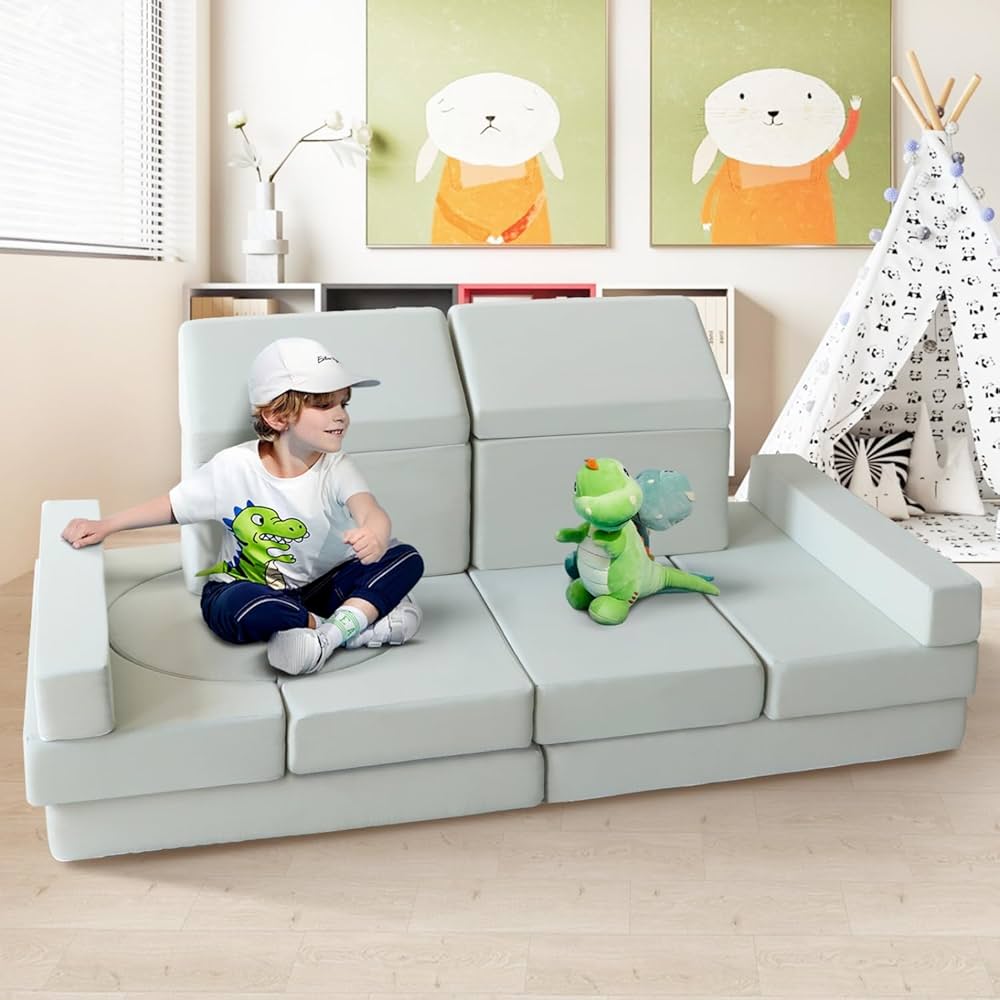
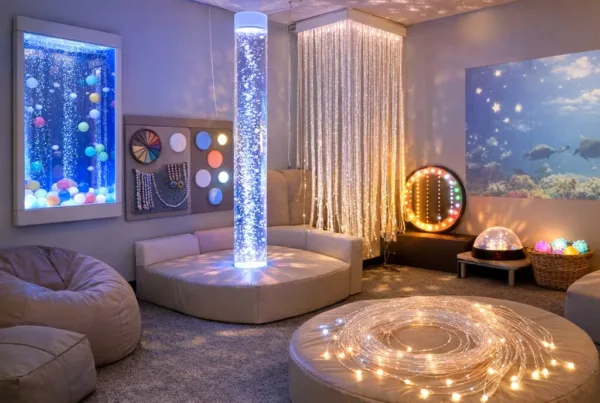
For example, a calming zone might include dimmable lights, soft seating, and a weighted blanket. A tactile zone could have textured cushions, sensory brushes, fidget tools, and wall-mounted tactile boards. A movement zone might include crash mats, body socks, or a gentle rocking seat. In schools, zoning is especially useful because staff can guide pupils to the right area based on need rather than defaulting to the same activity every time.
Use controllable sensory input
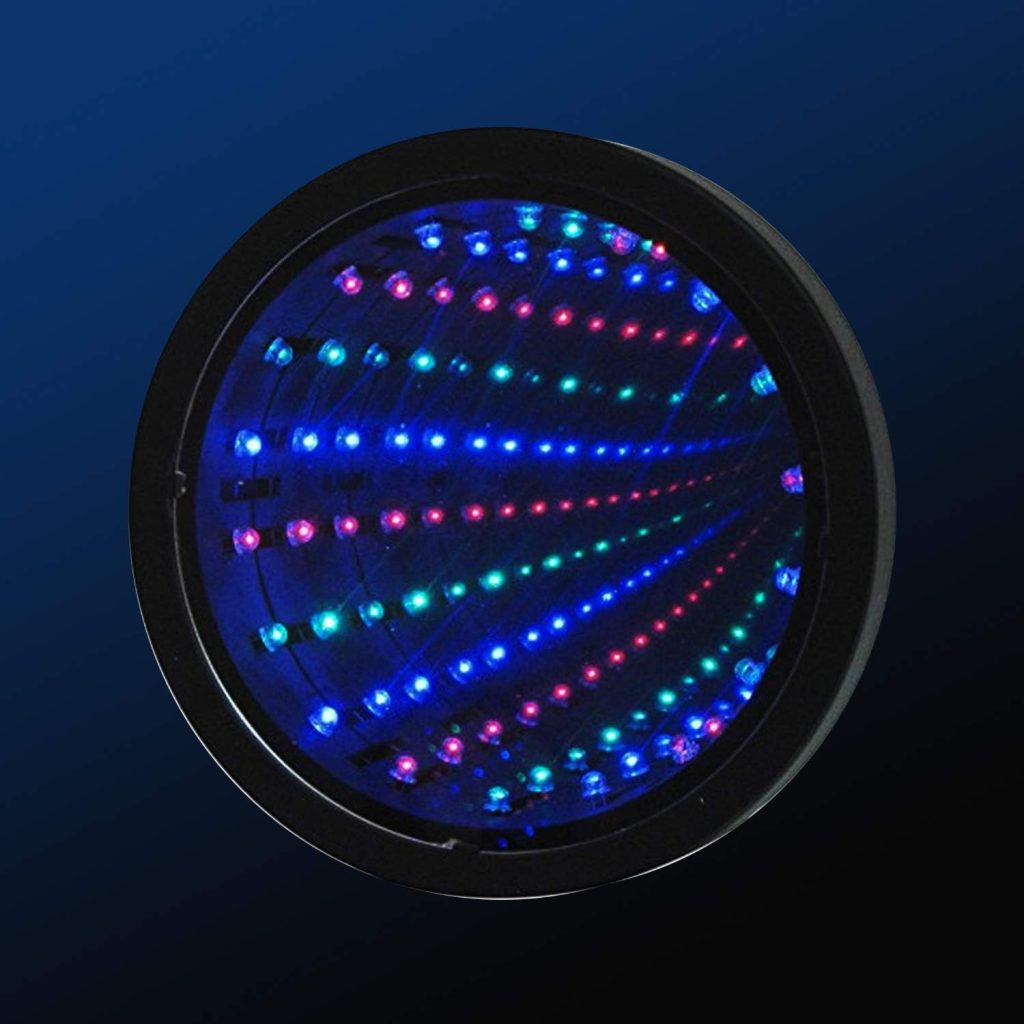
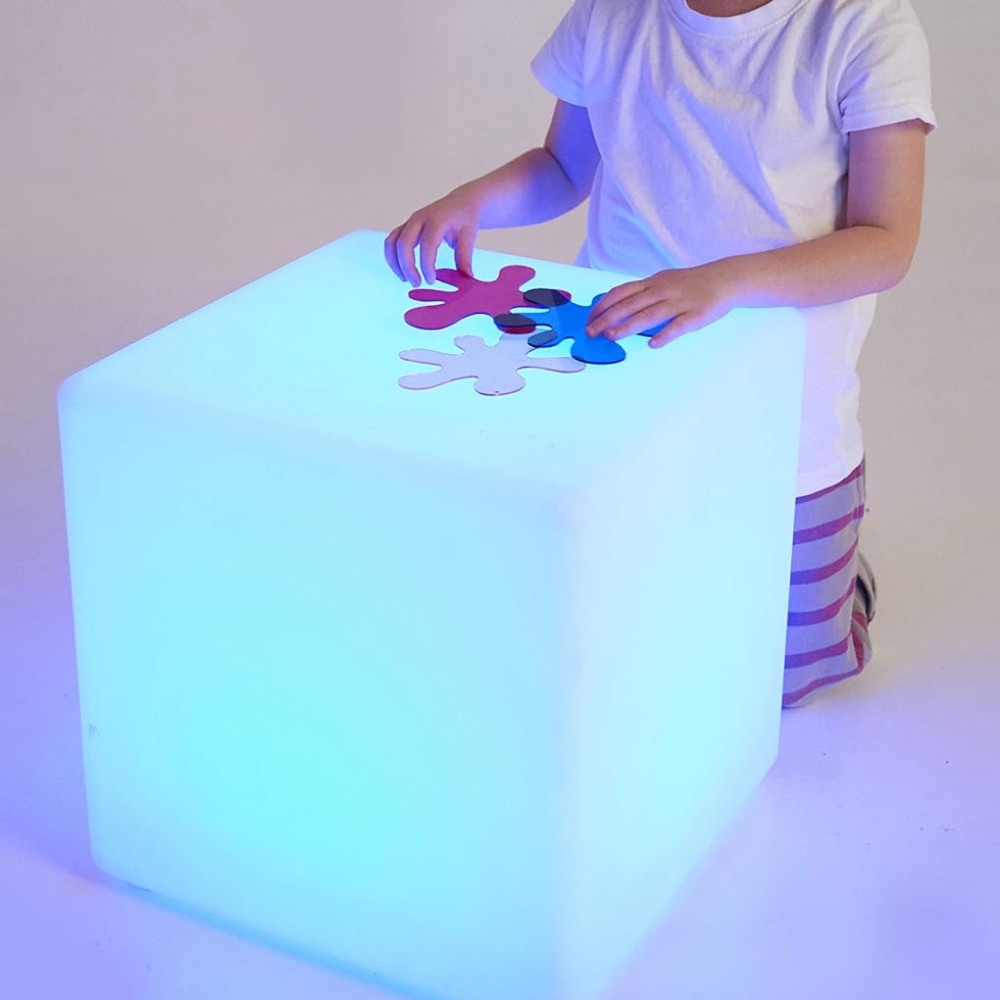
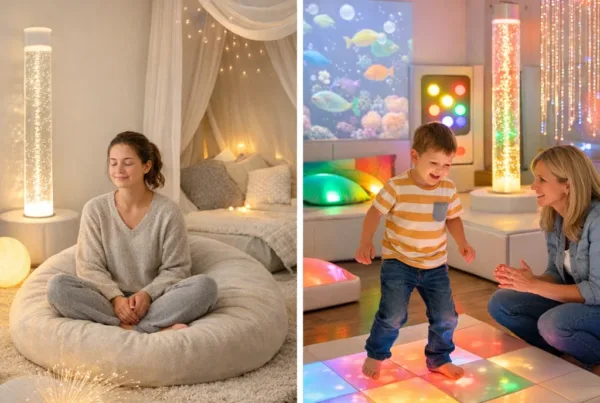
If I had to choose one design principle above all others, it would be control. The user or supporting adult should be able to increase, reduce, or stop sensory input easily. Fixed, bright overhead lights are a common problem. I prefer layered lighting with options such as projected visuals, soft lamps, or sensory LED lights that can be dimmed or colour-adjusted. This matters because unpredictable or intense visual input can quickly push an anxious or sensory-sensitive person into overload.
The same applies to sound. A speaker playing continuous music across the whole room often limits successful exploration because it removes choice. I prefer sound that can be started deliberately during an activity, then stopped immediately when needed. The room should support co-regulation and self-regulation, not trap someone in an experience they cannot escape.
Build in physical and emotional safety
People explore more confidently when they feel safe. That sounds obvious, but many sensory rooms fail here. Furniture should be stable, walkways clear, cables hidden, and equipment suitable for the person’s age, size, and motor abilities. Soft flooring and crash-safe layouts are especially important where users seek movement or have reduced spatial awareness.
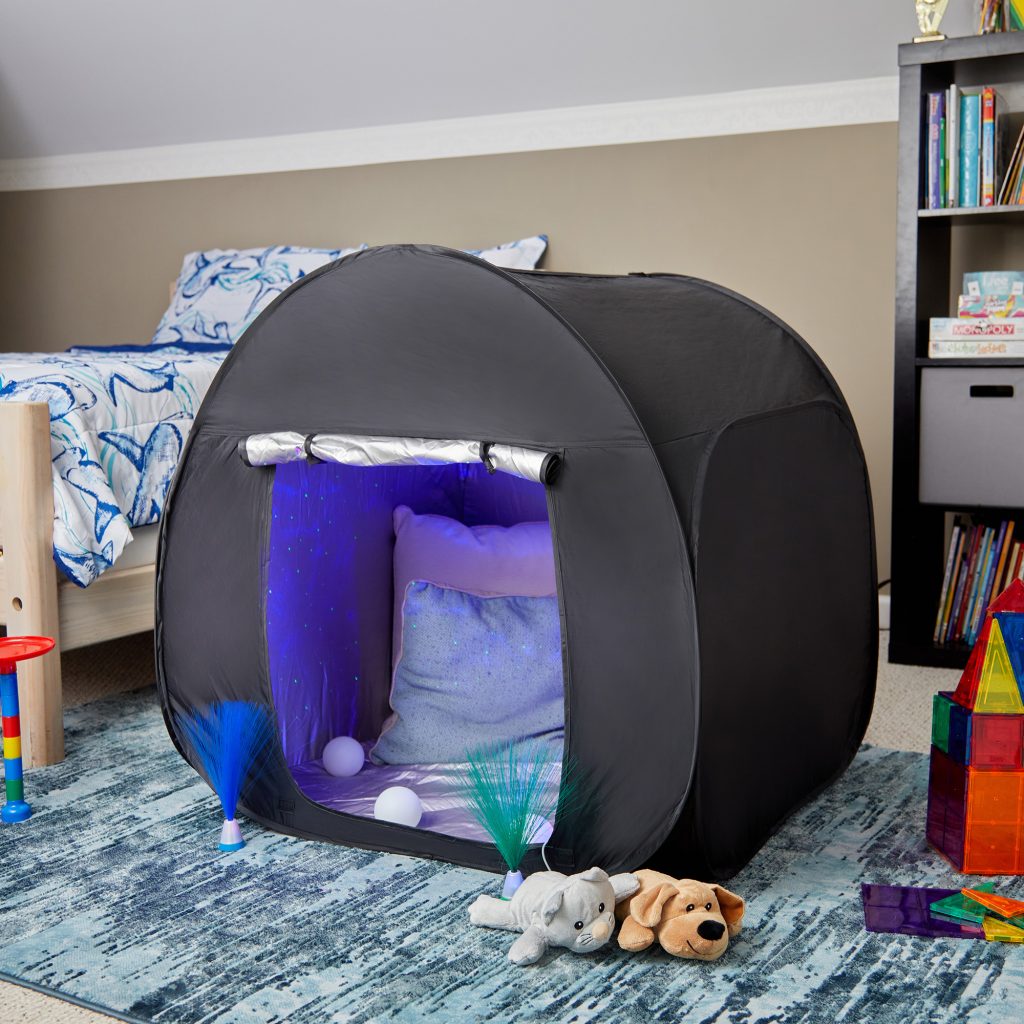
Emotional safety matters just as much. I often include a retreat option such as a canopy, small pod, or corner with soft cushions where the user can step back from sensory input. Exploration should always include the right to pause. I have seen children go from refusing all room activities to willingly engaging once they knew they had a quiet place to retreat to if things felt too much.
Step-by-step: setting up a sensory room for better exploration
When families or schools ask me where to begin, I use a practical sequence that keeps the room purposeful and manageable.
Step 1: Define the main goal
Choose one primary aim and one secondary aim. For example, the primary aim might be calming after dysregulation, while the secondary aim is encouraging tactile curiosity. This prevents the room from becoming a storage area for random equipment.
Step 2: Assess the space honestly
Look at light, noise, flooring, wall space, ventilation, and storage. A small room can work beautifully if it is uncluttered and thoughtfully arranged. A large room can be ineffective if every surface is overstimulating.
Step 3: Choose a core sensory palette
I usually select a few predictable sensory experiences rather than too many options. For a calm-focused room, that might include soft light, gentle vibration, smooth and textured touch options, and deep-pressure tools. For active exploration, it may include movement, resistance, bouncing, and more dynamic visuals.
Step 4: Add one feature per sensory channel
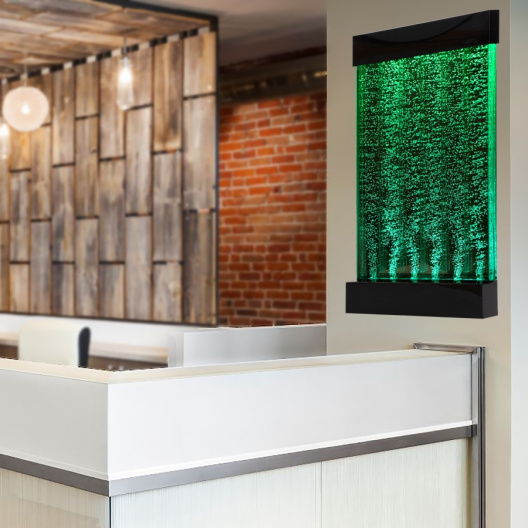
Instead of overcrowding the room, start with one well-chosen feature for visual, tactile, auditory, and proprioceptive input. For visual input, I often recommend a sensory bubble tube or soft projector. For tactile input, textured boards and fabric swatches can be more effective than novelty toys. For proprioceptive input, weighted lap pads, resistance bands, or a rocking chair may be enough to begin with.
Step 5: Test, observe, and adjust
This is where expertise really shows. I never assume the first layout is the best layout. Watch how the person enters the room, what they approach first, what they avoid, and how long they engage. If a child always heads straight for the dark corner and ignores the expensive visual equipment, that tells you something useful. Modify the room based on actual behaviour rather than adult expectations.
If you need inspiration for planning purposeful equipment combinations, I recommend looking at activities and equipment for sensory integration, which aligns well with a goal-based approach rather than impulse buying.
Choosing sensory experiences that genuinely encourage exploration
Visual exploration
Visual input should be engaging, not relentless. Slow-moving light effects, colour-changing features, and gentle contrast tend to work better than rapid flashing patterns. Research from the UK National Autistic Society notes that many autistic people experience hyper- or hypo-sensitivity to sensory input, including light, which can strongly affect comfort and behaviour according to the National Autistic Society. That is why I avoid strobe-like effects unless there is a very specific reason and the user clearly enjoys them.
A useful comparison is this: an effective visual setup offers one or two focal points and a generally calm background, while a poor setup bombards the room with multiple moving lights, bright wall colours, and reflective surfaces all at once. Exploration flourishes when the eyes can settle, track, and choose. It collapses when everything demands attention simultaneously.
Tactile exploration
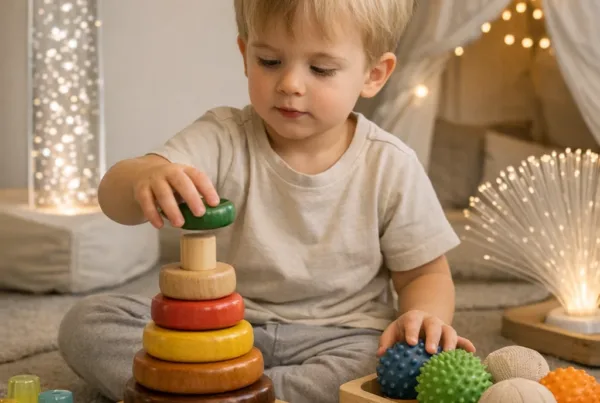
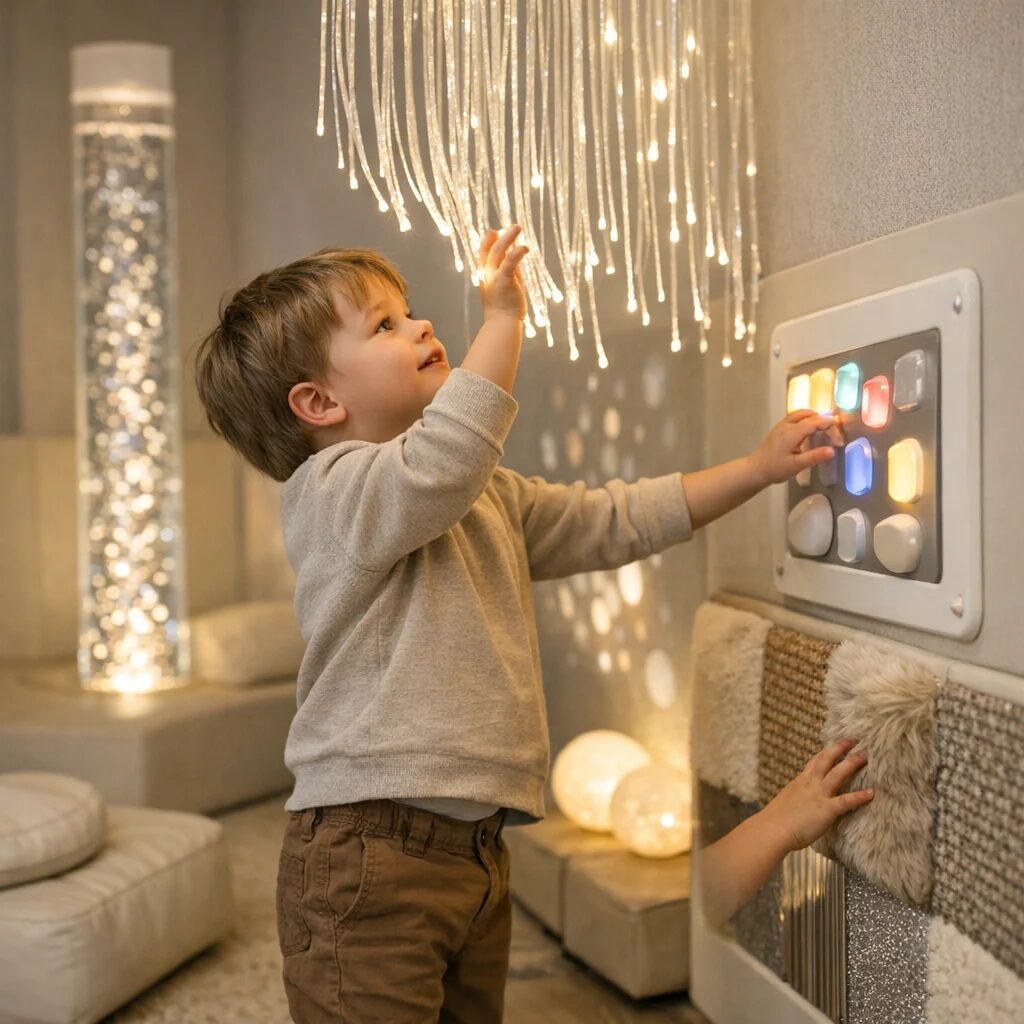
Tactile experiences are often underused, yet they are one of the best ways to support sensory exploration. I like to include a range of textures with clear contrast: smooth, bumpy, fluffy, stretchy, cool, and resistant. This can be as simple as tactile wall panels, fabric boards, gel pads, and baskets of sensory-safe materials rotated regularly.
For children who are tactile defensive, I avoid insisting on direct hand contact right away. Tools such as brushes, rollers, or even putting materials inside bags can help them approach touch gradually. For sensory seekers, denser and more varied texture stations often work well. A set of tactile sensory toys can support this, especially when presented in an organised way rather than dumped into one overflowing box.
Movement and proprioceptive input
Movement is central in many of the successful sensory rooms I create, particularly for ADHD and sensory seeking profiles. Proprioceptive input, the input we get from muscles and joints, is often grounding and organising. This can include pushing, pulling, carrying, rocking, squeezing, or leaning into resistance. For many users, this type of input improves readiness to engage with other sensory experiences.
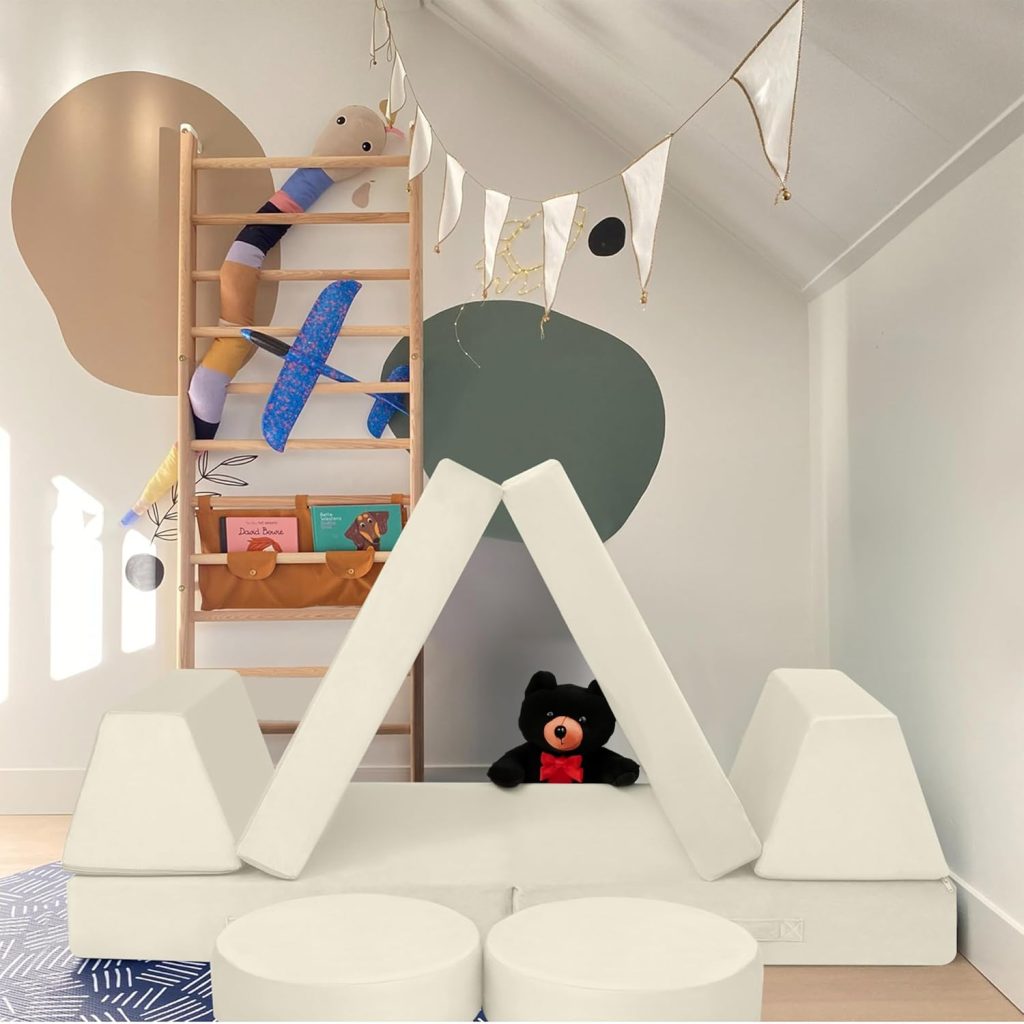
In practical terms, I might use floor cushions for crashing, resistance bands on chairs, weighted items, or a rocker. In schools, movement input before seated sensory exploration often leads to longer, calmer engagement. The Centres for Disease Control and Prevention estimate ADHD affects around 7 million US children aged 3–17, roughly 11.4% based on CDC data, and many of those children benefit from movement breaks that are structured rather than suppressed.
Adapting sensory rooms for autism, ADHD, dementia, and SPD
I never use a one-size-fits-all model because the same equipment can be calming for one person and distressing for another. For autism, predictability, control, and sensory pacing are usually central. I often minimise background noise, use neutral base colours, and ensure there is a clear retreat option. For ADHD, I may include shorter activity stations, more movement opportunities, and obvious visual boundaries to reduce distraction.
For sensory processing disorder, I look closely at whether the person is under-responsive, over-responsive, or fluctuates between both. That determines whether the room should offer activating sensory input, calming input, or flexible transitions between the two. For dementia care settings, sensory exploration works best when it is gentle, familiar, and reassuring. Soft music from the person’s era, tactile quilts, familiar scents, and warm lighting often outperform highly stimulating equipment.
If you are planning for specialist environments, it can help to review examples of sensory room ideas for special needs schools, especially for zoning and practical room use across multiple learners with different profiles.
Common mistakes that stop sensory exploration
The most common mistake is overstimulation disguised as good design. Too many colours, too many sounds, too many toys, and too much visual clutter make exploration harder because the nervous system has no clear starting point. When someone enters a room and immediately looks away, becomes agitated, or moves to the exit, I often find that the space is asking too much too quickly.
The second mistake is poor accessibility. If tools are out of reach, hidden in boxes, or require too much adult assistance, the user cannot explore independently. I want people to be able to see options clearly and initiate engagement where possible. Open shelves, labelled baskets, and straightforward layouts make a major difference.
The third mistake is treating the sensory room as a reward or last resort. If the room is only used after a crisis, it can become associated with stress rather than curiosity and regulation. I prefer scheduled access, low-pressure visits, and regular exploration when the person is calm enough to learn what works for them. For users with complex needs, consistency matters more than novelty.
What successful sensory exploration looks like in real settings
At home, success often looks quiet and simple. A child who used to avoid touch may begin stroking a textured cushion while listening to soft music. A teenager may use dim lights and deep pressure after school instead of escalating into overwhelm. Parents often tell me they expected dramatic “wow-factor” equipment to be the answer, but the real breakthrough came from a calmer layout and better control over stimulation.
In schools, successful exploration usually means the space supports function. A pupil enters dysregulated, spends five minutes in the movement zone, chooses a calming visual activity, and returns to class more settled. Staff can identify what input helped and repeat it with confidence. The room becomes part of a consistent regulation strategy rather than an occasional treat.
In therapy settings, success shows up in better observation and better progression. The therapist can see whether the client initiates touch, tolerates sound, tracks visual movement, or seeks deep pressure. That gives valuable information for future planning. The best sensory rooms do not just feel good in the moment; they generate insight that improves support elsewhere.
Frequently Asked Questions
How do sensory rooms promote sensory exploration?
Sensory rooms promote sensory exploration by offering controlled opportunities to interact with light, sound, touch, movement, and other inputs safely. The best rooms let users choose, pause, and repeat experiences at their own pace. That supports curiosity, regulation, and confidence.
What should I put in a sensory room first?
Start with adjustable lighting, comfortable seating, one or two tactile options, and a calming or movement-based tool matched to the user’s needs. It is better to begin with a few purposeful items than to overcrowd the space. Observe how the person uses those items before adding more.
Are sensory rooms only for autistic children?
No, sensory rooms can support autistic people, individuals with ADHD, sensory processing disorder, dementia, learning disabilities, and those experiencing stress or anxiety. The design should reflect the specific sensory and regulation needs of the user. Different groups benefit from different types of input.
How can I avoid making a sensory room too stimulating?
Use fewer items, reduce background noise, avoid constant flashing effects, and create clear zones. Choose equipment with adjustable settings so stimulation can be increased or reduced easily. If the user regularly avoids the room or becomes unsettled quickly, simplify the space.
What is the difference between a calming sensory room and an exploratory sensory room?
A calming sensory room focuses on reducing stress through low-arousal input such as soft light, deep pressure, and quiet sound. An exploratory sensory room includes more varied sensory choices to encourage curiosity and interaction. Many effective rooms combine both, using zones and adjustable features.
How often should a sensory room be used?
That depends on the user’s needs, but regular short sessions are usually more effective than occasional long ones. Using the room proactively, not just during distress, helps the person learn what sensory input supports them. Consistent observation also makes it easier to refine the setup.
Can I create a good sensory room on a small budget?
Yes, absolutely. Good sensory design depends more on planning, zoning, and sensory matching than on expensive products. Soft lighting, textured materials, floor cushions, and a few carefully chosen tools can create a highly effective space.
My final advice for promoting sensory exploration
When I design sensory rooms, I always come back to the same principle: exploration grows where there is safety, choice, and clear purpose. If the room feels calm enough to enter, interesting enough to engage with, and flexible enough to adapt to the user, sensory exploration has room to happen naturally. That is far more valuable than filling a room with impressive equipment that nobody can comfortably use.
If you are planning your own space, start small, observe carefully, and build around what genuinely helps the person in front of you. The most effective sensory rooms are not created by following trends. They are created by listening to behaviour, understanding sensory needs, and shaping the environment so the user can explore without fear of overload.