Table of contents
Regular maintenance tasks for sensory rooms keep the space safe, calming, hygienic, and effective for the people who rely on it. A well-maintained sensory room is not simply cleaner; it performs better, reduces avoidable risks, and protects expensive equipment from early failure. Drawing on best practice in autism-friendly design and day-to-day use across homes, schools, and therapy settings, the most reliable maintenance approach combines daily checks, weekly cleaning, routine testing, and planned replacement of worn items.
Highlights
- Regular maintenance tasks for sensory rooms include safety inspections, cleaning touchpoints, testing equipment, and checking sensory tools for wear.
- Daily, weekly, monthly, and termly schedules help prevent overstimulation, equipment breakdowns, and hygiene issues.
- Maintenance should match the users’ needs, especially in autism, ADHD, dementia, and sensory processing support.
- Clear records, staff training, and early repairs protect both users and long-term investment in the room.
What regular maintenance tasks for sensory rooms actually involve
A sensory room is a purpose-designed environment that uses lighting, sound, tactile objects, seating, and movement-based equipment to support regulation, engagement, relaxation, or therapeutic goals. Maintenance means more than housekeeping. It includes checking whether each feature still works as intended, whether it remains safe to use, and whether it continues to meet the sensory profile of the people using the room.
That distinction matters. A room can look tidy but still function poorly if a bubble tube flickers unpredictably, a weighted item has split stitching, a projector remote no longer works, or a bean bag has absorbed odours. In autism support, small changes in sensory input can have a large effect. A faint electrical hum, an over-bright replacement bulb, or a sticky tactile panel can turn a previously regulating space into one that triggers distress or avoidance.
In practice, regular maintenance tasks for sensory rooms fall into four main categories: safety, hygiene, performance, and suitability. Safety covers hazards such as loose cables, unstable wall fixings, cracked plastics, overheating devices, and damaged padding. Hygiene includes disinfection of high-touch surfaces and fabric care. Performance focuses on whether equipment operates consistently. Suitability asks whether the room still serves the needs of the users, which may change over time in a home, school, or clinic.
For multipurpose settings, maintenance also supports equitable access. A room used by a child with sensory seeking behaviour will wear differently from one mainly used for dementia care or relaxation sessions. The strongest maintenance plans recognise how the room is actually used rather than relying on a generic checklist copied from another setting.
Daily maintenance checks that prevent bigger problems
Daily tasks are the foundation of sensory room upkeep because they catch issues before they become safety incidents or expensive repairs. These checks should be brief and practical, usually taking 5 to 10 minutes at the start of the day or before the first session. In a school or therapy centre, a named adult should be responsible for the check rather than assuming someone else has already done it.
The first daily task is a visual safety sweep. This includes looking for trailing leads, detached Velcro, broken zips, liquid spills, exposed batteries, or signs that a user has moved equipment out of position. Seating should be checked for stability, especially rocking chairs, crash mats, floor cushions, and swings if fitted. Even a simple shift in furniture placement can affect safe circulation, particularly for children who move quickly when dysregulated or for adults with dementia who need obvious pathways.
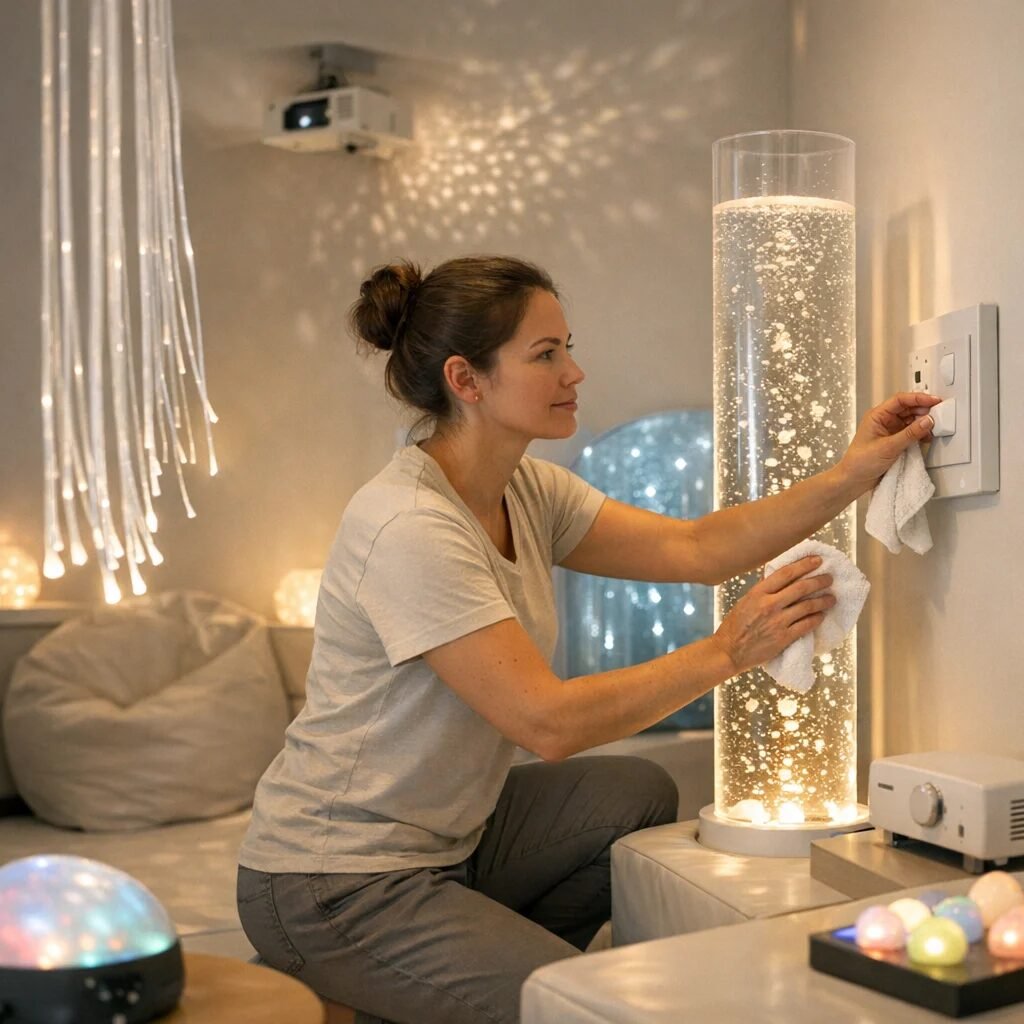
The second task is touchpoint cleaning. High-contact surfaces such as switches, remotes, door handles, tables, touch panels, and sensory toys should be cleaned with products suitable for the material. This is especially relevant in shared settings where multiple users mouth items, rub hands over textured surfaces, or use saliva-heavy oral motor tools. Fabric items need a clear rotation plan so one set can be in use while another is being washed and dried.
Third, staff or parents should do a quick functionality check of the core equipment. Turn on main lighting, test any sound source, confirm visual equipment responds correctly, and make sure timers or controls operate as expected. A room should never be opened assuming equipment will work. When equipment fails during a session, the abrupt change can upset users who depend on predictability. For example, a child who chooses the room specifically for one colour-changing light may struggle if the unit powers off after two minutes because of an unnoticed fault.
What to record each day
A short maintenance log avoids confusion and helps identify recurring faults. It only needs the date, checker’s name, issues found, and action taken. If the same item appears repeatedly, that usually signals a bigger problem such as unsuitable storage, overuse, or poor installation.
Good records also matter for safeguarding and accountability in schools and clinics. If a weighted lap pad or tactile wall panel repeatedly causes concern, written logs justify replacement and show that the setting took reasonable steps to maintain a safe environment.
Weekly cleaning and sensory equipment care
Weekly maintenance goes deeper than the daily sweep. This is when the room should be reset properly, not just wiped down. Start by removing portable sensory tools from shelves and baskets and checking them item by item. This includes fiddle toys, chewables, textured balls, lap pads, headphones, light-up objects, and hand-held projectors. Worn edges, missing battery covers, frayed fabric, and cracked casings are all reasons to remove an item from use immediately.
Cleaning should be tailored to the item. Hard plastic surfaces usually tolerate disinfection well, but many soft tactile resources do not. Over-wetting can ruin textures, leave lingering smells, or create mould risk if drying is poor. A common mistake is using one universal cleaning product for everything in the room. In practice, materials differ widely: vinyl crash mats, acrylic mirrors, foam padding, fleece covers, and electronic controls each need the right method.
Weekly fabric management is often overlooked. Bean bags, black-out curtains, weighted blankets, and soft seating absorb dust, odours, and skin oils more quickly than many families or schools realise. Research on indoor environments consistently links soft furnishings with allergen build-up, which can affect comfort and concentration. Guidance from organisations such as the NHS can help settings think more carefully about allergens and triggers when cleaning shared sensory spaces.
Where wall protection or impact surfaces are used, they should be wiped and inspected weekly. For rooms supporting high movement or crash-seeking behaviour, durable protection such as Anti Collision Wall Padding can support safer use, but only if adhesives, edges, and surfaces are checked regularly for lifting or damage.
Effective cleaning versus over-cleaning
An effective sensory room feels fresh, predictable, and comfortable. A poorly maintained one often swings between neglect and over-cleaning. Neglect leaves dust on lighting units, sticky residue on tactile resources, and unpleasant smells in fabrics. Over-cleaning creates another problem: harsh products can leave strong fragrances, bleaching, or slippery residue, all of which can be very difficult for autistic users or people with sensory processing differences.
A better approach is low-odour, material-appropriate cleaning on a consistent schedule. If a room smells strongly of disinfectant after every wipe-down, the cleaning routine itself may be harming usability. For many users, especially those with autism and ADHD, smell is not a minor detail. It can be the reason they refuse the room altogether.
Monthly inspection of lighting, technology, and moving equipment
Monthly inspections should be more methodical and are best carried out with a checklist. This is the time to test all electrics fully, inspect plugs and sockets, review batteries, and look for subtle changes in performance. Electrical equipment in sensory rooms often includes projectors, LED strips, bubble units, music systems, white noise machines, switch-adapted controls, and charging stations. If a setting has maintenance staff, they should be involved. In homes, a careful parent-led inspection can still catch many issues early.
Lighting deserves particular attention because it directly shapes arousal levels. A light feature that once provided a gentle glow may become overstimulating if settings reset after a power cut or if replacement bulbs differ in colour temperature. Warm, steady lighting generally supports calming better than cool, sharp, flickering light. According to the National Autistic Society, sensory differences can strongly affect how autistic people experience light, sound, touch, and space, making consistency especially valuable.
Monthly checks should also cover moving or pressure-bearing items. If a room includes rocking seats, platform swings, vibrating cushions, or specialist seating, inspect all fixings, stitching, seams, and load-bearing points. Many of the most serious preventable failures in sensory environments happen not because equipment was poor quality, but because wear developed gradually and nobody paused to check it. A school may use a swing dozens of times a week; a monthly visual and physical test is far more realistic than assuming termly review is enough.
Portable regulation tools should be checked for battery leakage, audio distortion, and rough edges. For example, electronic noise-reduction options or music devices may seem functional but produce static or inconsistent volume spikes. That type of fault can derail a session. In shared settings, using labelled storage and charging routines prevents the familiar problem of equipment being returned dead, tangled, or incomplete.
Step-by-step monthly review process
A reliable monthly process can be simple:
- Turn on every electrical item one by one and observe it for at least two minutes.
- Check plugs, adapters, extension leads, and cable routes for heat, fraying, or looseness.
- Inspect fixings on wall-mounted, ceiling-mounted, or weighted equipment.
- Review all batteries and chargers; replace or recycle as needed.
- Clean vents, lenses, and speaker grills to prevent dust-related performance issues.
- Remove any item that feels unpredictable, noisy, unstable, or damaged.
Small additions can also improve reliability. For instance, using clearly identified charging and storage spaces for shared tools can extend lifespan and reduce frantic last-minute troubleshooting before sessions begin.
Termly and seasonal maintenance for long-term safety
Some maintenance tasks are not needed every week but should never be ignored. Termly or seasonal reviews are the right time to look at the room as a whole. This includes furniture layout, wall-mounted resources, acoustic quality, ventilation, blind or curtain function, replacement cycles, and whether the room still reflects its intended purpose. A sensory room can drift over time, especially in schools, where it may become a storage overflow area or gather random donated items that do not belong together.
This broader review should ask practical questions. Is the room still calming, or has it become cluttered? Are users waiting too long because too many large items reduce usable floor space? Do staff understand how each item should be used? Is the room equally suitable for a child wanting deep pressure and an adult needing low-stimulation dementia support? A room that once felt expertly planned can decline simply because no one reassesses the overall environment.
Seasonal changes also affect performance. Rooms can become too warm in summer due to lighting equipment and black-out blinds, or too dry in winter if heating runs constantly. These conditions alter comfort and can increase irritability, especially in people who already struggle to regulate sensory input. Ventilation, humidity, and room temperature should be checked with the same seriousness as lights or soft seating.
Adapting maintenance to different users and settings
Regular maintenance tasks for sensory rooms should reflect who uses the space. In a home sensory room, maintenance often focuses on flexibility, comfort, and close observation. Parents may notice subtle changes quickly, such as a child avoiding one corner because a projector fan has become louder. Because home users are familiar, the maintenance style can be highly personalised, but this also creates blind spots. Families sometimes tolerate wear because they know how to work around it, even when a repair is overdue.
In schools, routines need to be more formal because multiple adults and pupils use the room. Clear labels, checklists, and sign-in procedures reduce accidental misuse. One common school mistake is allowing untrained staff to switch modes, move equipment, or bring in unrelated classroom resources. That can create inconsistent sessions and increase wear. A room intended for co-regulation should not double as a dumping ground for spare chairs and art supplies.
Therapy settings often have the highest standards for documentation but can still overlook overuse. If a therapist runs back-to-back sessions, touchpoint cleaning and reset time must be built into the timetable. In dementia care, maintenance should pay particular attention to contrast, shadows, and familiarity. A malfunctioning light feature that flashes unexpectedly may be unsettling not only for autistic users but also for older adults who are confused by visual change.
ADHD and sensory seeking profiles also influence wear patterns. A room used by active seekers may need more frequent checks of crash areas, floor mats, and wall padding. Deep-pressure tools and movement equipment generally need replacement sooner in these contexts. By contrast, low-arousal relaxation rooms may show less physical wear but more dust build-up on lighting and audio equipment because items are handled less often but left in place for longer.
Common maintenance mistakes and how to avoid them
The most common mistake is treating the sensory room like any other room. It is not. A standard cleaning checklist misses the nuances of sensory function, and a standard facilities inspection may not spot user-related triggers such as buzzing LEDs or strong cleaning smells. Maintenance should be sensory-aware, not purely operational.
Another mistake is keeping damaged items in circulation because they still “sort of work.” A fibre optic lamp with intermittent flicker, a weighted pad with thinning seams, or a tactile cushion with peeling coating is not harmless. In sensory work, unpredictability often matters more than total failure. Consistent, moderate input is usually preferable to unstable input, even if the unstable item seems more exciting.
Poor storage is another source of avoidable damage. Piling sensory tools into one large bin shortens lifespan and makes hygiene harder to manage. Instead, use separate labelled containers for mouthed items, soft fabrics, batteries or chargers, and staff-only controls. A simple storage system reduces breakage and helps everyone return the room to baseline after each use.
Finally, many settings fail to set replacement budgets. Maintenance is not only about preserving items forever; it also means knowing when to retire them. The best sensory rooms stay effective because someone plans for consumables, replacement covers, batteries, and occasional upgrades rather than waiting for total breakdown.
Expert tips for keeping a sensory room effective over time
One of the most useful professional habits is to observe the room when no one is speaking. Stand inside it for three minutes with all usual equipment on. This often reveals issues the maintenance list misses: a faint rattle in a fan, glare from a polished surface, a cable visible in a mirror, or a scent trapped in fabric. Sensory rooms should be assessed with the body as well as the eyes.
Another strong practice is to maintain a “golden setup” photo set. Take reference photos of how the room should look when correctly arranged. This helps staff reset equipment, restores consistency after busy use, and supports substitute staff who may not know the intended layout. It is especially effective in schools and clinics where several adults access the same room.
For portable comfort and regulation resources, quality matters. Low-cost items can be useful, but they tend to fail faster in shared environments. Products such as specialised tactile, seating, or protective tools should be chosen with cleaning and durability in mind, not only visual appeal. Maintenance begins at the purchasing stage.
It also helps to ask users, where possible, what has changed. A non-speaking child may show changes in behaviour rather than explain them verbally, but patterns still provide information. A therapy client who suddenly refuses a seat may be reacting to texture wear or smell. An autistic pupil who starts covering their ears in the room may be signalling a new hum or volume imbalance. Maintenance is most effective when behaviour is treated as feedback, not simply non-compliance.
Frequently Asked Questions
How often should a sensory room be cleaned?
A sensory room should have light daily cleaning of high-touch areas and a deeper weekly clean of fabrics, tools, and surfaces. Shared settings such as schools or clinics often need more frequent cleaning between users. The correct schedule depends on use, materials, and whether items are mouthed or handled intensively.
What is the most important daily maintenance task in a sensory room?
The most important daily task is a quick safety and functionality check before use. This means looking for loose cables, damaged equipment, spills, unstable furniture, and any item that no longer works consistently. Catching small faults early prevents distress and reduces risk.
When should sensory equipment be replaced instead of repaired?
Sensory equipment should be replaced when it becomes unpredictable, unhygienic, structurally weak, or impossible to clean properly. Items with split seams, cracked casings, exposed fillings, or flickering electronics are usually better retired than patched. Reliability matters as much as appearance.
Do sensory rooms need a maintenance log?
Yes, a maintenance log is strongly recommended for homes, schools, and therapy settings. It helps track recurring faults, confirms checks were completed, and supports safer decision-making about repairs or replacements. In professional environments, it also improves accountability.
How can maintenance support autistic users better?
Maintenance supports autistic users by keeping the room consistent, predictable, and free from avoidable sensory triggers. This includes reducing flicker, controlling smells, checking sound quality, and preserving familiar layouts. Even minor changes can affect regulation, so consistency is central.
What are common signs that a sensory room is not being maintained properly?
Common signs include strong odours, dusty equipment, sticky tactile surfaces, flickering lights, dead batteries, cluttered storage, and users avoiding the space. Behavioural signs matter too, such as increased agitation or reduced engagement in a room that was previously calming. These changes often point to maintenance issues rather than user preference alone.
Is maintenance different for home and school sensory rooms?
Yes, home sensory rooms are usually more personalised, while school sensory rooms need clearer routines, logs, and shared-use protocols. Schools often require stricter storage, cleaning, and staff training because more people use the space. Homes may notice changes faster but can sometimes delay repairs because workarounds feel easier.