Table of contents
Sensory rooms for seniors with dementia are carefully designed spaces that use light, sound, touch, scent, and familiar objects to reduce distress, support orientation, and encourage meaningful engagement. When planned well, these rooms can ease agitation, improve mood, and provide safe, calming stimulation for people living with dementia across home, care, and therapeutic settings.
Professionals who design sensory environments for neurodivergent children and adults often recognise a clear overlap with dementia care: both groups can benefit from structured sensory input, reduced overload, predictable layouts, and environments that support regulation rather than demand more processing. In dementia settings, the strongest sensory rooms are not built for entertainment alone; they are built to lower stress, reinforce comfort, and help the person feel secure, capable, and connected.
Highlights
- Sensory rooms for seniors with dementia help reduce agitation, support relaxation, and encourage positive engagement through controlled sensory experiences.
- The most effective rooms use soft lighting, familiar sounds, tactile items, safe seating, and simple layouts rather than busy, overstimulating equipment.
- Successful setups are tailored to the person’s history, stage of dementia, mobility, vision, and hearing needs.
- Home, school, and therapy professionals can adapt core sensory design principles to create dementia-friendly spaces that are safe and genuinely therapeutic.
What are sensory rooms for seniors with dementia?
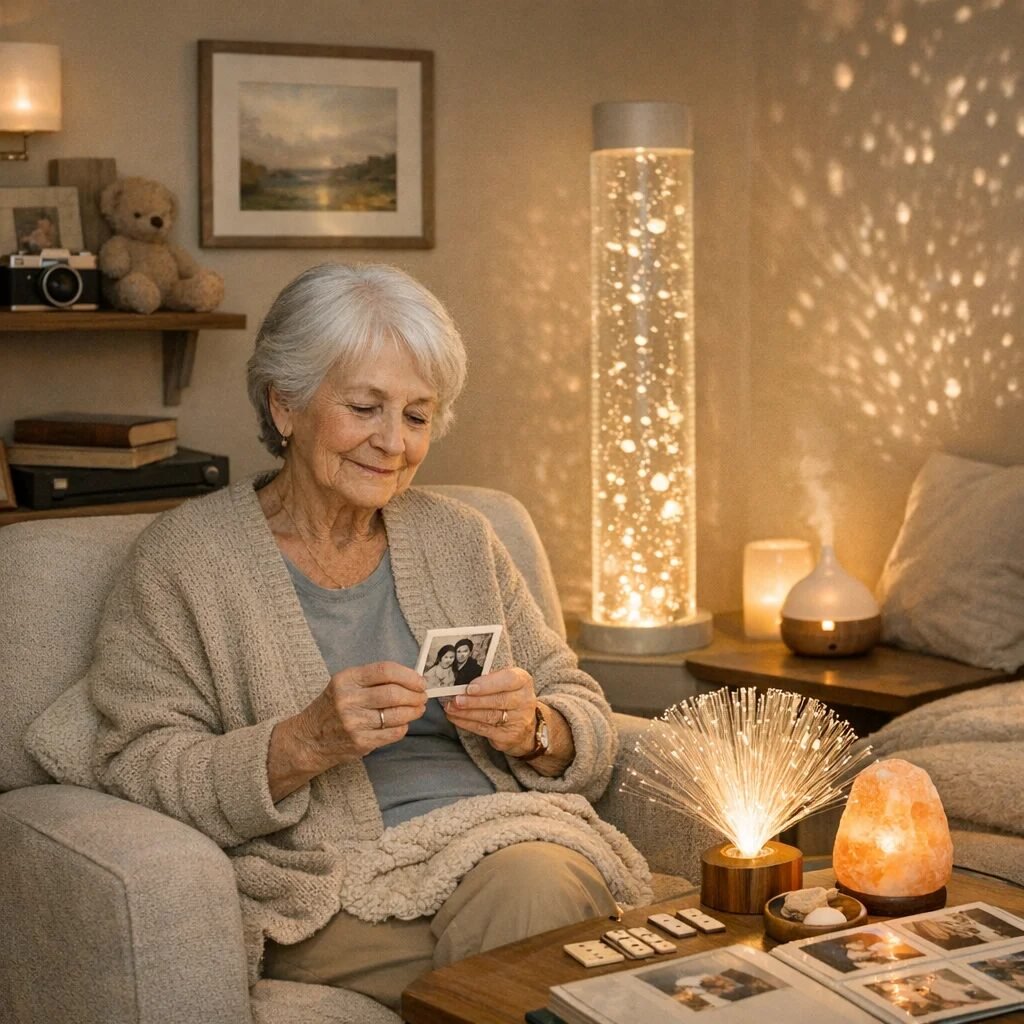
A sensory room for seniors with dementia is a dedicated space designed to provide controlled sensory input that soothes, engages, and supports emotional regulation. In practice, that means replacing confusing, noisy, or visually busy environments with a room that feels calm, predictable, and easy to process. These rooms may include gentle lighting effects, comfortable seating, textured resources, meaningful music, memory prompts, and quiet sensory tools.
For a person with dementia, everyday environments can become hard to interpret. Background noise may feel threatening, mirrors may be misread, clutter can increase confusion, and harsh lighting can heighten distress. A sensory room works by reducing competing demands while introducing selected sensory experiences that are easier to understand and more emotionally reassuring. This is particularly valuable during periods of sundowning, anxiety, withdrawal, or restlessness.
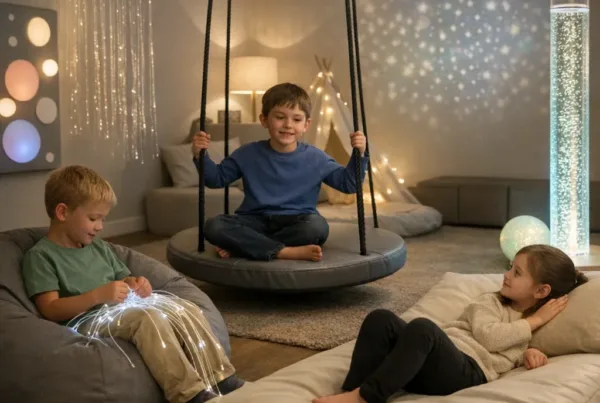
Although sensory spaces are often associated with autism and sensory processing differences, the design logic is highly relevant to dementia care. In both contexts, a well-planned room supports regulation, not overload. The difference is that dementia-focused rooms should lean more heavily on familiarity, comfort, reminiscence, physical safety, and simple cause-and-effect interactions rather than fast-changing visual stimulation.
Research supports sensory-based approaches in dementia care when used thoughtfully. The NHS notes that dementia can affect how a person experiences their environment, making supportive environmental design especially valuable. Alzheimer’s Society also highlights that personalised music and familiar sensory cues can improve wellbeing and reduce distress in some individuals. For wider context, Alzheimer’s Disease International estimates that over 55 million people worldwide live with dementia, underlining the need for supportive, non-pharmacological interventions in daily care according to Alzheimer’s Disease International.
Why sensory rooms can help people living with dementia
The main benefit of a sensory room is that it gives the person a setting where their nervous system can settle. Dementia often brings confusion, fear, frustration, and sensory misinterpretation. A quieter room with soft lighting, reduced visual clutter, and soothing sensory choices can reduce the triggers that contribute to pacing, calling out, resistance to care, or emotional shutdown.
These spaces can also support positive occupation. Many seniors with dementia are not helped by being left in passive inactivity, especially in communal settings where television noise and frequent movement increase fatigue. A good sensory room offers emotionally meaningful activity without pressure. Stroking a textured cushion, watching slow-moving lights, listening to songs from early adulthood, or handling familiar objects can all create moments of calm engagement.
Another major strength is relationship-building. Sensory rooms are not only for solitary use. They can help carers, therapists, and family members connect more successfully with the person. A daughter playing a favourite wartime song, a therapist guiding hand massage with scented lotion, or a care worker sitting quietly beside a resident in a softly lit room can all turn the environment into a tool for connection rather than merely a backdrop.
There is also a strong practical advantage: environmental support can reduce reliance on trial-and-error behavioural management. This does not mean sensory rooms replace medical care. It means they can complement it. In real settings, the most successful rooms are often used before distress escalates, not only afterward. A resident known to become anxious before evening mealtimes may benefit from a 20-minute visit to the sensory room beforehand, helping the transition feel more manageable.
Core design principles for a dementia-friendly sensory room
Keep stimulation gentle and understandable
A common mistake is assuming more sensory equipment creates a better room. In dementia care, the opposite is often true. Fast colour changes, loud soundtracks, flashing projectors, reflective surfaces, and multiple active devices can increase confusion. Seniors with dementia usually benefit more from slow, warm, predictable sensory experiences than from high-intensity effects.
An effective setup might include one light feature, one sound source, several tactile items, and clear seating. A poor setup might combine bubble tubes, moving projections, bright LEDs, mirrors, music, aromatherapy, and textured resources all at once. The first invites regulation. The second risks overload, especially for someone with reduced visual processing or anxiety.
Prioritise familiarity over novelty
Children in sensory rooms may enjoy novelty and exploration. Seniors with dementia often respond better to what feels known. That could be the texture of knitted blankets, the scent of lavender associated with bedtime, songs from the 1950s or 1960s, photographs of local places, or objects linked to past roles such as gardening, sewing, or office work.
This is where dementia sensory design differs from generic multisensory rooms. The room should not feel like a gadget display. It should feel emotionally legible. If a person spent years at the seaside, a basket of shells, gentle ocean sounds, and blue-toned soft lighting may be more effective than abstract visual projections. Personal history matters more than novelty.
Design for physical safety and dignity
Every item in the room should be evaluated for mobility, falls risk, hygiene, and ease of use. Seating should be supportive, stable, and easy to transfer into. Walking routes must remain clear. Cables should never be exposed. Equipment controls should be simple enough for staff to use quickly and consistently. Surfaces should be easy to wipe down without making the room feel clinical.
Dignity matters just as much as safety. Adults with dementia should not be placed in rooms that feel infantilising. Toys, cartoon visuals, and child-focused themes are rarely appropriate unless they connect directly to a meaningful personal memory. For adult users, sensory tools should feel respectful, age-appropriate, and comfortable within a care setting.
How to set up a sensory room for dementia step by step
Step 1: Identify the room’s purpose
Before choosing products, define exactly what the room needs to do. Is the main goal calming agitation, supporting one-to-one visits, reducing sundowning distress, encouraging gentle activity, or offering a quiet retreat from a noisy care environment? A room without a clear purpose often ends up cluttered and inconsistently used.
For example, a home-based sensory room may need to support evening relaxation after confusion builds during the day. A care home room may need to serve multiple residents with different sensory needs. A therapy setting may use the room for structured sessions, with clear plans for music, touch, and memory-based engagement.
Step 2: Assess individual sensory and cognitive needs
Not every person with dementia responds in the same way. Some seek sensory input and enjoy gentle tactile exploration. Others are highly sensitive to noise or light. Hearing loss, cataracts, reduced contrast sensitivity, neuropathy, arthritis, or trauma history can all affect how the room should be set up. Staff and family should build a preference profile before using the space regularly.
This profile should include preferred music, disliked sounds, favourite scents, mobility limitations, vision needs, known triggers, and calming routines. The same personalised planning used in autism sensory support also applies here. Professionals looking at broader sensory design principles may find value in how technology can enhance sensory experiences, particularly when adapting tools to individual needs rather than applying them in a generic way.
Step 3: Control the sensory foundations
Start with the room itself before adding specialist equipment. Use warm, dimmable lighting where possible. Reduce unnecessary noise from corridors, televisions, alarms, or ventilation. Keep wall displays simple. Choose soothing, non-glare colours. Remove clutter and excessive signage. Ensure there is enough space for wheelchairs or walking aids, with obvious routes around furniture.
The most transformative changes are often the least expensive. Softer bulbs, blackout curtains, acoustic soft furnishings, and clear floor space can do more for regulation than expensive visual effects. If the room still feels chaotic without equipment turned on, it is not yet ready.
Step 4: Add a few high-value sensory elements
Once the environment is stable, add sensory tools selectively. Soft projected lighting, weighted tactile cushions, calming music, hand-held fidgets suitable for adults, familiar photographs, and aromatherapy used carefully can all contribute. Seating should encourage relaxation and support.
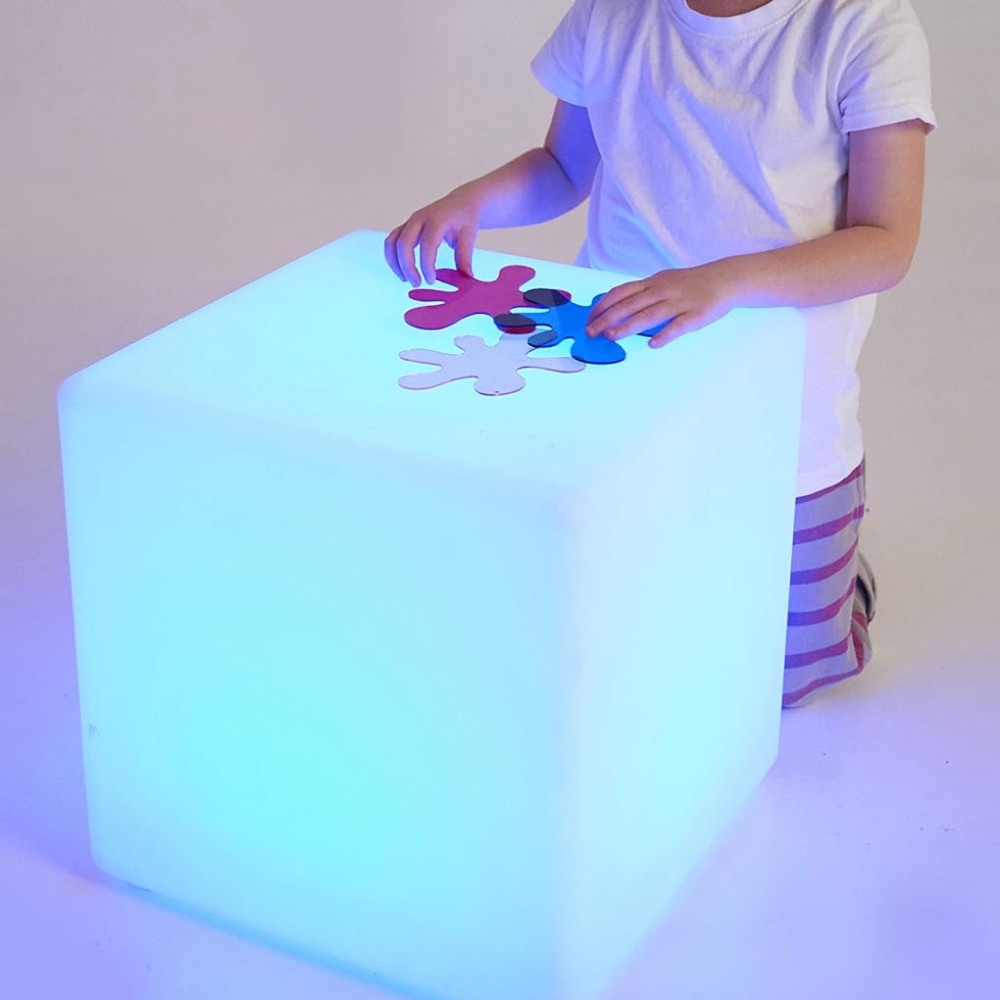
A practical example is a corner with a supportive chair, a fleece blanket, slow colour lighting, a music player, and a tactile cushion. Another might include a memory box linked to the person’s life history. For soft ambient lighting, some care providers use the B0DMFMDWWX, but any lighting feature should be tested for glare, speed, and comfort before routine use.
Step 5: Create a simple usage routine
A sensory room is most effective when staff and families know when and how to use it. Build short, repeatable routines such as a 15-minute calming session after personal care, a music-based visit before evening meals, or a tactile and reminiscence activity during periods of withdrawal. Predictability helps the person associate the space with comfort.
Staff should also know when not to use the room. If someone is frightened by dim lighting, disoriented by colour changes, or distressed by enclosed spaces, the setup should be adjusted or replaced with mobile sensory support in another room. Good sensory care is responsive, not rigid.
Best sensory features for seniors with dementia
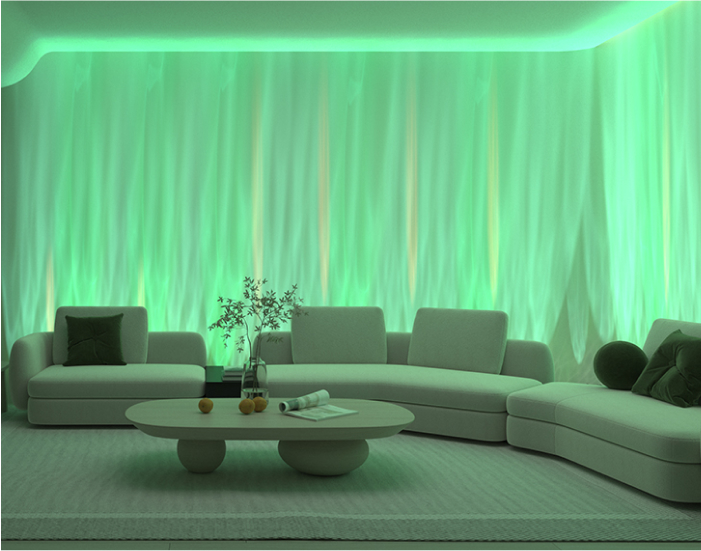
Lighting should be soft, warm, and adjustable. Harsh overhead fluorescents can increase discomfort, while dimmable lamps, slow colour wash effects, or gentle projectors can make the room feel safer and calmer. Lighting works best when it helps the person see clearly without causing visual confusion. For adults with dementia, slow and steady is far more effective than dramatic effects.
Sound is another high-impact feature. Personalised music is often one of the strongest tools available because it links directly to emotion and autobiographical memory. According to Alzheimer’s Society, music can support communication and reduce distress for some people with dementia through music and dementia support guidance. However, the key word is personalised. Random relaxation playlists are less useful than songs tied to the person’s life.
Tactile resources should be chosen with adult dignity and hand comfort in mind. Good options include knitted sleeves, textured cushions, sensory quilts, smooth worry stones, soft fabrics, and familiar household materials. Items should be easy to clean and free from loose pieces. If arthritis is present, very small fidgets may frustrate rather than help.
Seating is frequently overlooked, yet it shapes how long and how comfortably a person can engage. Supportive armchairs, rocking chairs for some users, and clear transfer space all matter. Environmental comfort can also be enhanced by learning from wider design principles in creating a relaxing sensory bedroom, especially where calm sensory design overlaps with rest and emotional regulation.
Common mistakes in dementia sensory rooms
The first mistake is overstimulation. Rooms packed with colour-changing devices, competing sounds, mirrors, and bright projections may impress visitors but often fail the person who actually needs support. If the room feels more like an exhibit than a refuge, the design has missed its purpose.
The second mistake is copying sensory rooms designed for children without adapting them for older adults. Seniors with dementia need respect, comfort, and personal relevance. A room filled with juvenile toys, neon colours, and novelty effects can feel patronising or simply confusing. Adult sensory design should be subtle and grounded in the user’s age, history, and current abilities.
The third mistake is poor staff implementation. Even an excellent room fails if no one knows how to use it. Staff may switch on every feature at once, bring multiple residents with conflicting needs into the room together, or wait until distress is too severe. Training should cover pacing, observation, personalised triggers, and documenting what works for each person.
A final mistake is neglecting review. Dementia changes over time, so the room should change too. A person who once enjoyed visual effects may later prefer music and hand massage. Another may begin to find scent overwhelming. The best rooms are evaluated regularly and adjusted as sensory tolerance shifts.
Using sensory rooms across home, therapy, and care environments
In home settings, the room is usually smaller and more personal. A spare bedroom corner, conservatory area, or quiet lounge space can become a sensory zone with the right planning. Families often get the best results by focusing on one person’s routines and memories rather than trying to replicate a full institutional sensory room. Familiarity is the biggest advantage at home.
In therapy environments, the room may be used more intentionally for structured sessions. Occupational therapists, dementia specialists, and activity practitioners can use sensory rooms to observe regulation patterns, trial calming strategies, and identify preferred sensory inputs. Here, the room functions as both support space and assessment tool.
In care homes or specialist units, the challenge is balancing individualisation with shared use. A flexible core setup works best: calming lighting, comfortable seating, portable tactile tools, music options, and removable reminiscence items. Staff should prepare the room before each use rather than assuming one fixed setup suits everyone.
Professionals who work across settings often notice useful crossover with autism and ADHD sensory support: low arousal spaces help many people regulate. Yet dementia care requires stronger emphasis on orientation, familiarity, mobility, and life story. The room should always answer one question: does this help the person feel safer and more settled right now?
Expert tips for making the room genuinely effective
Keep a simple record after each session. Note what equipment was used, how long the session lasted, the person’s mood before and after, and any signs of discomfort. Patterns emerge quickly. A resident may consistently settle with music and tactile input but become uneasy with projected lights. Without documentation, these insights are often lost between staff shifts.
Use the room proactively, not only reactively. Waiting until someone is already shouting, resisting, or highly disoriented can make the room harder to use effectively. Scheduled sensory support before predictable stress points often works better. This is especially true for end-of-day agitation, post-care anxiety, and transitions between busy communal activities.
Do not underestimate scent, but use it carefully. Some individuals find lavender, rose, or familiar hand creams deeply comforting; others dislike fragrance or have respiratory sensitivities. Introduce scent lightly and never assume a “relaxing” aroma is universally calming. Personal association matters more than trend-based aromatherapy.
Finally, involve family wherever possible. They often know the songs, routines, textures, and objects that truly matter. A sensory room becomes far more powerful when it reflects the individual’s life rather than a standard care template. That is where sensory design shifts from decorative to therapeutic.
Frequently Asked Questions
Do sensory rooms help seniors with dementia?
Yes, sensory rooms can help seniors with dementia by reducing agitation, supporting relaxation, and encouraging meaningful engagement. They work best when the setup is personalised, calm, and based on the person’s sensory preferences and life history.
What should be in a sensory room for dementia?
A dementia sensory room should include soft lighting, comfortable seating, calming or familiar music, tactile items, and a clear, uncluttered layout. The most effective rooms use a few well-chosen features rather than many stimulating devices.
Are sensory rooms only for people in care homes?
No, sensory rooms can be created at home, in therapy clinics, and in residential care settings. Even a quiet corner with supportive lighting, familiar music, and tactile resources can function as a useful sensory space.
Can a sensory room reduce agitation in dementia?
It can reduce agitation for many people when used appropriately. Gentle sensory input, lower noise, and familiar cues can help the person feel safer, though the room should be tailored because some features may increase discomfort if poorly chosen.
What colours are best in a dementia sensory room?
Soft, warm, and non-glare colours are generally best. Muted blues, greens, creams, and warm neutral tones often create a calmer atmosphere than very bright or highly contrasting colour schemes.
How long should a person with dementia stay in a sensory room?
Many people benefit from short sessions of 10 to 30 minutes, depending on energy, attention, and sensory tolerance. The best guide is the person’s response; sessions should end before fatigue or confusion increases.
What is the biggest mistake when designing a dementia sensory room?
The biggest mistake is overstimulation. Too many lights, sounds, and moving features can overwhelm the person, making the room less calming and more confusing.