Table of contents
Types of sensory rooms include calming rooms, active sensory rooms, multi-sensory rooms, therapy-focused spaces, sensory bedrooms, school regulation rooms, and specialist environments for dementia care or profound disabilities. In my experience designing sensory spaces for homes, schools, and clinics, the right room type depends less on aesthetics and more on the user’s regulation needs, sensory profile, and the practical realities of the setting.
A sensory room is not one single concept. It can be a quiet retreat for an autistic child who is overwhelmed, a movement-led space for a pupil with ADHD, or a carefully structured therapy room supporting communication, motor planning, and emotional regulation. The most effective sensory rooms I have created always start with one question: what should this room help the person do better?
Highlights
Types of sensory rooms vary by purpose, user needs, and setting. The most common include calming rooms, active sensory rooms, multi-sensory environments, therapy rooms, sensory bedrooms, and specialist spaces for schools or dementia care. The best design matches sensory input to regulation goals, rather than filling a room with random equipment.
What are the main types of sensory rooms?
When parents or schools ask me about types of sensory rooms, I explain that the category is usually defined by function. A sensory room is a dedicated space designed to provide controlled sensory input or reduce sensory stress. That may involve light, sound, touch, movement, deep pressure, smell, or visual structure, but the aim is always purposeful regulation.
The main types I work with are calming sensory rooms, active sensory rooms, multi-sensory rooms, therapy sensory rooms, sensory bedrooms, school regulation rooms, and specialist sensory spaces for older adults or highly complex needs. Some rooms blend elements of several categories, but the strongest designs still have a clear primary purpose. If a room tries to do everything at once, it often becomes overstimulating and far less effective.
A good comparison is this: a calming room should lower demand and support recovery, while an active sensory room should safely increase alertness and body awareness. Mixing those goals without planning can lead to poor results. I have seen beautifully decorated rooms fail because they included bright flashing lights next to soft cocoon seating intended for de-escalation. The room looked impressive, but it worked against the user’s nervous system.
Calming sensory rooms
Calming sensory rooms are the most requested type, especially for autistic children, people with sensory processing difficulties, and students who become overwhelmed in busy environments. Their purpose is to reduce stress, lower arousal, and create a predictable environment where the body and brain can settle. In schools, these rooms often prevent escalation. At home, they can become a safe retreat after sensory overload, transitions, or social fatigue.
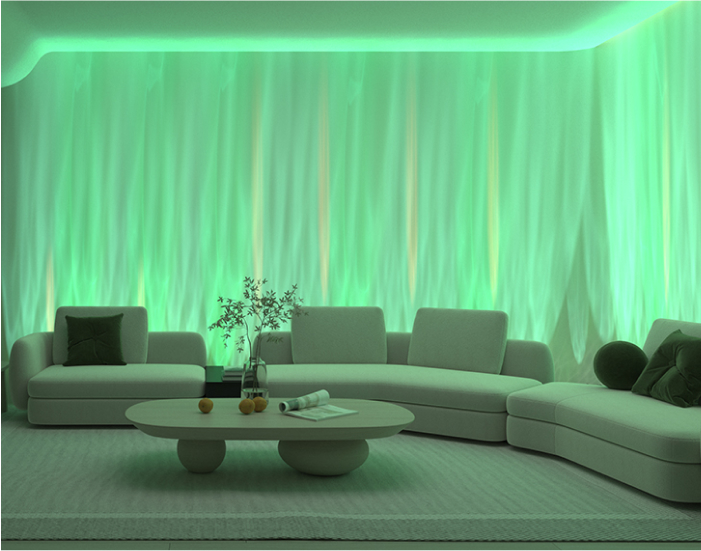
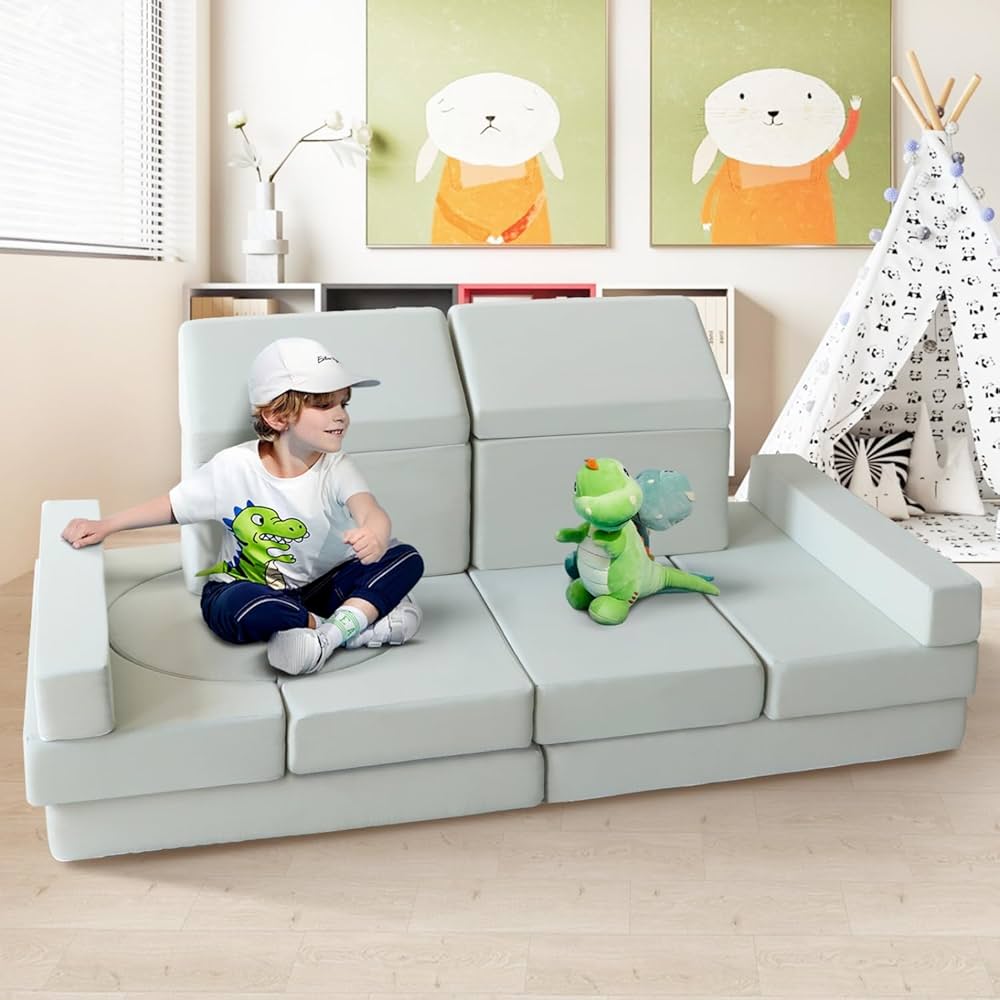
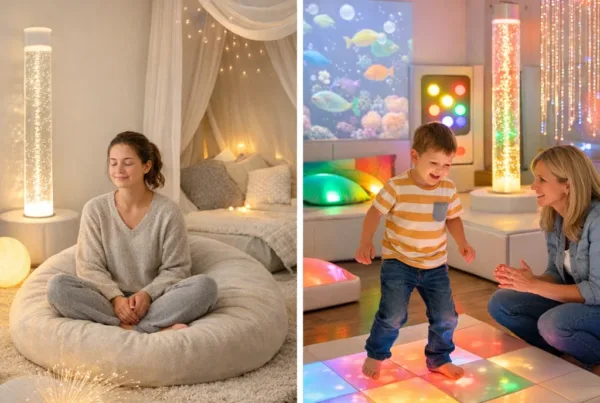
In practical terms, I design calming rooms around low stimulation and clear predictability. That usually means muted colours, soft lighting, minimal visual clutter, acoustic control, and a limited number of sensory choices. Items such as a weighted blanket, soft crash mats, gentle projectors, and enclosed seating can work well when chosen to match the individual. I often recommend warm, dimmable lighting over colour-changing effects if the user is easily visually overloaded.
One common mistake is assuming “sensory” means adding more sensory input. For a child who is already overloaded by sound, movement, and visual demands, adding spinning lights and noisy gadgets can make regulation harder. Effective calming rooms remove demand before they add stimulation. I usually start with sound absorption, a defined quiet corner, and one or two regulating tools rather than ten novelty items.
How I set up a calming room effectively
My process starts with identifying triggers. Is the person distressed by noise, bright light, physical proximity, transitions, or unpredictability? Once I know that, I zone the room so there is an obvious low-demand area. That might include beanbag seating, a floor mat, a weighted lap pad, and a simple visual choice board to reduce communication pressure.
I then test sensory input carefully. A bubble tube may be soothing for one person and distracting for another. A soft diffuser scent may help one adult with anxiety but be intolerable for someone with autism who is scent-sensitive. I always recommend introducing one element at a time and watching for changes in breathing, posture, vocalisation, and recovery time.
Active sensory rooms
Active sensory rooms are designed for users who need movement, vestibular input, proprioceptive feedback, and opportunities to increase alertness in a safe, structured way. These rooms are especially useful for some children with ADHD, sensory seeking profiles, dyspraxia, and developmental delays. They can support focus, coordination, emotional regulation, and body awareness when used intentionally.
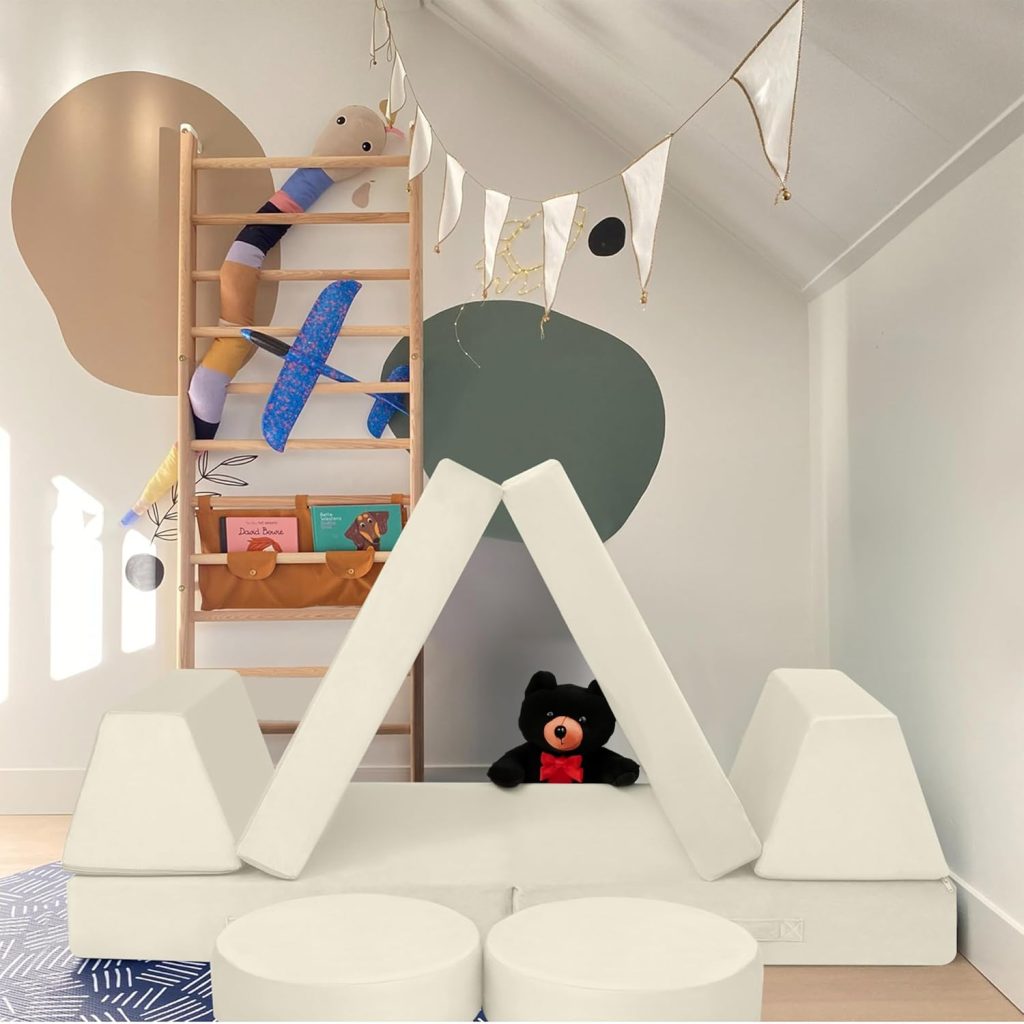
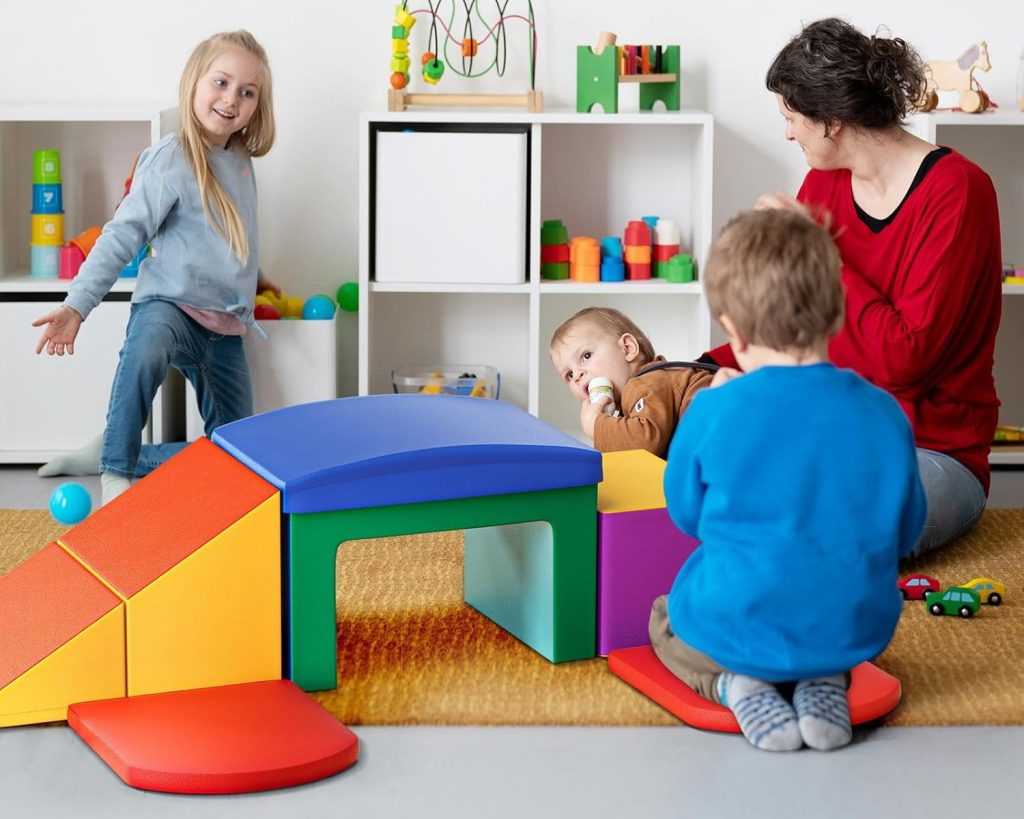
In schools and therapy settings, active sensory rooms often include climbing elements, swings, crash pads, stepping stones, resistance tools, tunnels, and wall-mounted activity panels. At home, the same principle can be achieved on a smaller scale with movement circuits and heavy-work options. A room like this should feel organised rather than chaotic. I want movement to be purposeful, not a free-for-all that leads to dysregulation.
A poor active setup usually has too many exciting features crammed into a small room with no safety plan. I have seen compact spaces with a swing, trampoline, projector, music speaker, pop-up tent, and spinning chair all competing for attention. The result was not therapeutic movement; it was disorganisation, collisions, and overstimulation. A strong active room has flow, clear safety spacing, and a sequence of activities matched to the user’s needs.
For families exploring movement support, I often suggest starting with simple, versatile tools such as a sensory swing or floor-based proprioceptive equipment before investing in larger installations. If you are supporting attention and regulation in school-aged children, this guide on whether sensory rooms are good for ADHD gives helpful context on matching room design to regulation goals.
Multi-sensory rooms
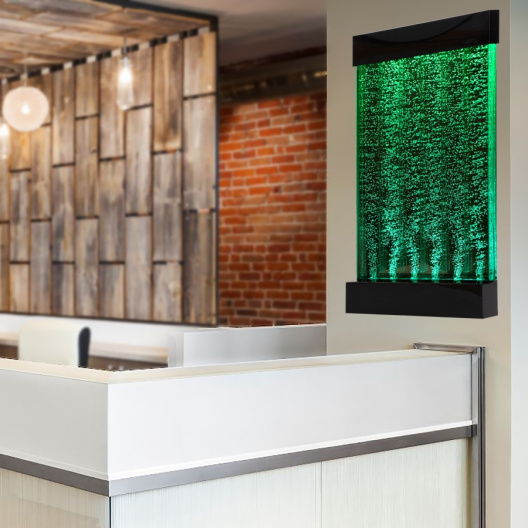
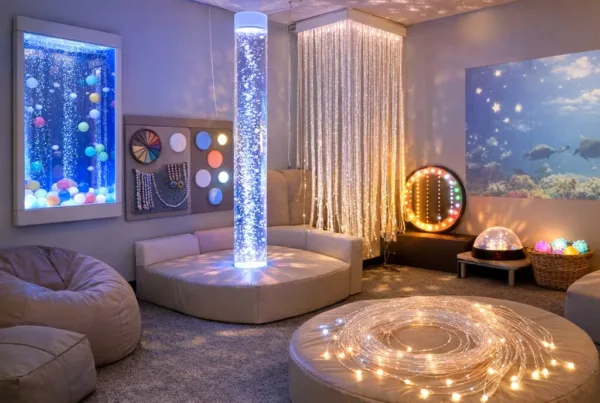
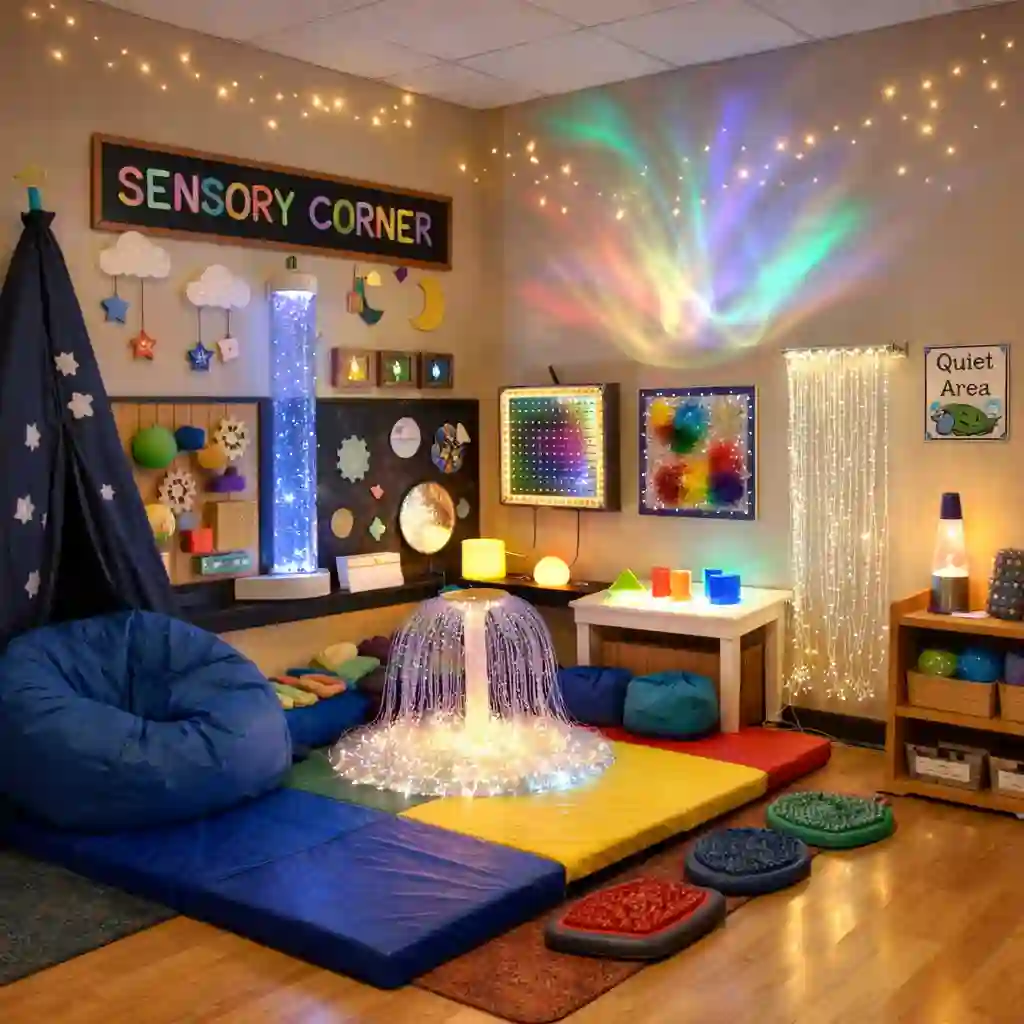
A multi-sensory room is the type many people picture first: bubble tubes, fibre optics, projectors, music, tactile panels, mirrors, and interactive lighting. These rooms can be highly effective for engagement, relaxation, learning, and communication when planned well. I use them frequently in special schools, therapy centres, and some home settings, particularly for children and adults with profound and multiple learning disabilities or complex communication needs.
The strength of a multi-sensory room is flexibility. It can support visual tracking, cause-and-effect learning, shared attention, sensory exploration, and emotional regulation. For users with limited verbal communication, these rooms can create meaningful opportunities for choice-making and interaction. Research from the UK’s National Autistic Society notes that sensory differences can significantly affect daily functioning, which is why carefully adapted environments matter so much according to the National Autistic Society.
That said, multi-sensory rooms are the easiest type to get wrong. If every feature is on at once, the room can become visually busy, acoustically harsh, and impossible to process. I nearly always create simple operating modes: calming mode, engagement mode, communication mode, and alerting mode. This allows the same room to be adapted without overwhelming the user.
Best uses for a multi-sensory room
In one school project, we used a bubble tube and fibre optics to support visual attention for a pupil with profound disabilities. The teacher paused the lighting changes and paired them with vocal turn-taking, transforming what could have been passive watching into active communication work. In another home project, I used projected visuals and tactile textures to support bedtime wind-down for an autistic teenager who needed structured sensory decompression after college.
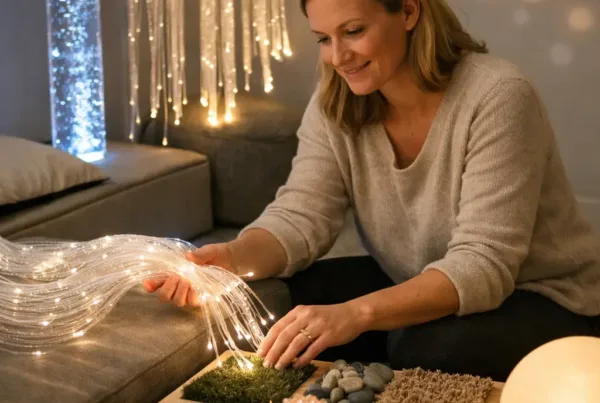
If you are building this kind of space, I would prioritise controllability over quantity. A good sensory bubble tube, dimmable LED lighting, and a few tactile features often outperform a room full of budget gadgets. I also like using fibre optic sensory lights in spaces where users benefit from quiet visual input without excessive brightness.
Therapy sensory rooms
Therapy sensory rooms are more structured than general sensory spaces. I design these for occupational therapists, speech and language therapists, play therapists, and specialist practitioners who need the room to support goals such as motor planning, emotional regulation, communication, posture, bilateral coordination, or sensory integration work.
What makes a therapy room different is that every element has a job. Seating may support posture. Movement equipment may target vestibular processing. Fine motor stations may be placed after gross motor work to take advantage of improved regulation. Even lighting and acoustics are chosen to support attention and reduce interference during sessions.
One mistake I see is copying a school sensory room into a clinic without considering clinical workflow. Therapists need easy observation lines, storage that keeps equipment accessible but not distracting, and room transitions that support the session plan. In a therapy room, usefulness matters more than spectacle. The best rooms help professionals assess, adapt, and repeat interventions consistently.
Sensory bedrooms and home sensory spaces
Not every family has space for a dedicated sensory room, and that is completely realistic. Some of the most successful projects I have worked on have been sensory bedrooms, under-stair calming nooks, converted box rooms, or corners of living spaces adapted with intention. A home sensory room does not need to be large to be effective. It just needs to be predictable, safe, and matched to the person using it.
A sensory bedroom often works best when sleep, regulation, and retreat are the main goals. I focus on blackout options if light is disturbing, soft furnishings that reduce sound bounce, deep-pressure tools, and low visual clutter. For children who need a defined safe zone, enclosed beds or canopy spaces can help. For teens and adults, I often create more age-respectful setups with discreet lighting, heavy blankets, and textured cushions rather than childlike themes.
Families frequently make the mistake of turning a bedroom into both an exciting play zone and a sleep sanctuary. If the room includes flashing LEDs, busy wall decor, noisy toys, and lots of movement equipment, settling for sleep becomes harder. In those cases, I separate functions as much as possible: one corner for regulation, one area for sleep, and active equipment elsewhere if possible.
School sensory rooms and regulation spaces
In schools, I tend to separate sensory rooms into two categories: general regulation rooms and specialist sensory environments. A regulation room supports pupils who need short, structured breaks to calm, reset, or regulate before returning to class. A specialist sensory room may be used for timetabled sensory circuits, communication work, or support for pupils with complex needs.
The best school rooms have a clear entry system, time limits where appropriate, adult guidance, and a plan for reintegration into learning. Without that structure, rooms can become reward spaces, avoidance zones, or dumping grounds for mismatched furniture. I always ask school teams who will use the room, when, with what supervision, and how staff will know the intervention has worked.
For broader planning ideas, I often point teams toward practical sensory room guides so they can think through equipment, layout, and day-to-day use before making purchases. This is especially relevant because the Centers for Disease Control and Prevention estimates around 1 in 36 children are identified with autism spectrum disorder based on CDC surveillance data, meaning many schools are trying to create more responsive sensory support environments.
Specialist sensory rooms for dementia and complex needs
Sensory rooms are not only for children. I have also designed spaces for adults with dementia, acquired brain injury, and profound disabilities, and these rooms require a very different approach. For dementia care, sensory rooms often focus on reassurance, familiarity, reminiscence, gentle stimulation, and reducing agitation. Soft music, tactile textiles, calming imagery, and familiar scents can be more effective than highly interactive technology.
For people with profound and multiple learning disabilities, the room may need to support positioning, accessibility, visual contrast, gentle sound, switch access, and one-to-one engagement. In these environments, comfort, dignity, and responsiveness matter deeply. I avoid designing around what looks impressive and focus instead on what the individual can perceive, tolerate, and enjoy.
There is good evidence that the environment affects distress and quality of life in dementia care. The Alzheimer’s Society highlights how sensory changes and environmental adjustments can influence wellbeing in its guidance on dementia and the senses. In practice, I have found that slower pacing, softer contrasts, and familiar sensory cues are usually more valuable than dramatic effects.
How to choose the right type of sensory room
If you are unsure which type of sensory room you need, I recommend a simple decision process. Start with the person, not the products. Ask whether the room should calm, alert, engage, support therapy, improve sleep, or provide a safe retreat. Then consider what sensory experiences usually help and which ones tend to trigger distress.
My step-by-step method looks like this:
- Define the main outcome: calming, movement, therapy, sleep, or engagement.
- List the person’s sensory preferences and triggers.
- Consider the setting: home, school, clinic, or care environment.
- Choose 3–5 core features that directly support the outcome.
- Test the room in low-demand sessions before adding more equipment.
- Review usage after two to four weeks and adjust based on actual response.
This process prevents one of the most expensive mistakes I see: buying equipment first and trying to force a purpose later. A room built around random purchases often ends up underused. A room built around clear outcomes gets used consistently because people understand what it is for and how it helps.
Common design mistakes across all sensory room types
The first mistake is overstimulation. More equipment does not mean better support. I would rather see one well-chosen light source, one safe seating option, and one tactile activity used properly than a crowded room full of competing sensory inputs.
The second mistake is poor zoning. Even in a small room, users need visual clarity. If calming tools sit next to movement equipment, or if there is no obvious pathway through the room, regulation becomes harder. I use rugs, wall colours, furniture positioning, and lighting levels to define spaces clearly.
The third mistake is forgetting maintenance and real-life use. Bubble tubes need upkeep. Soft furnishings need cleaning. Staff need training. Families need systems that are quick to use on hard days. If the setup is too complex to run or reset, it will not become part of everyday support. Simplicity is often what makes a sensory room genuinely sustainable.
Frequently Asked Questions
What is the most common type of sensory room?
The most common type is a calming sensory room. These spaces are designed to reduce overload, support emotional regulation, and provide a safe retreat for children or adults who become overwhelmed by noise, light, or everyday demands.
Which type of sensory room is best for autism?
There is no single best type for all autistic people. Some benefit most from calming rooms, while others need active sensory spaces or multi-sensory environments. The right choice depends on whether the person is sensory seeking, sensory avoidant, or needs support with regulation, communication, or transitions.
Can a sensory room be created at home without a spare room?
Yes, a home sensory space can be created in a bedroom corner, small box room, landing nook, or section of a living room. The key is to define the area clearly and use a few purposeful items that match the user’s sensory needs.
What is the difference between a sensory room and a multi-sensory room?
A sensory room is a broad term for any space designed to support sensory regulation or sensory input. A multi-sensory room is a specific type of sensory room that offers several different forms of stimulation, such as lights, sound, tactile features, and visual effects.
Are sensory rooms only for children?
No, sensory rooms can be highly effective for adults as well. I have used them in dementia care, mental health settings, disability services, and rehabilitation environments where sensory support improves comfort, regulation, and engagement.
How many items should a sensory room have?
There is no ideal number, but fewer well-chosen items usually work better than a crowded setup. I generally start with a small core group of tools and add more only if there is a clear purpose and positive response.
What should I buy first for a sensory room?
Start with the basics that support the room’s main goal: seating, lighting control, and one or two sensory regulation tools. For many spaces, that might mean soft seating, dimmable lights, and calming options such as tactile items or deep-pressure supports like sensory LED lights.