Table of contents
Common sensory room activities are structured or flexible experiences that help a person regulate, focus, explore, communicate, or relax through sight, sound, touch, movement, and deep pressure. In my work designing sensory spaces for autistic children, adults with sensory processing differences, pupils with ADHD, and people living with dementia, I’ve found that the best sensory room activities are always purposeful: they match the individual’s sensory profile, the setting, and the goal for that moment.
Quick Answer
Common sensory room activities include bubble tube tracking, fibre optic play, calming light work, movement breaks, weighted relaxation, tactile exploration, music and sound activities, cause-and-effect games, and guided breathing. The most effective activities are tailored to the user’s sensory needs, whether the aim is calming, alerting, engagement, or emotional regulation.
What are sensory room activities?
Sensory room activities are planned experiences that use sensory input to support regulation, attention, communication, motor development, emotional wellbeing, or relaxation. In simple terms, they are things a person does in a sensory room that help the brain and body feel more organised. That might mean calming an overwhelmed child, helping a pupil with ADHD reset between lessons, supporting an autistic learner with transitions, or giving a person with dementia familiar and soothing stimulation.
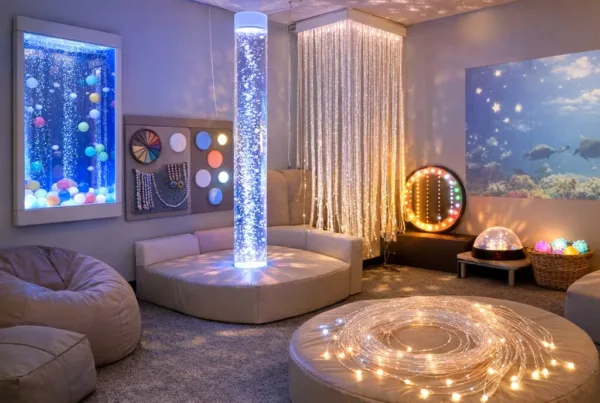
I always explain to parents and staff that an activity is not just “turning on nice lights.” A proper sensory room activity has a purpose. For example, watching a bubble tube can support visual tracking and calm breathing, while pushing into beanbags or lying under a weighted blanket can provide deep pressure input that helps some people feel secure and grounded. When I plan a room, I focus less on buying impressive equipment and more on how each element will actually be used.
If you are still planning your space, I’d start with practical inspiration from sensory room ideas and then compare options at sensory room equipment. The activity should always drive the design, not the other way round.
How I choose the right sensory room activities
Before I suggest any activity, I look at three things: the person, the environment, and the goal. The person may be sensory-seeking, sensory-avoidant, anxious, under-responsive, highly active, or easily overloaded. The environment may be a home corner, a school regulation room, a clinic, or a care setting. The goal may be calming after distress, improving focus before learning, encouraging shared attention, or giving safe sensory exploration.
This is where many sensory rooms go wrong. A room can be visually beautiful but practically ineffective if every activity is high stimulation. I’ve seen school spaces with flashing lights, noisy equipment, mirrored surfaces, and too many choices all switched on at once. For some children, especially autistic pupils or those with sensory processing disorder, that kind of setup increases dysregulation rather than reducing it. By contrast, an effective room often feels quieter, simpler, and more intentional.
Research supports this careful approach. The UK’s National Autistic Society explains that autistic people can be hypersensitive or hyposensitive to sensory input, and both patterns affect how a space should be used according to the National Autistic Society. The CDC also estimates that about 1 in 36 children has been identified with autism spectrum disorder, which is one reason sensory-aware environments matter so much in schools and homes based on CDC prevalence data.
Common calming sensory room activities
Bubble tube watching and visual tracking
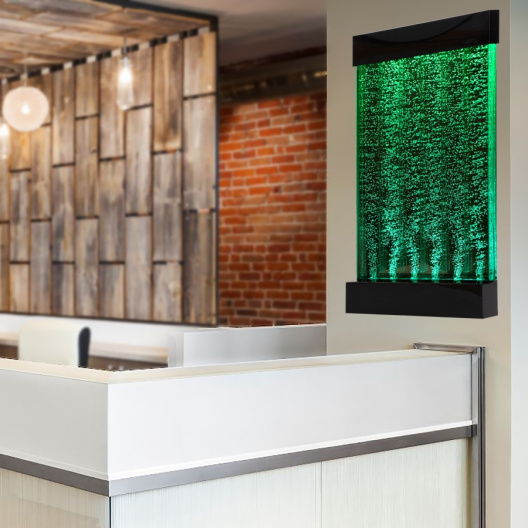
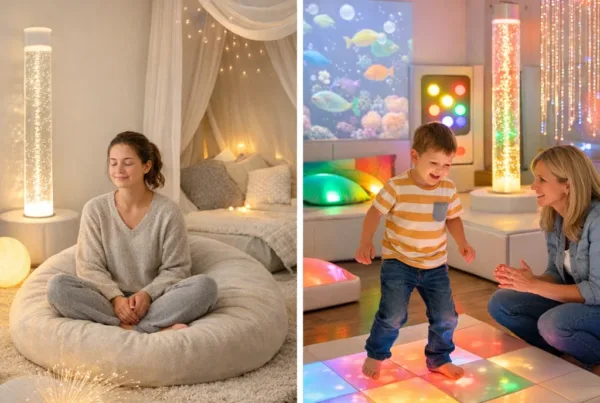
Bubble tubes are one of the most widely used sensory room tools because they combine gentle movement, light, and predictable visual patterns. I often use them for calming after overwhelm, reducing verbal demand, and encouraging stillness without insisting on eye contact or formal participation. A child might sit beside the tube and watch the bubbles rise while matching their breathing to the movement. An adult with anxiety may simply benefit from a fixed visual focus point.
To make this activity more effective, I keep the room dim, reduce background noise, and use a short instruction such as “watch the bubbles go up” or “breathe in, breathe out.” If the user enjoys control, I add a colour-change switch so they can make simple choices. If you are looking for equipment, a sensory bubble tube can be a valuable centrepiece when used thoughtfully rather than constantly.
Weighted relaxation and deep pressure time
Deep pressure activities are among the most consistently helpful options I use, especially for some autistic users, children with ADHD who need body awareness, and people who seek a sense of containment. This might involve lying under a weighted blanket, curling into a beanbag, pressing against padded cushions, or using a compression-style body sock under supervision. The aim is not to restrain movement but to help the nervous system feel more settled.
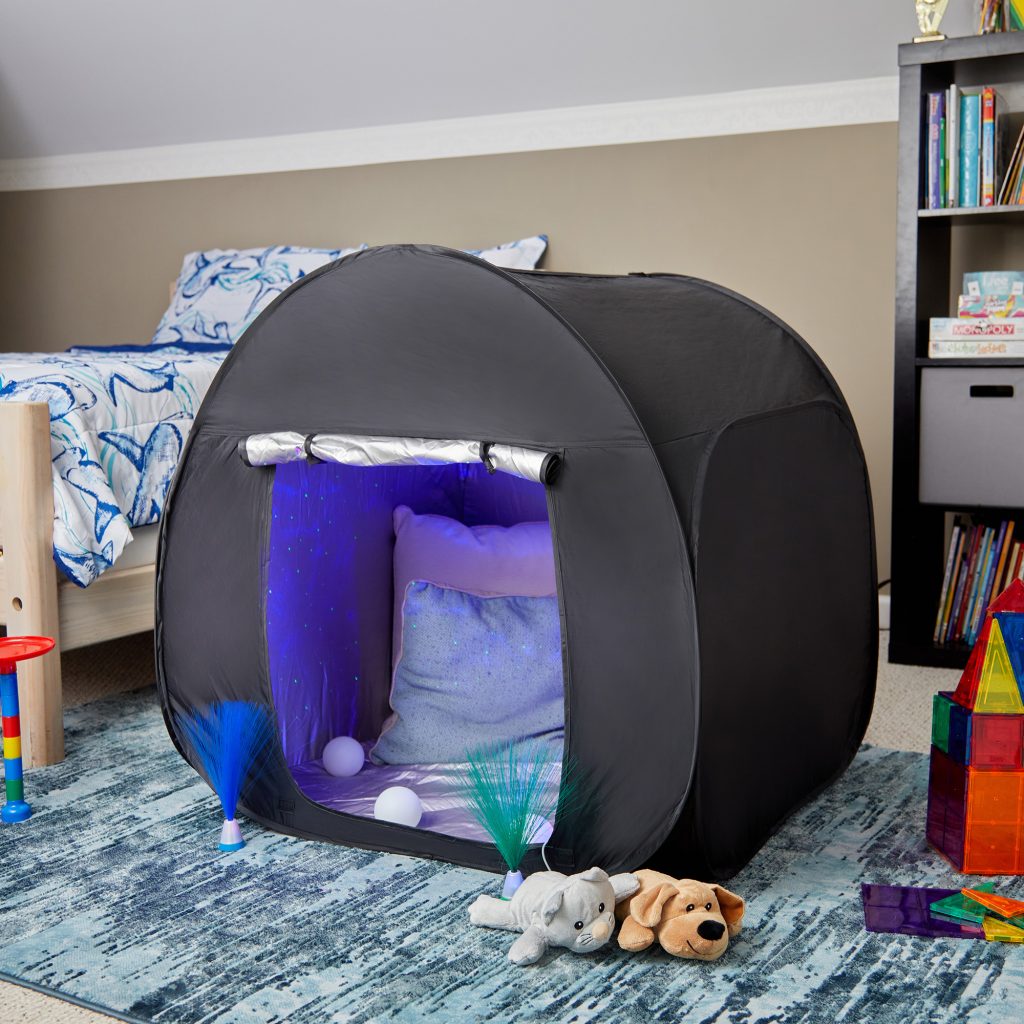
I recommend setting this up as a defined calming station rather than an afterthought. Use one soft seating option, one deep pressure item, and one low-arousal visual feature such as dim sensory lighting. A weighted blanket and supportive floor cushions can work well in home and school settings, but I always advise checking weight guidance, tolerance, and supervision needs first.
Fibre optic quiet play
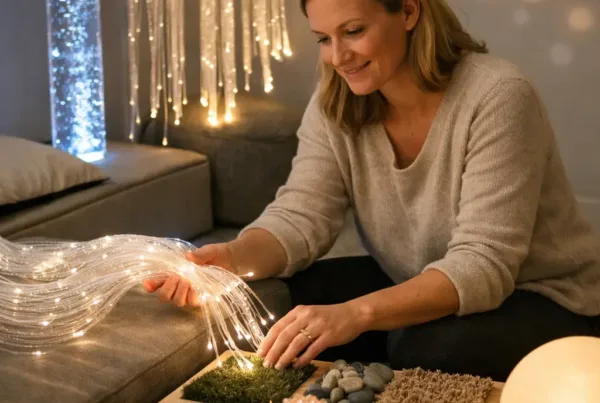
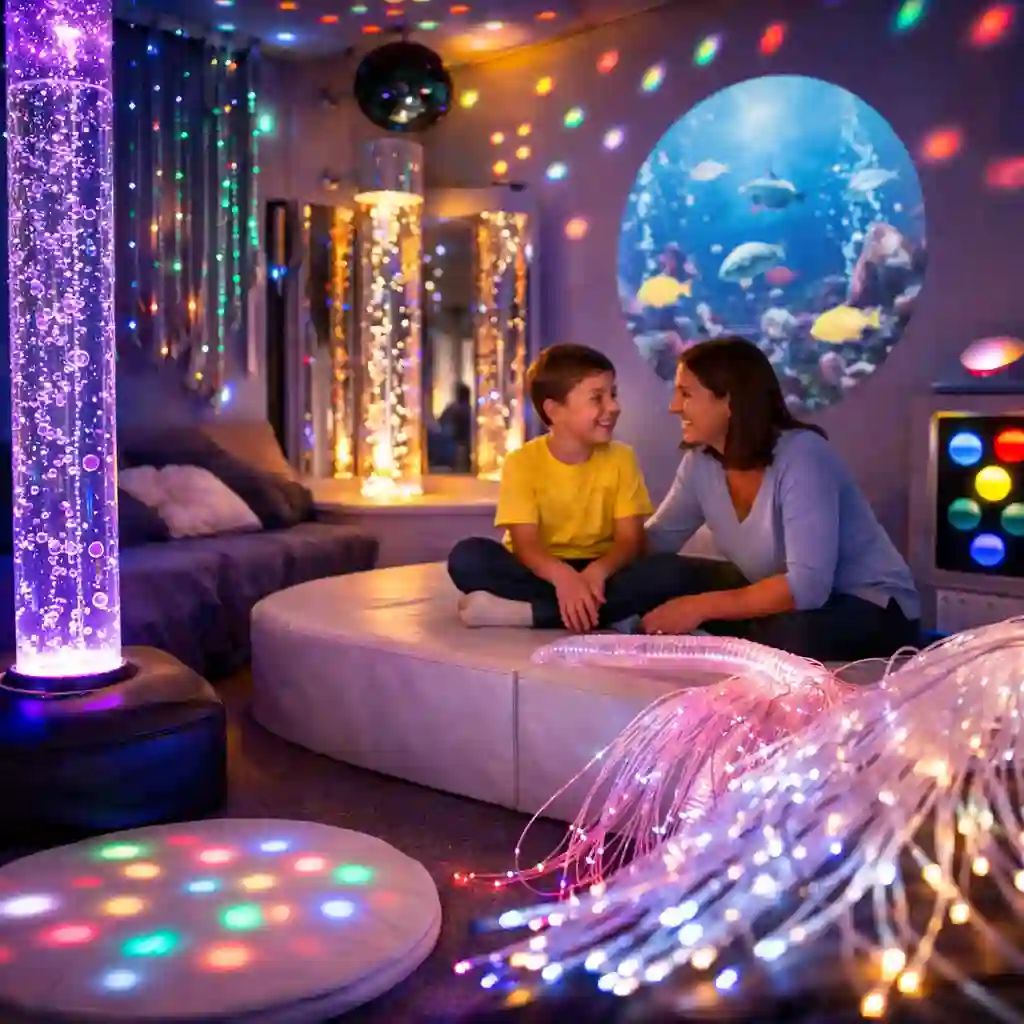
Fibre optics are excellent for calm engagement because they invite touch without demanding too much. I often place learners on a mat with fibre optic strands draped gently over their lap or hands. This can support body awareness, colour recognition, turn-taking, and simple communication such as requesting a favourite colour or describing what they feel.
This activity works particularly well for children who avoid busy group rooms but still need a gentle way into interaction. In a therapy setting, I may pair fibre optics with simple language work: “soft,” “blue,” “more,” “my turn.” At home, parents can use the same setup for evening wind-down. If you are choosing ambient products, sensory lighting options can help you avoid lights that are overly harsh or stimulating.
Alerting and movement-based sensory room activities
Swinging, rocking, and vestibular input
Movement is one of the most requested sensory supports I see, especially for children who need vestibular input to feel regulated. Common activities include gentle swinging, rocking on a wobble seat, bouncing on a therapy ball, or using a platform swing in a properly assessed space. These activities can increase alertness, improve body awareness, and help with transitions back into classroom or therapy work.
The key is dose and timing. Ten minutes of intense spinning is very different from two minutes of slow linear movement. In school settings, I favour structured movement breaks with a clear beginning and end. For example: shoes off, three minutes of swing, wall push-ups, then quiet time on a beanbag. Poor sensory setups often let movement become chaotic, with no pacing and no follow-up calming strategy. Good setups treat movement as a tool, not entertainment.
Crash pad and heavy work circuits
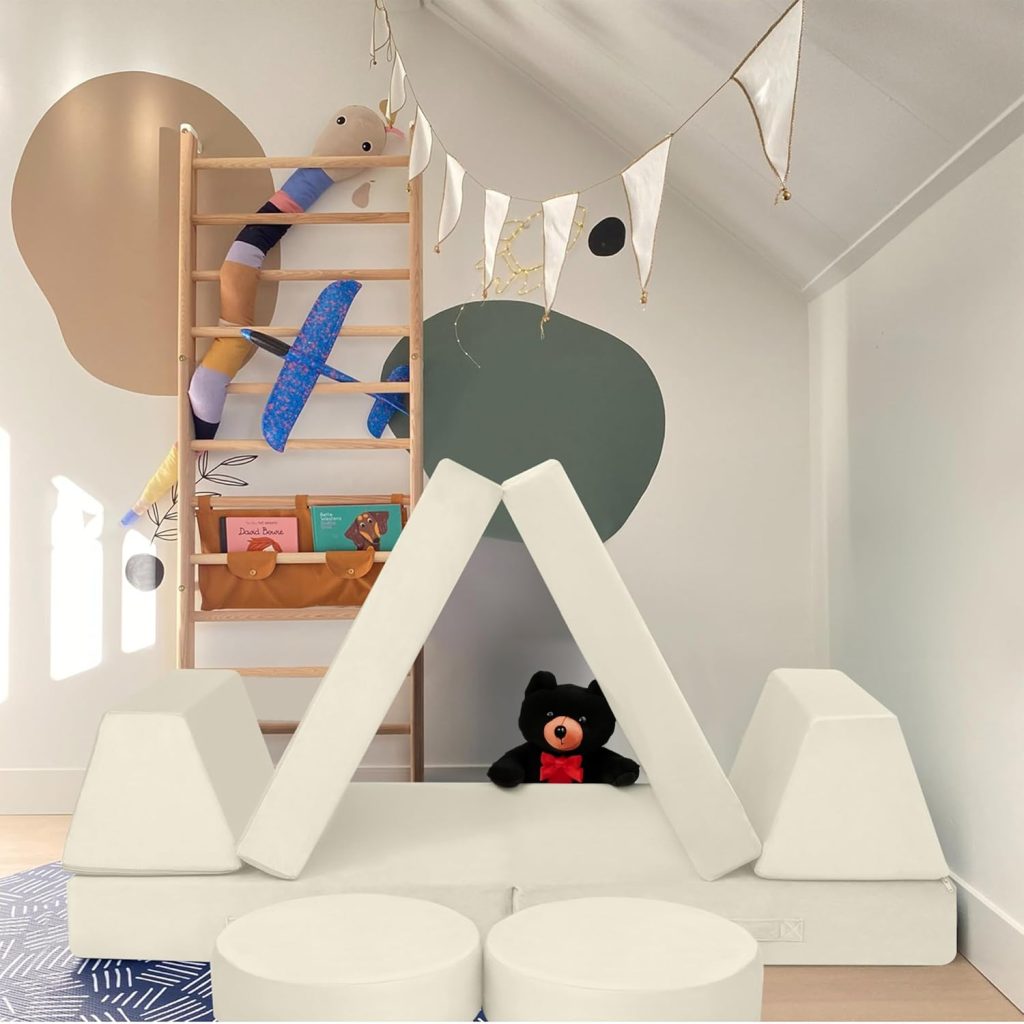
Heavy work activities give proprioceptive input through muscles and joints. These are particularly useful for sensory seekers and pupils who seem constantly in motion. In a sensory room, this might include jumping onto a crash mat, carrying weighted soft items, pulling resistance bands, crawling through a tunnel, or pushing against a wall. These activities can help a person feel more organised and ready to attend.
One of my favourite practical setups is a simple three-step regulation circuit: jump, push, then rest. A child might do five star jumps onto a soft mat, ten wall pushes, then sit with calming lights for two minutes. This gives the body what it is asking for and then helps it come back down. If you use floor equipment regularly, a sensory crash mat or thick gym mat can make a huge difference to safety and confidence.
Tactile and exploratory sensory activities
Texture trays, tactile boards, and sensory bins
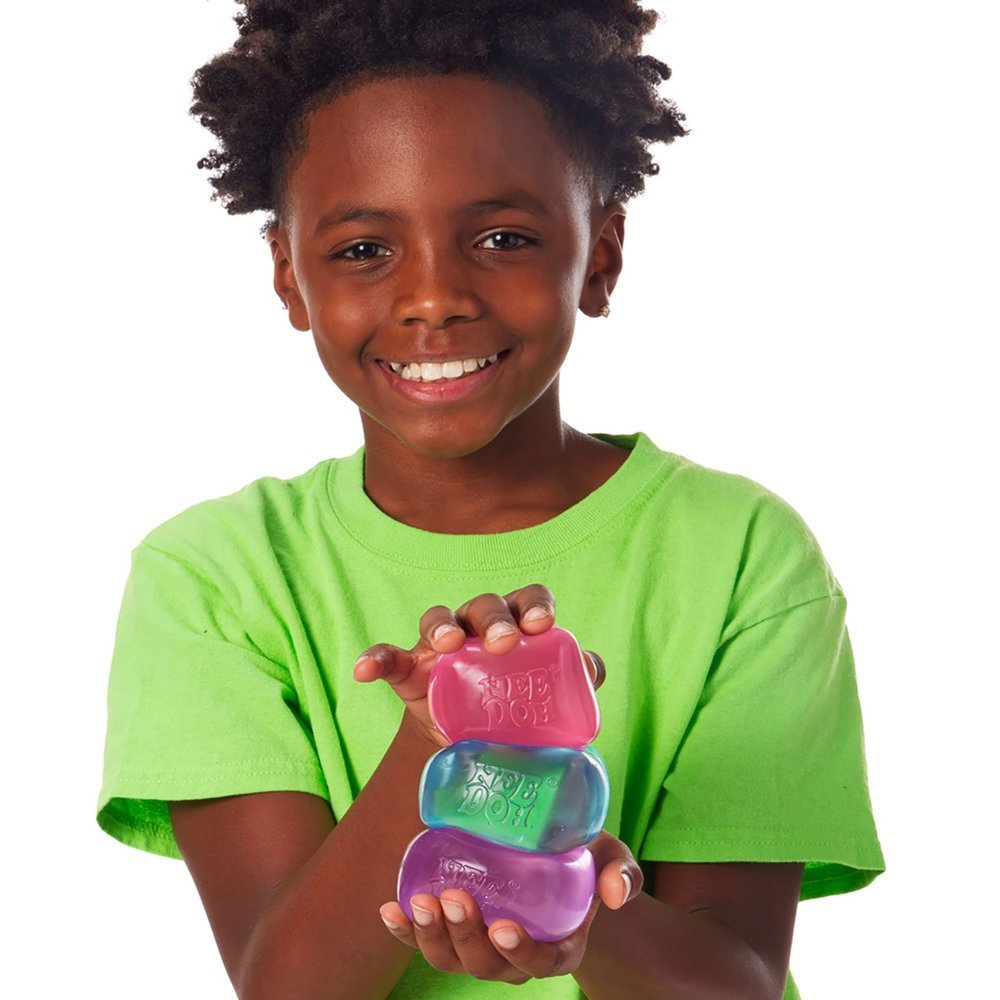
Tactile exploration is one of the easiest sensory room activities to adapt for different ages and needs. I use texture trays with fabric swatches, silicone brushes, smooth stones, stress balls, and sensory sand depending on the person’s tolerance. For some users, especially those who are tactile defensive, the goal is simply to build trust around touching different materials. For others, it is about active exploration and play.
A good tactile activity has layers. I may begin with a preferred texture, such as a soft fleece square, then place one new texture nearby without pressure. In a school room, I might use a tactile board as part of transition support: touch the familiar object, choose a card, then move to the next task. In dementia care, familiar tactile items such as knitted fabrics or polished wooden objects can be grounding and conversation-starting.
Messy play with boundaries
Messy sensory play can be brilliant, but it needs boundaries to be successful. Water beads, foam, gel bags, coloured rice, or sand trays can support exploration, fine motor work, and language, but only if the person is comfortable and the setup is contained. I usually define the play area clearly with trays, aprons, hand wipes, and a simple visual choice board. That structure prevents the activity from becoming stressful.
One common mistake is assuming every child will enjoy messy textures. Many do not. I never force hand immersion. Instead, I offer tools first: scoops, spoons, brushes, or containers. Effective sensory practice respects consent and sensory thresholds. If a child engages by watching or using a tool, that still counts as successful participation.
Auditory and music-based sensory room activities
Calming sounds and guided listening
Sound can regulate or dysregulate very quickly, so I treat auditory activities with care. In a sensory room, common calming options include nature sounds, slow instrumental music, white noise, and guided breathing audio. I keep volume low and avoid layering multiple sounds. For some users, especially those with sound sensitivity, silence is more therapeutic than music.
When using sound for regulation, I often pair it with one other sensory channel only. For example, soft ocean sounds plus dim blue lighting, or a heartbeat rhythm plus beanbag pressure. That is far more effective than adding moving projectors, bright LEDs, and multiple audio sources at once. If sound quality matters in your room, a simple Bluetooth speaker for a sensory room can help you maintain clear and controllable audio.
Cause-and-effect sound play
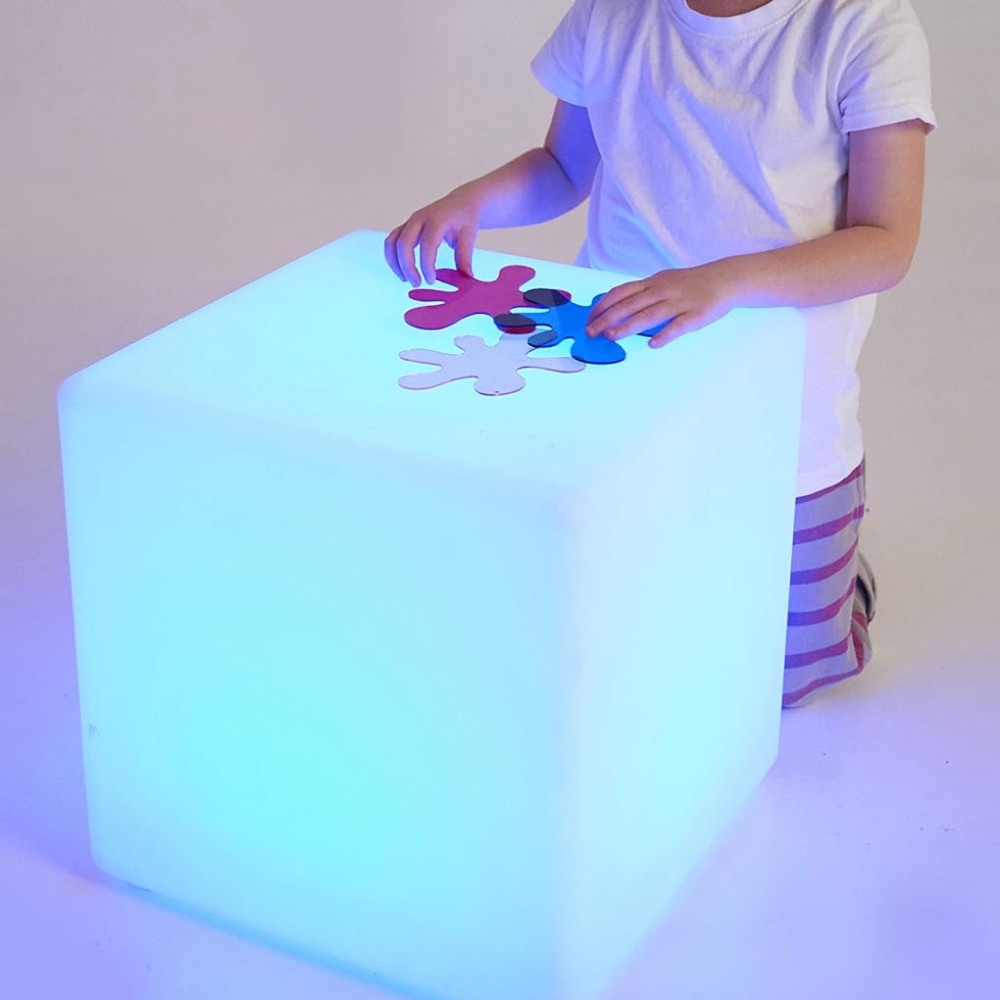
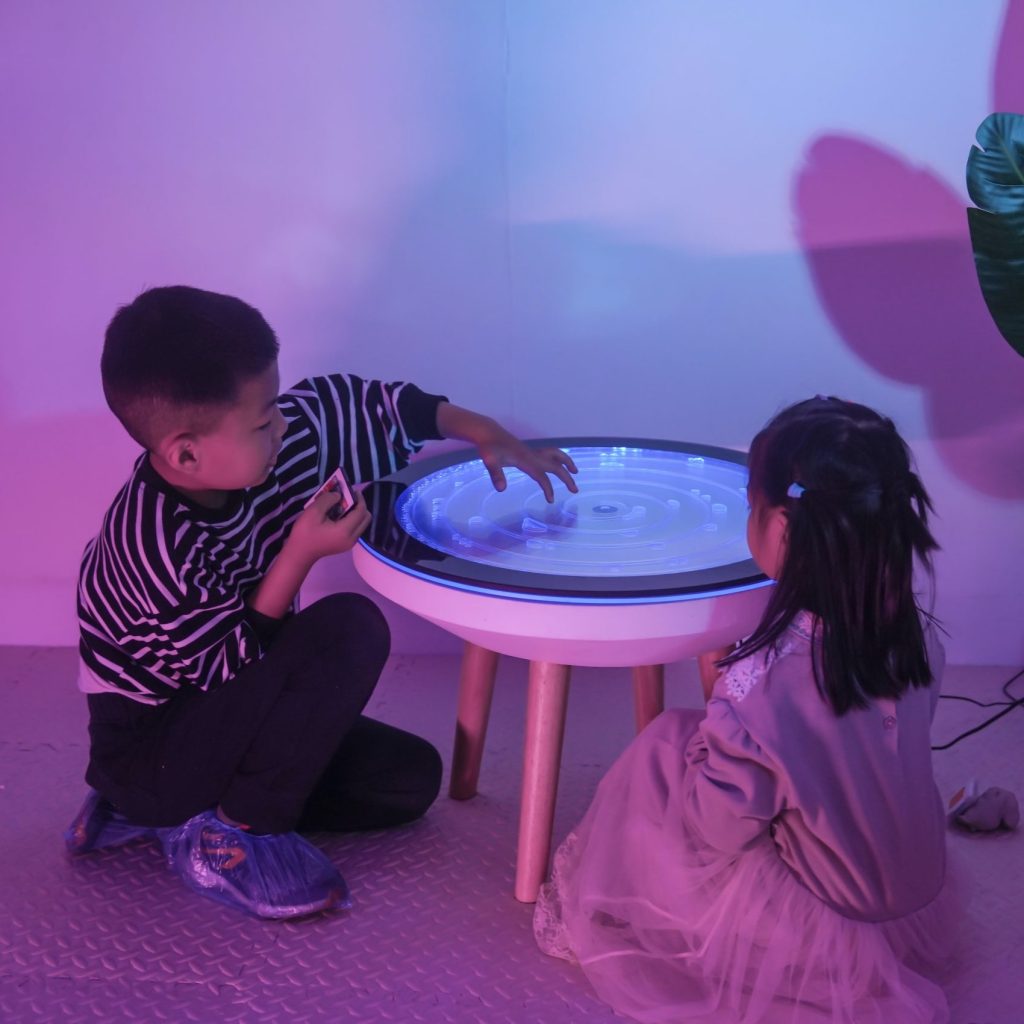
For children in early developmental stages or learners working on communication, cause-and-effect activities are some of the most valuable sensory room experiences. Press a switch and music starts. Tap a panel and a sound changes. Clap and lights respond. These activities build agency, shared attention, and early problem-solving.
I use these most often in therapy and specialist education settings because they create a clear message: “what I do matters.” For non-speaking autistic children, this can be particularly motivating. Successful cause-and-effect work is simple and repeatable. Poor setups tend to include too many buttons, too much sensory feedback, and no pause for processing time.
Step-by-step: how I plan a sensory room activity session
When parents or schools ask me what to actually do in the room, I recommend following a clear sequence rather than improvising every time. A predictable structure helps the user know what to expect and allows you to spot what works.
- Start with the goal. Decide whether the session is for calming, alerting, transition support, communication, or sensory exploration.
- Choose one primary sensory channel. For example, visual for calming or movement for alerting.
- Add one supporting activity only. If you use bubble tube watching, pair it with breathing or deep pressure, not five other features.
- Keep the session short at first. Five to fifteen minutes is often enough, especially for children who become overloaded easily.
- Watch the response. Look for breathing changes, muscle tension, vocalisation, eye gaze, and willingness to stay.
- End gently. Use a cue such as lights fading, music stopping, or a verbal countdown so the transition out is not abrupt.
For a home sensory corner, this might look like: dim lights, sit in beanbag, watch bubbles for three minutes, weighted blanket for five minutes, then leave. For a school movement break: trampoline or wall pushes, crash mat jump, drink of water, two minutes with low lighting, return to class. If you are building a room from scratch, DIY sensory room guidance can help you create these routines without overspending.
Activities for different needs and environments
Autism and sensory processing differences
For autistic users, I plan activities around actual sensory presentation, not assumptions. Some autistic children crave movement and deep pressure; others need extremely low stimulation and predictable visual input. I often create two distinct types of activity: regulation activities for overwhelm, and engagement activities for interaction. A regulation activity might be low light, beanbag pressure, and a bubble tube. An engagement activity might be fibre optics, colour choices, and turn-taking.
If you are designing specifically for autistic users, sensory room for autism planning should focus on reducing overload as much as adding stimulation. The best autism-friendly rooms are rarely the busiest ones.
ADHD, focus, and classroom readiness
With ADHD, I usually use sensory room activities to support regulation before learning, not as a reward after learning. Movement circuits, resistance work, timed sensory breaks, and short calming resets can all improve readiness and reduce escalation. The mistake I see most often is making the space too sleepy when the child actually needs alerting input first.
An effective comparison is this: a poor setup sends a highly active pupil straight into dim lights and silence, where they fidget, seek movement, and leave dysregulated. A better setup begins with heavy work or movement, then shifts into a brief calming phase. Sequence matters.
Dementia and adult care settings
In dementia care, sensory room activities should feel safe, soothing, and familiar. I use gentle music, memory-linked objects, soft textiles, aroma if appropriate and tolerated, and slow ambient lighting. The aim is often reassurance rather than stimulation. Strong flashing effects, confusing mirrors, or loud soundscapes can be disorienting.
Adults also benefit from comfort-led seating. A supportive beanbag chair for adults or reclined seating option can make longer calm sessions far more practical in care or therapy environments.
Common mistakes I see in sensory room activity planning
The biggest mistake is using everything at once. A sensory room is not more effective because every light, sound source, and projector is active. That often creates confusion, especially for people with sensory sensitivities. I get better results by limiting input and rotating activities based on need.
The second mistake is copying another child’s or setting’s setup without considering the individual. A home room for one autistic child may need blackout curtains, deep pressure, and no music. A primary school room may need durable movement equipment and visual timers. A therapy room may prioritise communication-led cause-and-effect tools. Same concept, very different activity choices.
The third mistake is buying equipment before deciding on outcomes. If your goal is emotional regulation, your room needs predictable calming activities. If your goal is sensory exploration, include tactile stations and choice-making. If your goal is transition support, build quick routines. Equipment should serve the routine, not define it. For practical planning help, I often suggest starting with simple categories and then adding only what earns its place.
Frequently Asked Questions
What is the best activity in a sensory room?
The best activity depends on the person’s sensory needs and the goal of the session. For calming, bubble tubes, weighted relaxation, and dim lighting often work well. For alerting, movement circuits and heavy work are usually more effective.
What do children do in a sensory room?
Children may watch calming lights, play with tactile materials, use swings or crash mats, listen to music, or explore cause-and-effect equipment. In a well-planned room, these activities help with regulation, focus, communication, and emotional recovery.
How long should a sensory room session last?
Most sensory room sessions work best at 5 to 20 minutes, depending on the person and the purpose. Shorter sessions are often better for transitions or regulation breaks. Longer sessions can work when the environment is calm and structured.
Are sensory rooms only for autism?
No, sensory rooms can support people with autism, ADHD, sensory processing disorder, dementia, anxiety, learning disabilities, and other additional needs. The activities simply need to be adjusted to the user’s sensory profile and goals.
What should I avoid in a sensory room?
Avoid too many active features at once, flashing lights for sensitive users, loud layered sounds, and activities with no clear purpose. Also avoid forcing interaction with textures or equipment that the person finds uncomfortable or overwhelming.
Can I create sensory room activities at home?
Yes, many effective sensory room activities can be created at home with simple tools such as soft seating, low lighting, tactile items, and calming audio. A dedicated spare room is not essential; even a quiet corner can work well when it is tailored to the individual.
Do sensory room activities help with meltdowns?
They can help reduce escalation and support recovery, but they are not a guaranteed fix in the middle of every meltdown. The best results come when sensory activities are introduced proactively and matched to the person’s known regulation needs.
When I design sensory spaces, I always come back to one principle: common sensory room activities are only truly useful when they are intentional, personalised, and easy to repeat. A simple routine with the right light, the right movement, or the right tactile input will outperform an expensive room full of poorly matched equipment almost every time.