Table of contents
An effective sensory room is a carefully planned space that helps a person regulate, engage, calm, or activate their senses in a safe and purposeful way. The key features of an effective sensory room include clear goals, adaptable lighting, comfortable seating, controlled sound, tactile and movement-based equipment, strong safety measures, and a layout matched to the user’s sensory profile.
When sensory rooms are designed well, they do far more than look appealing. Experienced designers, autism specialists, and therapists consistently find that the best sensory rooms are not built around trendy equipment; they are built around the needs of the child or adult who will use them, whether that person is autistic, has ADHD, sensory processing differences, dementia, or complex learning needs.
Highlights
- An effective sensory room is personalised, not overfilled, with every feature chosen for a specific sensory purpose.
- Lighting, sound, textures, movement, and seating must be adjustable so the room can support both calming and alerting needs.
- Safety, zoning, and ease of supervision are essential in home, school, and therapy settings.
- The best sensory rooms balance stimulation with predictability, helping users feel secure rather than overwhelmed.
What makes a sensory room effective?
A sensory room is a dedicated environment designed to provide sensory input in a structured, manageable, and supportive way. That definition matters because many spaces are labelled as sensory rooms when they are really just playrooms with colourful lights. An effective sensory room should help with regulation, focus, communication, emotional recovery, or therapeutic goals rather than simply entertaining the user.
The strongest sensory room designs begin with one central question: what should this room help the person do? For one autistic child, the answer may be to recover from overwhelm after school. For another, it may be to build tolerance for certain textures and movement experiences. In a school, it may need to support brief regulation breaks for several pupils across the day. In a dementia care setting, it may be used to reduce agitation and support orientation through familiar, soothing sensory input.
That is why an effective room usually feels organised and intentional. It may include calming visual features, deep pressure seating, tactile surfaces, or movement tools, but each item should serve a clear purpose. A poor setup often has too many competing elements at once: flashing lights, noisy toys, crowded floors, and no obvious place to sit, retreat, or regulate. The result is confusion rather than support.
Research supports the value of sensory-informed environments when they are used properly. The National Autistic Society explains that many autistic people experience hyper- or hyposensitivity to sensory input, affecting daily comfort and behaviour, which is why regulated sensory environments can be so helpful according to the National Autistic Society. For schools, the UK Government also reports rising demand for SEND support, increasing the need for spaces that help pupils stay regulated and ready to learn through Department for Education statistics.
Personalisation is the most important feature
The most effective sensory rooms are personalised to the people using them. This applies whether the room is for one child at home, a class group in school, or a therapy caseload. Sensory needs are not universal. One child with ADHD may benefit from movement, resistance, and active tactile input, while another child in the same age group may need dim lighting, low visual clutter, and a quiet den to feel settled.
A practical way to personalise the room is to create a short sensory profile before buying anything. This can include triggers, calming inputs, avoided sensations, preferred movement types, communication needs, and known safety risks. For example, a child who seeks vestibular input may need a movement zone with floor-based gross motor equipment, while a child who becomes distressed by sound may need acoustic softening and a retreat space first.
In real-world projects, the rooms that work best are often the ones that start small. A parent may begin with one calm corner, soft seating, low lighting, and a tactile basket, then gradually add features based on actual response. By contrast, rooms assembled in one large shopping spree often contain several items that are rarely used because they looked suitable but did not match the user’s regulation style.
Planning should also consider who else will use the room. In schools and community settings, shared input can be invaluable when choosing equipment, routines, and upkeep. This is one reason many settings benefit from involving the community in maintaining sensory rooms, especially when the goal is to keep the space relevant, well cared for, and responsive to users over time.
Lighting should be calming, controllable, and purposeful
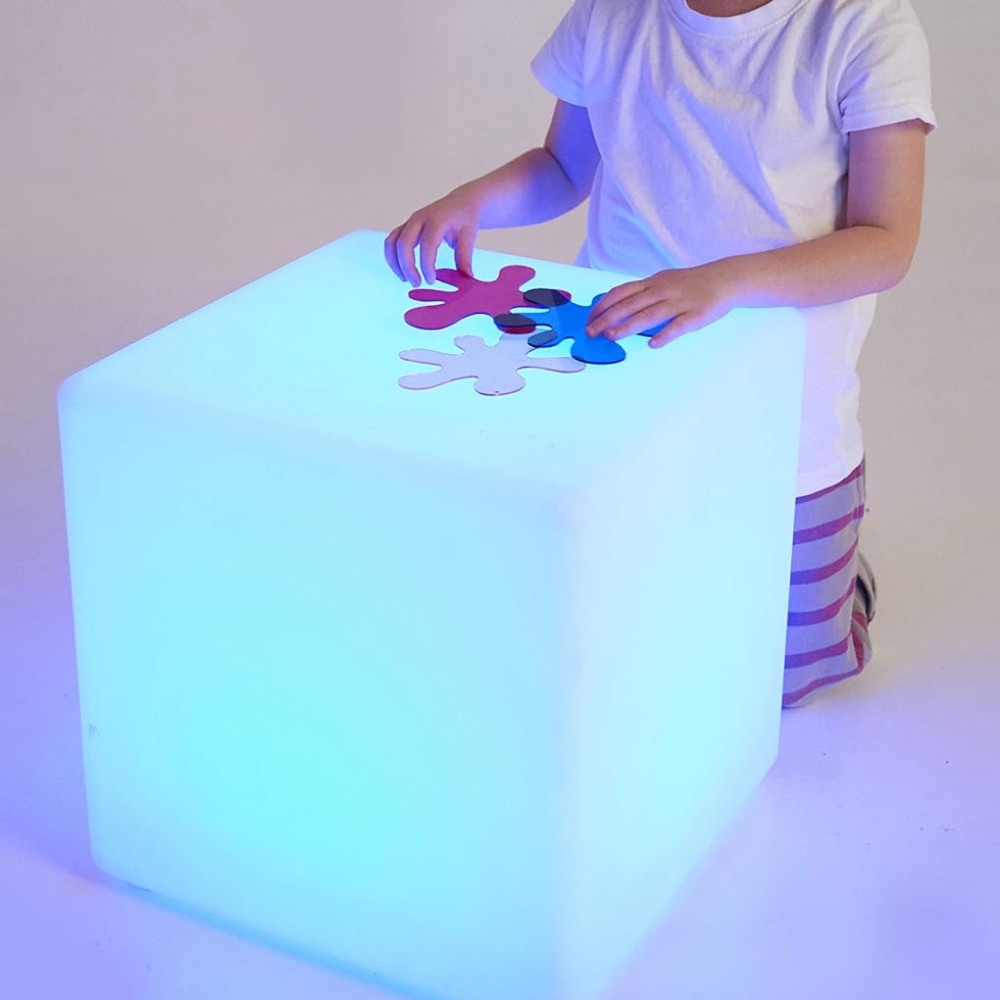
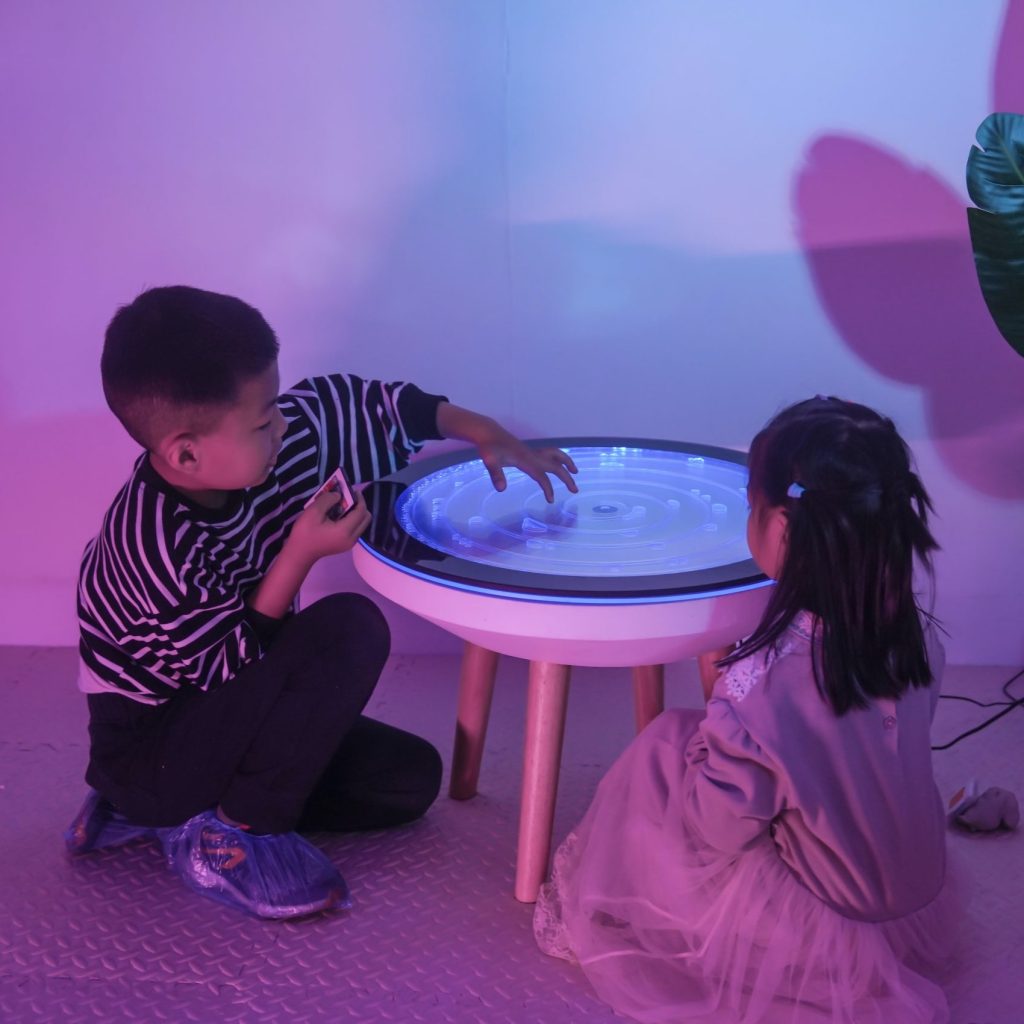
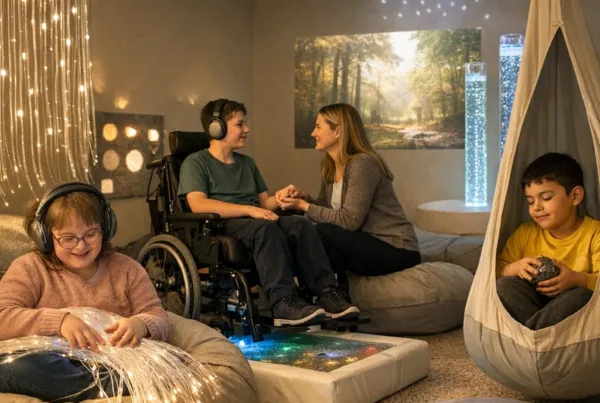
Lighting is one of the most influential features in any sensory room. Good sensory lighting reduces glare, avoids harshness, and allows staff or family members to adjust the level of visual input depending on the user’s state. Soft, dimmable, indirect light usually supports calm better than bright overhead lighting. The goal is to create comfort and visual interest without causing strain or overstimulation.
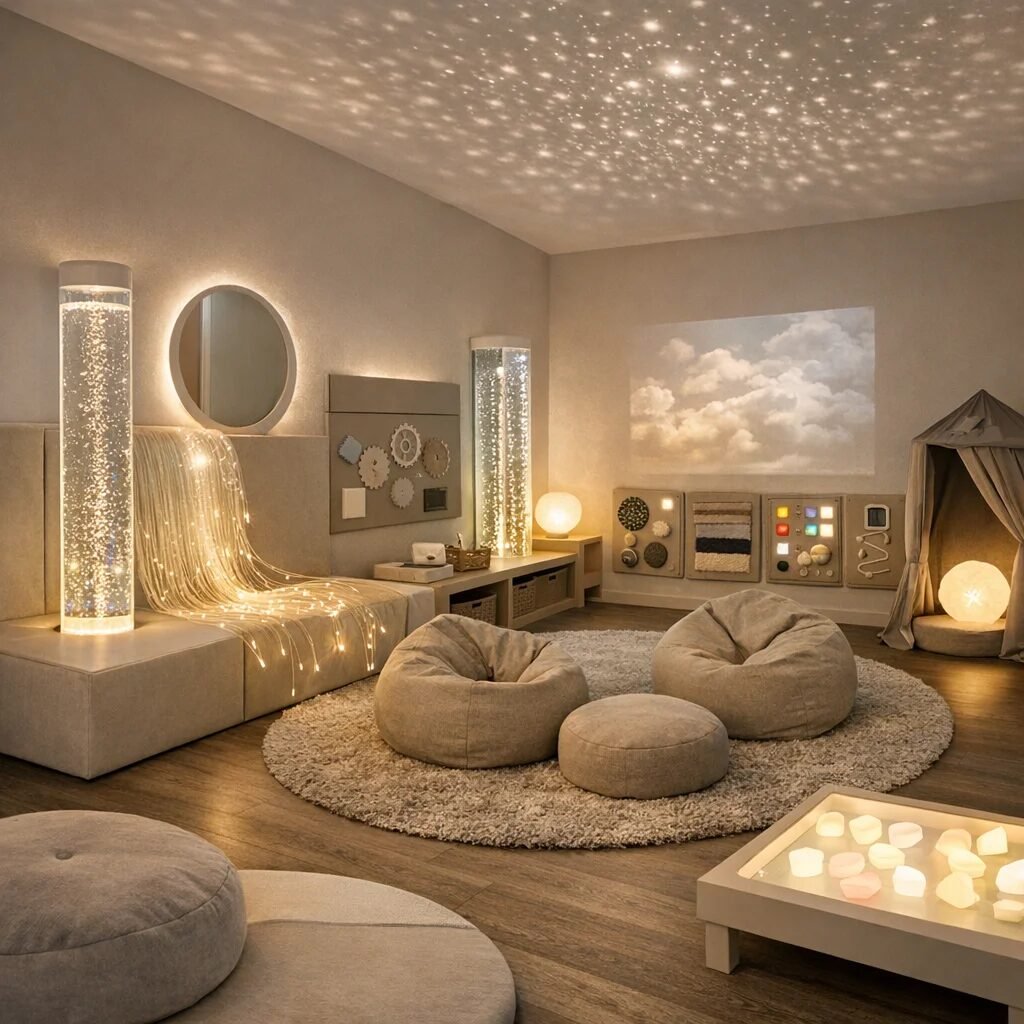
Bubble tubes, projected images, gentle colour-changing lamps, and wall glow features can all work well when used with care. For example, a corner with a Bubble Tube Tank Vortex Tower may provide calming visual tracking for an autistic child who finds repetitive movement soothing. A ceiling projection from a Galaxy Projector can work well in a home sensory bedroom where vertical space is easier to use than floorspace.
What should be avoided is aggressive visual stimulation. Fast flashing LEDs, multiple moving lights at once, and strong colour contrasts can quickly tip a room from soothing to dysregulating. This is especially relevant for children with sensory defensiveness, people prone to migraines, and some individuals with epilepsy, where specialist advice may be needed before using dynamic lighting.
A useful design rule is to layer lighting in three ways: base light for general safety, feature light for focus, and optional accent light for mood. This allows staff, parents, or therapists to adapt the room quickly. A calming session may use one light source and a quiet corner, while a more alerting session may involve brighter visual engagement and movement prompts.
Comfort, seating, and retreat spaces create emotional safety
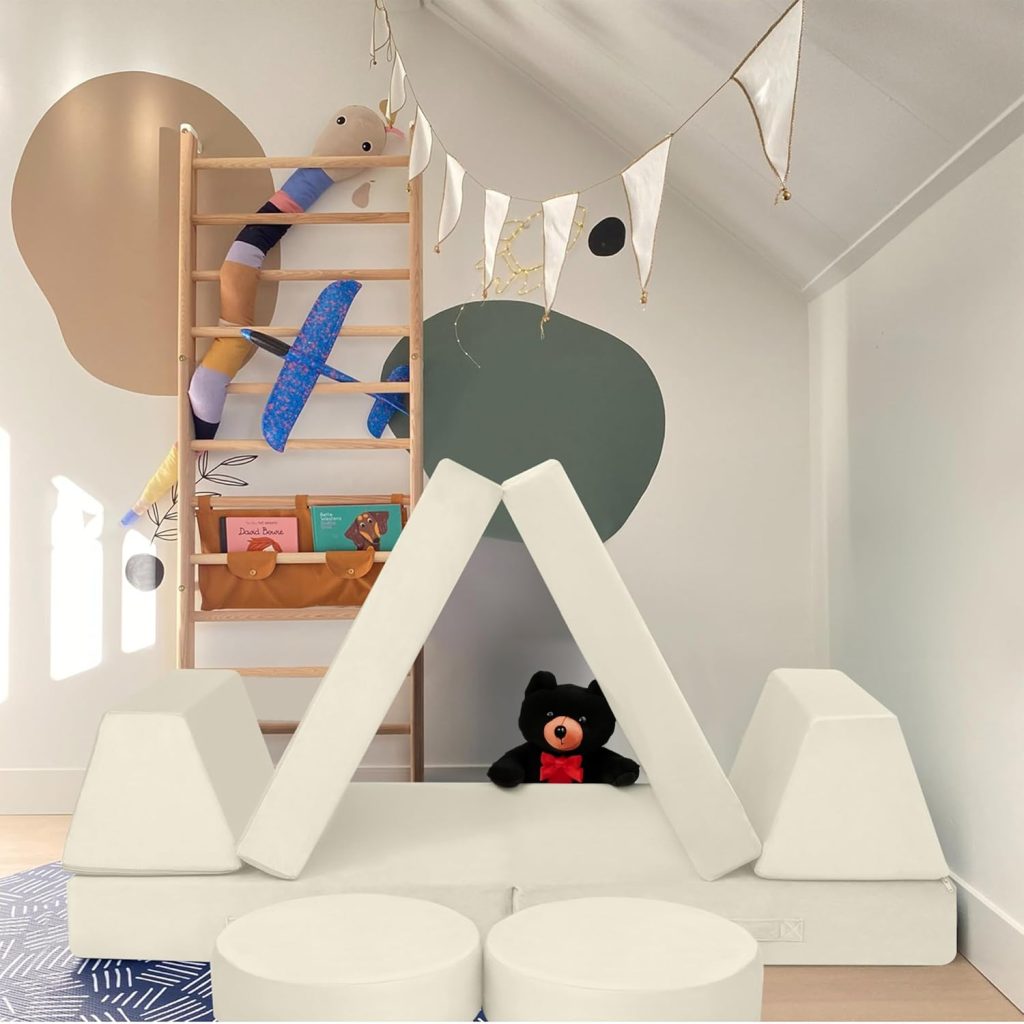
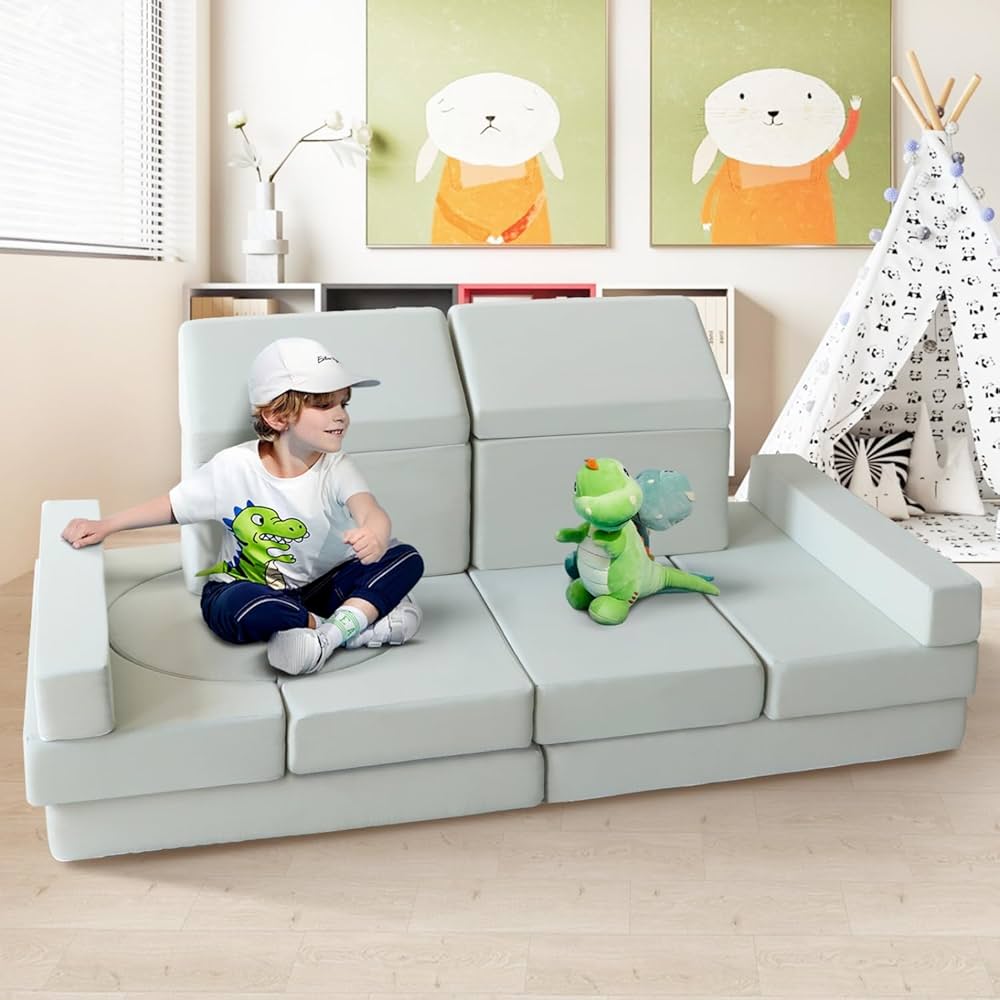
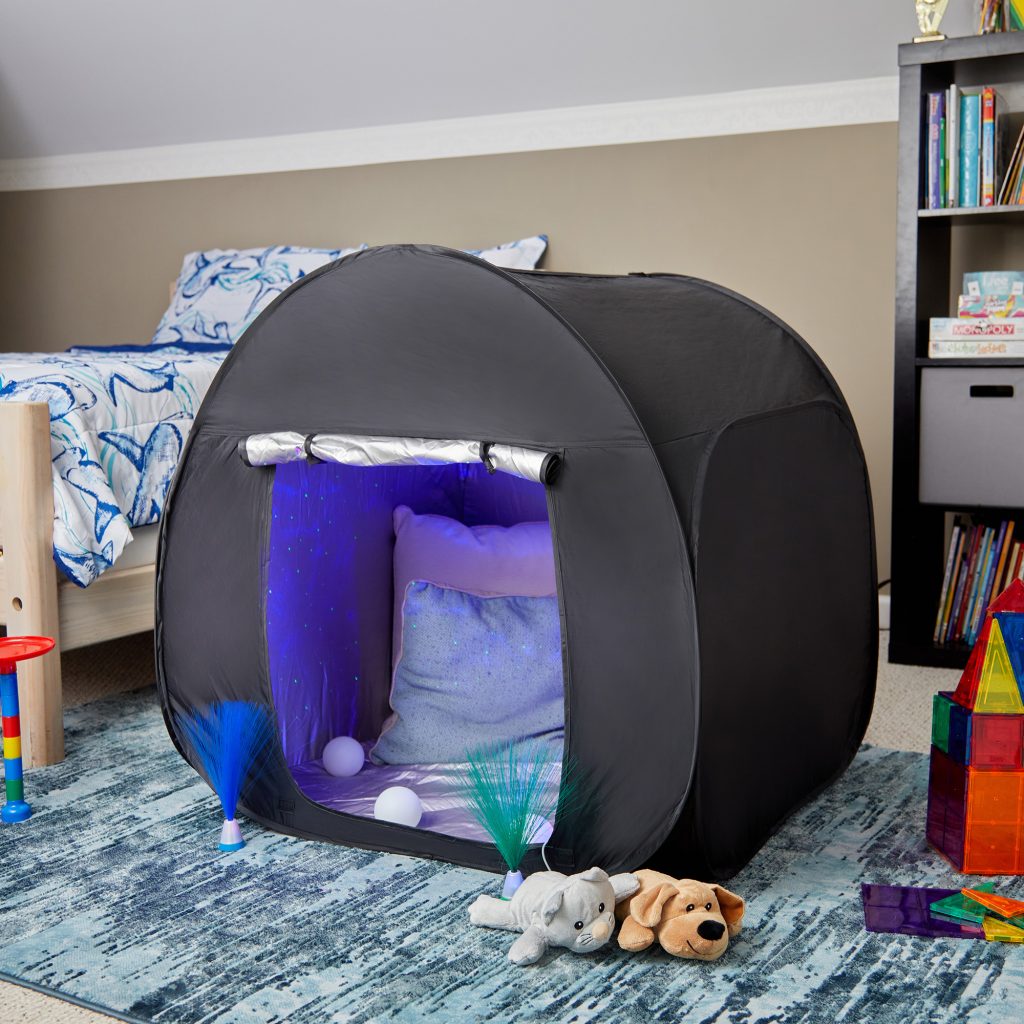
Many people think first about lights and sensory gadgets, but emotional safety often depends more on comfort and retreat. A sensory room should include at least one place where the user can feel physically contained and supported. This might be a bean bag, modular sofa, floor cushions, a canopy corner, or a small tent where visual and auditory input is reduced.
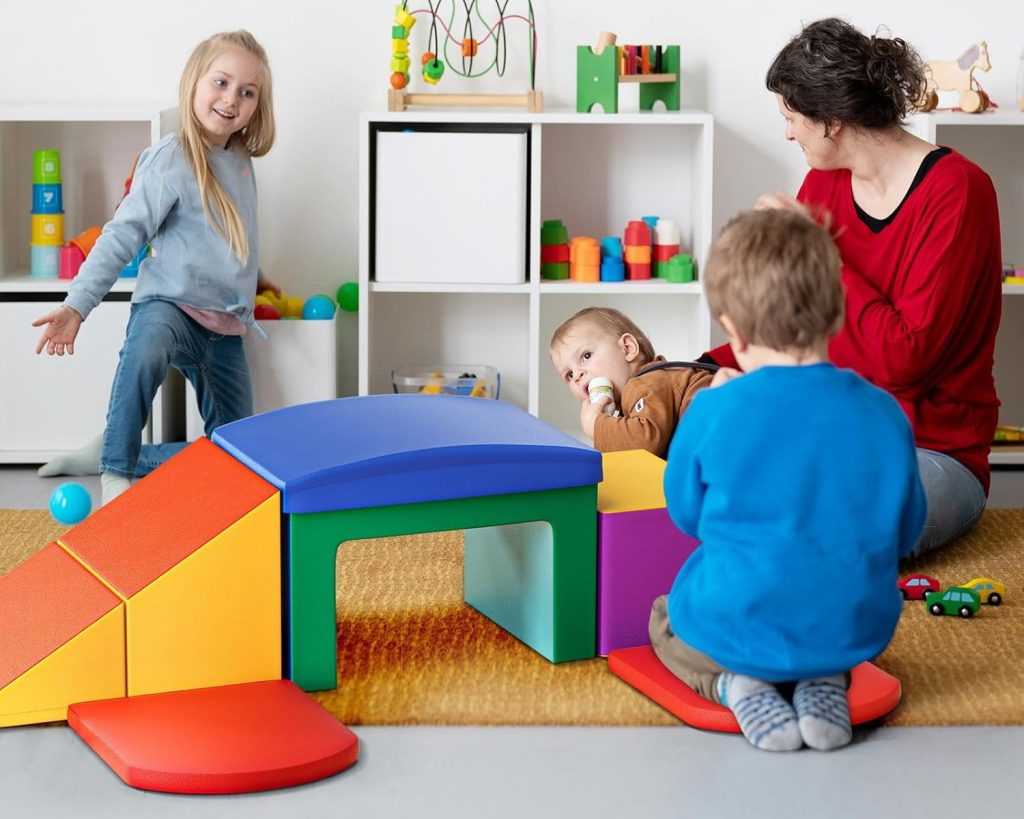
For younger children or home settings, flexible seating is particularly useful because it can be reconfigured as needs change. A Kids Modular Play Sofa can work as a crash space, reading nook, or cocoon-like seating area. In smaller rooms, a Sensory Tent can provide a valuable low-stimulation retreat without requiring permanent partition walls.
Effective retreat spaces are not used as punishment or isolation. They are presented as safe options the user can choose or be guided toward when overwhelmed. This distinction matters. A calm corner that preserves autonomy builds trust; a forced time-out space can increase distress, especially for autistic children who are already struggling to process demands.
In dementia environments, comfort and familiarity matter even more. Upholstery should feel inviting, colours should be gentle rather than confusing, and seating should be stable and easy to enter and exit. In therapy settings, seating should also support observation, shared attention, and co-regulation between therapist and client.
Tactile and movement features should match regulation needs
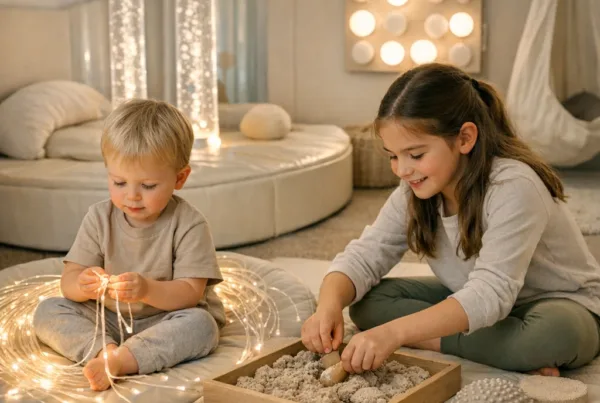
Tactile and movement experiences are often the most therapeutic elements in a sensory room, but only when they suit the individual. Some users calm through deep pressure, crawling, squeezing, and predictable resistance. Others prefer fine motor tactile activities such as smooth textures, flicking sequins, sand alternatives, or hand fidgets. This is where sensory rooms must move beyond decoration and become functional spaces.
For tactile seekers, a basket of hand tools can prevent a room from becoming static. A Schylling NeeDoh Nice Cube can be helpful as a portable squeeze tool for transitions or seated regulation. Tactile floor or wall features can also support active exploration, but they should be spaced so the room still feels navigable and not cluttered.
Movement features should be selected with caution. Vestibular input can be highly regulating for some children with ADHD or sensory processing disorder, but overuse can increase dysregulation in others. A good room provides controlled movement options rather than nonstop stimulation. In school settings, gross motor equipment is often best placed in one clearly defined zone, separate from the calming area.
A useful comparison is this: an effective movement setup offers one or two reliable choices with adult oversight, clear floor space, and predictable routines. A poor setup places spinning, bouncing, climbing, and flashing equipment together in one corner, which invites chaotic use and makes it hard to identify what is helping and what is overwhelming.
Sound control is just as important as sensory activities
Sound is often overlooked in sensory room design, yet it can determine whether the space is genuinely calming. An effective room manages both the sounds it adds and the sounds it blocks. Soft furnishings, rugs, acoustic panels, and fabric elements can reduce echo, while door seals and thoughtful placement away from busy corridors can prevent external noise from undermining the space.
Not every sensory room needs music. For some users, especially autistic children with auditory sensitivity, silence or near-silence is more regulating than background tracks. For others, low repetitive sound such as water bubbling, white noise, or gentle instrumental audio may support focus. The key is control. Sound should be easy to switch off immediately if the user becomes unsettled.
This is especially important in schools, where adults may be tempted to keep background music on all day. In practice, many pupils tolerate a room better when sound is introduced intentionally for a short purpose, not as constant wallpaper. The same principle applies in dementia settings, where familiar sounds may be comforting, but busy layered audio can increase confusion.
A good test is whether someone entering the room can identify the dominant sound within a few seconds. If the answer is “everything,” the room is probably too acoustically busy. The sensory room should simplify sensory information, not compete with itself.
Layout, zoning, and safety turn equipment into a usable room
Even excellent equipment fails in a poor layout. Effective sensory rooms usually have clear zones, such as a calming zone, a tactile zone, and a movement zone. In very small rooms, these zones may simply be implied by furniture placement and lighting rather than fixed partitions. The goal is to make the function of each area obvious and reduce sensory conflict.
A simple step-by-step setup process works well in most environments:
- Identify the room’s main purpose: calming, therapy, learning readiness, or multisensory exploration.
- Map the safest route into and through the room, leaving clear walking and supervision space.
- Place the calmest features furthest from the entrance, so users move from stimulation toward regulation.
- Add seating before decorative equipment, ensuring there is always a place to pause.
- Install one or two sensory focal points only, then test use before adding more.
- Review hazards such as cords, unstable items, sharp edges, and overstimulating combinations.
Safety is non-negotiable. Equipment must be stable, wipeable where needed, age-appropriate, and difficult to tip or pull over. Bubble tubes and lights should be secured properly. Soft floor surfaces help reduce injury risk, especially for children who drop to the floor, seek deep pressure, or move impulsively. In settings serving users with high support needs, wall padding and durable materials may be essential.
Supervision matters too. A room should never be so visually blocked that an adult cannot observe discreetly and respond quickly. This is particularly relevant in schools and clinics, where multiple staff may use the room and consistency is needed across shifts.
Common sensory room mistakes and how to avoid them
One of the most common mistakes is trying to stimulate every sense at once. This often happens when a room is created from a catalogue of appealing products rather than an understanding of regulation. The result can be visually crowded, noisy, and hard to use. A better approach is to begin with one primary goal and build outward slowly.
Another mistake is choosing equipment that looks sensory but offers little practical value. For instance, a room filled with decorative LEDs but no comfortable seating, no retreat area, and no tactile variety may impress adults but do little for the user. By contrast, a simpler room with dimmable light, a soft sofa, one tactile basket, and clear routines may be used every day and make a measurable difference.
Many home setups also fail because they are not maintained. Broken lights, tangled cables, dead batteries, and worn textures quickly discourage use. In shared spaces, assigning responsibility for upkeep is essential. Community ownership can help here, especially when schools or centres want the room to stay clean, safe, and relevant over time. Thoughtful planning around community involvement in sensory room maintenance can make a practical difference to long-term success.
A final error is expecting the room itself to do the work. Sensory rooms are tools, not cures. They are most effective when adults understand how to use them: when to reduce input, when to offer movement, when to model co-regulation, and when to end a session before the user becomes overloaded.
How effective sensory rooms differ by environment
At home, the best sensory rooms are often compact, flexible, and integrated into family routines. They may be used before school, after school, or at bedtime. Parents usually benefit from equipment that can adapt across purposes, support calm quickly, and pack away or blend with the rest of the home if space is limited.
In schools, sensory rooms work best when they are predictable and easy for multiple staff to use consistently. Clear referral rules, simple visual prompts, session time limits, and staff training prevent the room from becoming either a reward space or a place pupils are sent only during crisis. It should support regulation before behaviour escalates, not only after.
Therapy rooms need a stronger clinical lens. Equipment should support specific goals such as tolerance-building, bilateral coordination, communication, emotional regulation, or graded sensory exposure. In these settings, the room should allow the therapist to shape input with precision and observe responses clearly.
For dementia care, effectiveness often depends on calm familiarity and reduced confusion. Gentle sensory cues, soft textures, comforting objects, and low visual complexity tend to work better than highly stimulating light effects. What feels engaging for a child may feel disorienting for an older adult, which reinforces the core principle of all sensory design: fit the person, not the trend.
Frequently Asked Questions
What are the most important items in a sensory room?
The most important items are those that match the user’s sensory needs, but essentials usually include adjustable lighting, comfortable seating, a quiet retreat area, and a small number of tactile or visual regulation tools. A sensory room does not need expensive equipment to be effective. Good planning matters more than quantity.
What should an autism sensory room include?
An autism sensory room should include predictable, controllable sensory input rather than constant stimulation. Many autistic users benefit from dimmable lighting, reduced noise, soft seating, visual calm features, and options for deep pressure or tactile regulation. The exact setup depends on whether the person seeks or avoids sensory input.
How big does a sensory room need to be?
A sensory room can be effective in a very small space if it is organised well. Even a corner of a bedroom, classroom, or therapy room can work when it includes a clear calming purpose, comfortable seating, and controlled sensory input. Larger rooms help with zoning, but size is less important than thoughtful layout.
What is the difference between a sensory room and a calming room?
A sensory room may include both calming and alerting sensory experiences, while a calming room is typically designed mainly for soothing and de-escalation. Some spaces combine both functions, but they need adjustable features and careful zoning. If the room is mostly for recovery from overwhelm, simpler and calmer is usually better.
Are sensory rooms helpful for ADHD?
Yes, sensory rooms can help people with ADHD by supporting movement breaks, reducing overload, and improving readiness for focus. Features such as heavy work options, flexible seating, tactile tools, and short structured use can be particularly helpful. The room should offer purposeful regulation rather than unrestricted stimulation.
How can a school make a sensory room more effective?
A school can improve effectiveness by setting clear goals, training staff, limiting clutter, and creating simple routines for when and how the room is used. The room should be monitored, maintained, and reviewed regularly. Consistency across staff often matters as much as the equipment itself.
What should be avoided in a sensory room?
Harsh lighting, loud background noise, too much equipment, tangled layouts, and features with no clear regulation purpose should be avoided. A sensory room should not overwhelm the senses or become difficult to supervise. If the space feels chaotic, it needs simplifying.