Table of contents
A sensory room is a carefully designed space that uses controlled sensory input to help a person feel calmer, more alert, better organised, or more able to engage. In practice, a sensory room works by adjusting light, sound, movement, touch, and space so the environment matches an individual’s sensory needs rather than overwhelming them. Drawing on established autism practice, sensory integration principles, and real-world room design, the most effective sensory rooms are never built around attractive equipment alone; they are built around the person who will use them.
For parents, educators, and therapists, that distinction matters. A well-planned sensory room can support autistic children, pupils with ADHD, individuals with sensory processing difficulties, and older adults with dementia by reducing distress, improving regulation, and creating opportunities for movement, communication, and learning. A poorly planned room, by contrast, can become overstimulating, unsafe, or simply ignored.
Highlights
- A sensory room is a structured environment designed to support regulation, focus, relaxation, or stimulation through controlled sensory experiences.
- It works by matching sensory input to a person’s needs, such as calming an overstimulated child or alerting someone who is under-responsive.
- Effective sensory rooms use thoughtful zoning, predictable routines, safe equipment, and regular review rather than filling a space with random lights and toys.
- Sensory rooms can be used successfully in homes, schools, clinics, and dementia care settings when tailored to the user.
What is a sensory room?
A sensory room is a dedicated space designed to provide sensory experiences in a controlled, purposeful way. Those experiences may be calming, organising, or stimulating depending on the user’s profile. The room may include soft lighting, tactile materials, movement equipment, quiet seating, projection effects, sound, deep-pressure resources, or interactive wall features.
Definition-style, a sensory room can be described as an environment that deliberately manages sensory input to support self-regulation, engagement, and wellbeing. That definition is broader than many people expect. A sensory room is not only for children, and it is not limited to autism. It can support people with ADHD, sensory processing disorder, profound and multiple learning disabilities, anxiety, dementia, acquired brain injury, and developmental delay.
In practical settings, sensory rooms usually fall into one of two broad categories. The first is a calming space, designed to reduce overload and help a person recover from distress, agitation, or anxiety. The second is an active or developmental sensory space, designed to encourage movement, exploration, body awareness, and structured interaction. Some rooms combine both functions, but only when zoning is planned carefully.
The strongest rooms are intentional. A darkened corner with a projector and bean bag may help one child settle after school, while another child may need climbing, pushing, and body-based movement before calm is even possible. The room should fit the sensory pattern, not the other way around.
How does a sensory room work?
A sensory room works by changing the nervous system’s sensory load. Every person constantly processes information from sight, sound, touch, smell, movement, balance, and body position. When that input is too intense, too limited, too unpredictable, or too complex, regulation can become difficult. The room helps by lowering demand or providing the right kind of input in the right amount.
For an autistic child who is overwhelmed by noise, glare, and transitions, a low-arousal sensory room can reduce visual clutter, soften lighting, and provide repetitive, predictable sensory experiences. That reduction in demand often leads to slower breathing, less defensive behaviour, and improved communication. For a pupil with ADHD who is under-aroused and constantly seeking movement, the same room would need a different setup: balance tools, movement opportunities, and tactile tasks that increase alertness without chaos.
Research supports the need for sensory-sensitive environments, though outcomes depend heavily on individualisation. The UK National Autistic Society notes that sensory differences are a core part of many autistic people’s daily experience, affecting comfort, attention, and behaviour. The CDC estimates that about 1 in 36 children in the United States is identified with autism spectrum disorder, underlining how many families and schools may benefit from practical sensory support. The NHS also recognises dementia as affecting around 1 in 11 people over the age of 65 in the UK, a group for whom calm, familiar sensory environments can reduce agitation and distress. Useful background can be found at the National Autistic Society, the CDC autism data pages, and the NHS dementia overview.
The key mechanism is regulation through fit. A sensory room does not “treat” autism or ADHD. It provides an environment where the brain has a better chance of organising itself. Sometimes that means reducing sensory input. Sometimes it means giving more vestibular, proprioceptive, tactile, or visual input in a structured way. Good design always starts with identifying which one is needed.
Who benefits from a sensory room?
Autistic children and adults are among the most common users because sensory differences often affect everyday functioning. Some individuals are hypersensitive to light, sound, textures, or touch, while others actively seek intense movement and pressure. A sensory room can give both profiles more control. In schools, this often translates into fewer escalations, more successful transitions, and greater readiness to learn after regulation breaks.
Children with ADHD may benefit when the room includes body-based sensory options rather than passive visual features alone. A child who constantly rocks on a chair, leans on peers, or struggles to sit through carpet time may actually need proprioceptive and vestibular input. If the room only offers dim lights and a bubble feature, it may look calming to adults but feel useless to the child. The child often leaves no calmer than before because the sensory need was movement, not visual relaxation.
People with sensory processing disorder may use the room for graded exposure and structured sensory input. Therapists may guide touch exploration, body awareness tasks, or movement sequences that help the nervous system process daily sensations more efficiently. Meanwhile, older adults with dementia may respond well to familiar textures, gentle lighting, soothing music, and tactile objects that lower agitation and provide orientation without confusion.
Careful adaptation is essential. A teenager with anxiety may want privacy, a rocking chair, low amber light, and weighted support. A pupil with profound learning disabilities may need cause-and-effect lighting, sound feedback, and postural support. A person with dementia may need clear contrast, no visual trickery on the floor, and a simple seating layout. The same term, sensory room, covers very different practical realities.
The core elements of an effective sensory room
Lighting
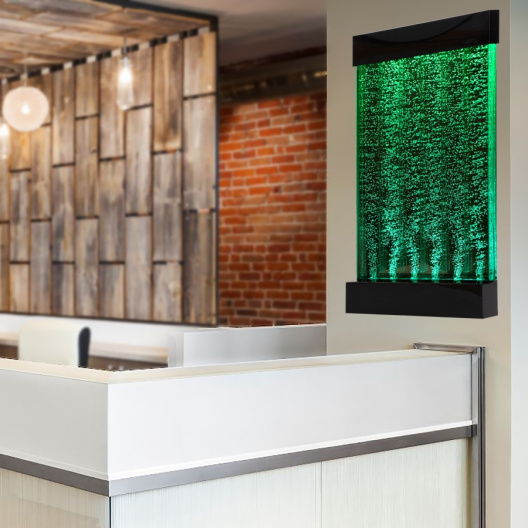
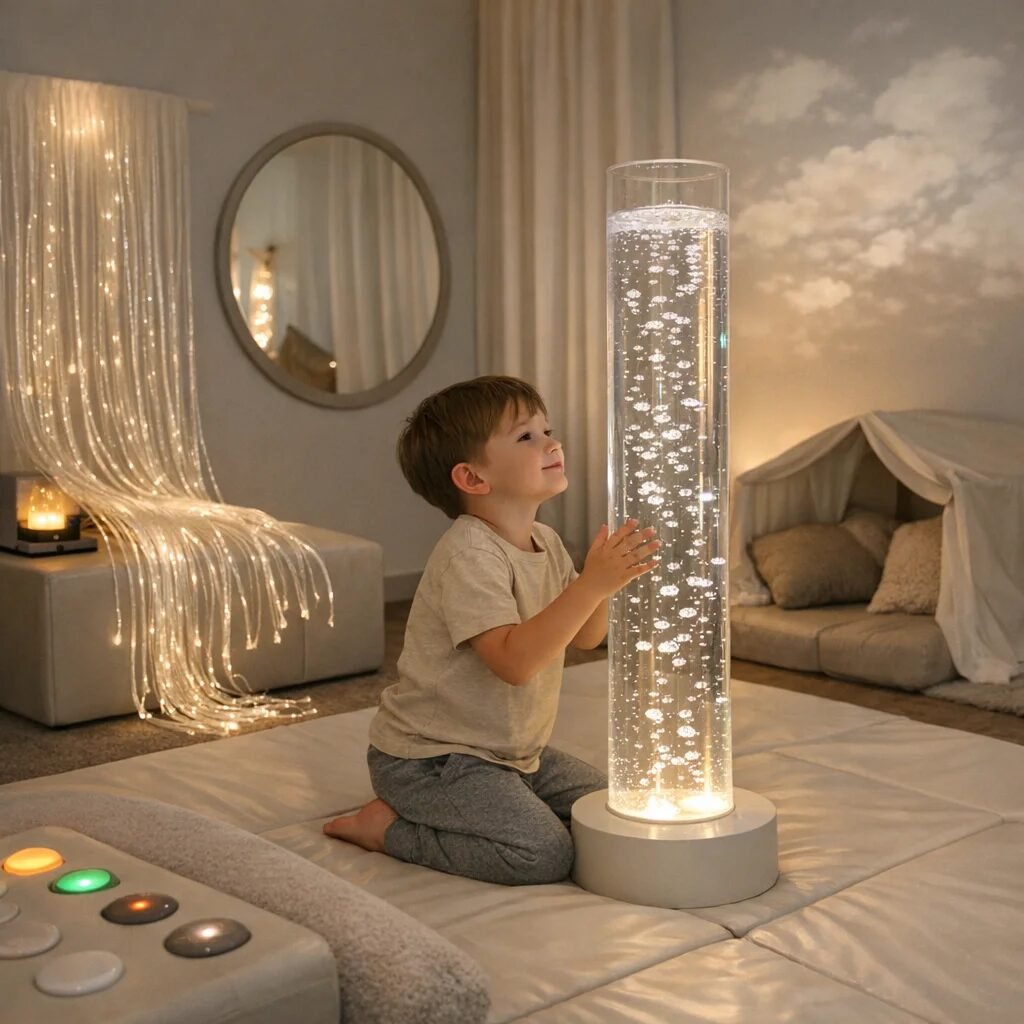
Lighting is one of the fastest ways to change the feel of a sensory space. Soft, controllable light tends to work better than bright overhead fittings. Many successful rooms avoid fluorescent lighting entirely because flicker and glare can be difficult for autistic individuals and people with sensory sensitivities. A feature such as the Bubble Tube Tank Vortex Tower can provide slow, repetitive visual input that many users find regulating when placed in a calm zone rather than as the centre of a busy room.
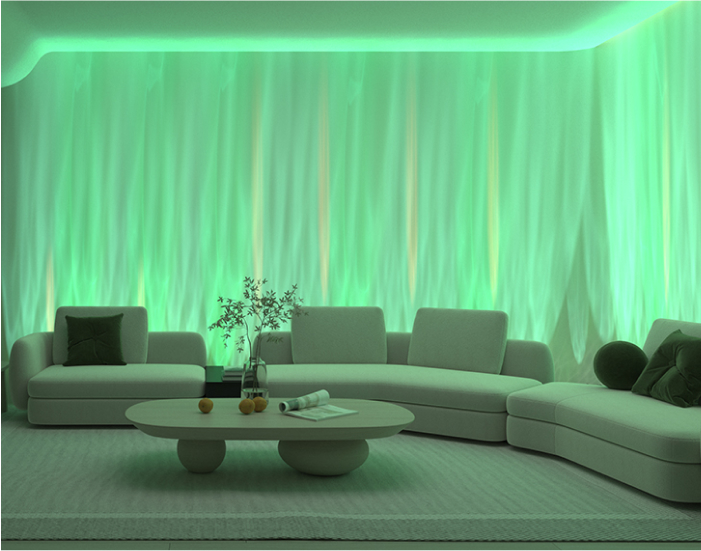
Projected light can also be effective, especially for bedrooms, nurture rooms, and smaller home spaces. A ceiling projection should be dimmable and easy to switch off quickly if it becomes overstimulating. The Galaxy Projector suits spaces where users need visual calm without a large equipment footprint.
Seating and body support
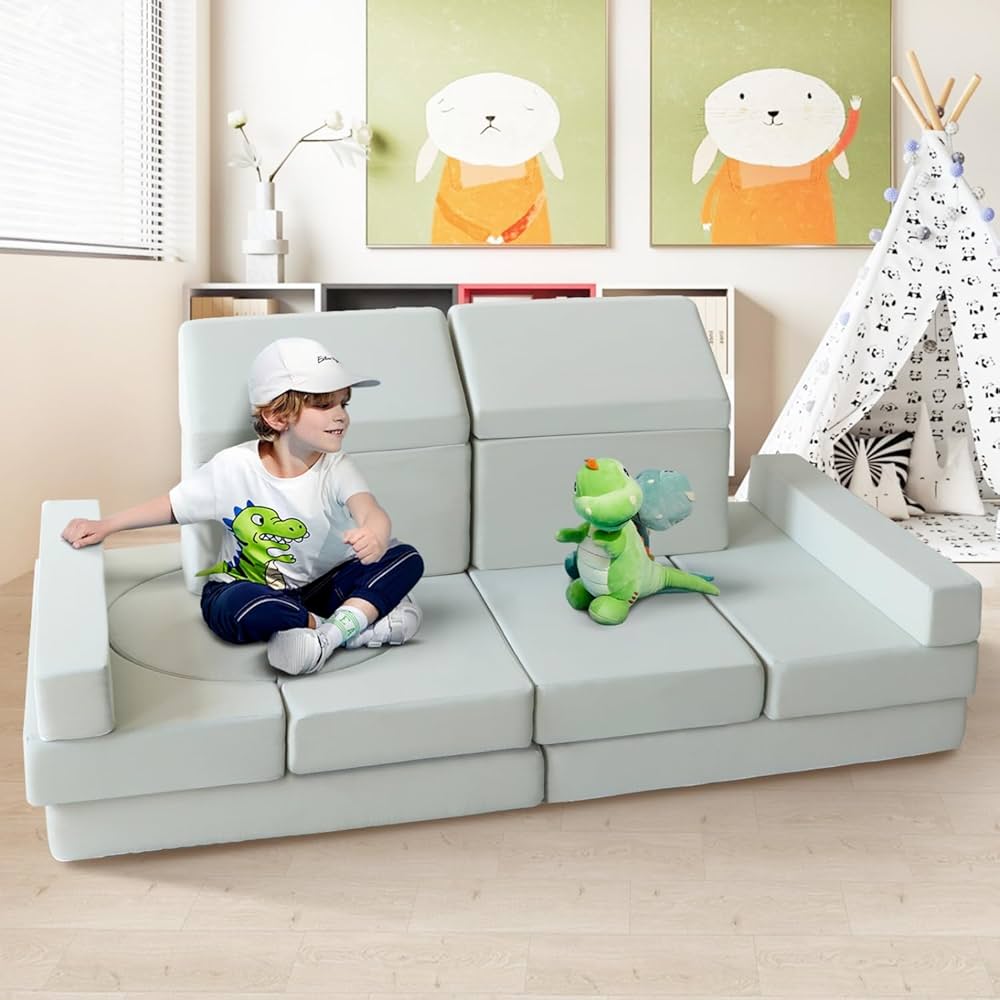
Seating affects regulation just as much as lighting. Many children and adults do better when they can curl up, lean, rock gently, or feel enclosed. Soft, modular seating helps a room adapt across ages and energy levels. In family homes and nurture spaces, the Kids Modular Play Sofa can be arranged as a retreat seat, crash area, or floor-based calming setup.
The best support options are stable, washable, and matched to the user’s posture and movement needs. A floppy bean bag may work for one child but frustrate another who needs firmer support to feel secure. In therapy rooms, seating should allow adults to join without crowding. In schools, enough floor space should remain for safe movement and supervised co-regulation.
Tactile and movement features
Touch and body movement are often the missing pieces in underperforming sensory rooms. Staff may invest in lighting but forget that many users regulate through hands, muscles, and joints. Tactile tools, textured panels, wall-mounted activities, and graspable fidgets offer grounded, immediate input. A small hand tool such as the Schylling NeeDoh Nice Cube can support waiting, transitions, or calming while seated.
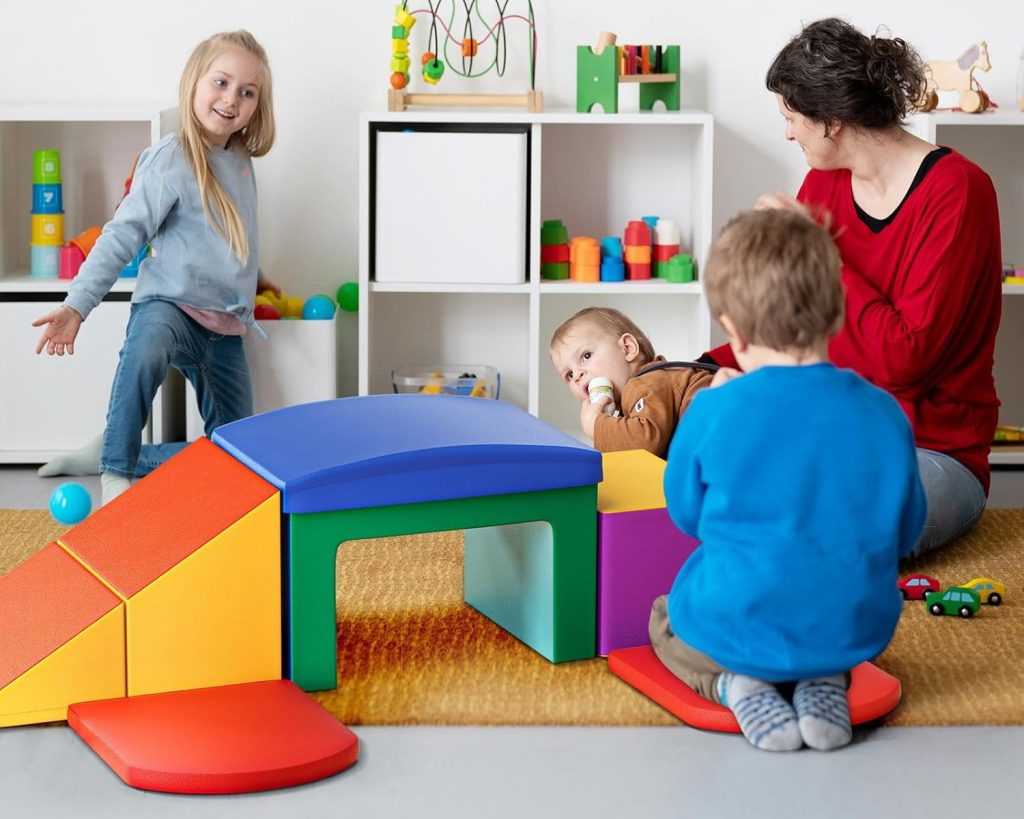
For larger movement needs, floor-based play equipment is often more useful than decorative kit. In early years settings and therapy environments, the Soft Play Explorer Set Foam Blocks can create climbing, crawling, pushing, and crashing opportunities that meet proprioceptive needs far more effectively than passive observation alone.
How to set up a sensory room step by step
The first step is to decide what problem the room is solving. That sounds obvious, but many rooms fail because they are designed around products rather than outcomes. A school may say it needs a sensory room, when what it actually needs is a decompression room for post-breaktime regulation. A family may think a child needs calming equipment, when observation shows the child first needs heavy work and movement after school.
Step two is to identify the user or user group. Consider age, communication level, mobility, sensory triggers, favourite sensations, unsafe behaviours, and times of day the room will be used. A room for one autistic child at home can be highly personalised. A room in a school for eight different pupils needs wider flexibility, visual simplicity, and clear routines for turn-taking and session length.
Step three is to zone the space. Even in a small room, clear zones reduce confusion. One corner can be low arousal with dim light and soft seating. Another can offer tactile exploration or tabletop sensory play. A third, where space permits, can support gross motor movement. Effective zoning prevents one child from trying to calm while another is crashing into foam blocks two feet away.
Step four is to choose a small number of high-value resources. Start with controllable lighting, supportive seating, one or two tactile tools, and one movement option if space allows. Test use before adding more. A room with six well-used features is usually more successful than one with twenty underused items fighting for attention.
Step five is to create predictable rules and routines. Decide who can access the room, how sessions begin and end, how adults support without over-directing, and what signals a session is working. Many schools use visual timetables, first-then boards, and short regulation goals. At home, a parent may use the room for ten minutes before homework or as part of a bedtime wind-down.
Effective sensory room setups versus poor sensory room setups
An effective setup feels coherent. The light level is adjustable, sounds are limited, and the user can understand what the room is for. There is enough empty space to move safely. Equipment is selected because it meets a need. Adults know when to offer support and when to step back. Most importantly, the person using the room becomes more settled, organised, or engaged over time.
A poor setup often looks busy and expensive. Ceiling projectors, flashing toys, bright wall art, mirrors, music, scented items, and tactile bins may all be present at once. Adults assume more sensory input creates a better sensory room, but for many users the result is a flood of competing information. The room then becomes dysregulating, and staff may wrongly conclude that sensory spaces “do not work” for that child.
Consider two school examples. In the first, a Year 2 pupil with autism enters a room with dimmable lighting, a visual timer, a low sofa, one bubble feature, and a push-pull activity wall. After seven minutes, breathing slows and the pupil returns to class ready for phonics. In the second, the same pupil enters a space with flashing multicolour lights, loud music, peers coming in and out, and no clear adult plan. Within minutes, the pupil covers ears, runs out, or melts down. The difference is not the label of the room. It is the quality of the design.
Common mistakes and how to avoid them
The most common mistake is designing for appearance rather than function. Social media has popularised sensory rooms with dramatic lighting effects, but what photographs well may not regulate well. To avoid this, every item should answer a practical question: what sensory need does it meet, and for whom? If no clear answer exists, the item is probably clutter.
Another frequent mistake is mixing calming and active equipment without boundaries. A child cannot easily relax next to a spinning toy, crash mat, and active group game. Strong rooms separate low-arousal and high-arousal activity, either by physical zones or by using the room for different purposes at different times.
Maintenance is also often neglected. A sensory room quickly loses value when bubble tubes stop working, batteries die, fabrics become unhygienic, or switches fail. Ongoing checks should be part of the plan from the start. For practical guidance, maintaining sensory rooms properly is not a minor issue; it directly affects safety, regulation, and long-term usability.
Finally, adults sometimes overuse the room as a behaviour destination. A sensory room should not feel like isolation, punishment, or removal for being “too much.” It works best when introduced positively, used proactively, and associated with support rather than shame. Language matters. “Let’s go help your body feel calmer” is very different from “You need to leave because you can’t cope.”
Practical tips for home, school, and therapy settings
At home, simplicity usually works best. A spare bedroom corner, under-stairs nook, or section of a playroom can become a useful sensory area with controlled lighting, soft seating, and a few chosen regulation tools. Parents often get better results from a compact, predictable setup than from trying to replicate a full commercial sensory suite. The room should be easy to reset and realistic to maintain.
In schools, access systems matter as much as equipment. Staff should know which pupils benefit from proactive use, what activities are appropriate, and how long sessions should last. A five-minute movement break before literacy may be more effective than taking a child there only after escalation. Record what happens before and after room use; patterns quickly show whether the setup is actually helping.
In therapy spaces, the room should support goals rather than distract from them. Therapists often combine movement, sensory modulation, communication work, and co-regulation. Equipment layout should allow the professional to grade challenge carefully. Too much novelty can pull attention away from the therapeutic purpose, especially for children who are highly visually motivated.
Across all settings, the strongest tip is to observe, adjust, and review. Sensory needs change with age, stress, health, sleep, and environment. A room that worked beautifully for a six-year-old may feel babyish or ineffective at age ten. The most expert sensory room designers expect to refine the space over time.
Frequently Asked Questions
What is the main purpose of a sensory room?
The main purpose of a sensory room is to provide controlled sensory input that helps a person regulate their body and emotions. Depending on the design, it can calm, alert, organise, or engage the user. The best sensory rooms are always tailored to individual sensory needs.
How does a sensory room help autistic children?
A sensory room can help autistic children by reducing sensory overload and offering predictable, supportive sensory experiences. This may lower anxiety, improve communication, and make transitions easier. It is most effective when matched to the child’s specific sensory profile rather than using a one-size-fits-all setup.
What should be in a sensory room?
A sensory room should include only the items that serve the user’s needs, such as adjustable lighting, supportive seating, tactile resources, and movement options. Not every room needs every type of equipment. A smaller number of well-chosen items usually works better than an overcrowded space.
Can a sensory room be created at home?
Yes, a sensory room can be created at home using a corner, spare room, or enclosed area with carefully selected resources. Soft lighting, a comfortable seat, and a few calming or tactile tools are often enough to make a real difference. Home sensory spaces work best when they are simple, consistent, and easy to maintain.
Are sensory rooms only for autism?
No, sensory rooms are not only for autism. They can support people with ADHD, sensory processing disorder, anxiety, learning disabilities, dementia, and other conditions that affect regulation or sensory tolerance. The room design should always reflect the needs of the person using it.
How long should someone spend in a sensory room?
There is no single ideal time, because effective session length depends on the person and the purpose of the room. Some people benefit from five to ten minutes, while others need longer for regulation or therapeutic work. The most useful guide is whether the person leaves better regulated than when they entered.
What makes a sensory room ineffective?
A sensory room becomes ineffective when it is overstimulating, poorly maintained, or not matched to the user’s actual needs. Common problems include too many flashing features, no clear zoning, and using the room only after behaviour has escalated. Good sensory rooms are purposeful, safe, and regularly reviewed.