Table of contents
A sensory room benefits most people who struggle to regulate input, attention, movement, anxiety, or arousal levels, especially autistic children and adults, people with ADHD, sensory processing differences, learning disabilities, dementia, and those recovering from stress or trauma. The greatest benefit comes when the sensory room is matched to the individual rather than designed as a visually impressive space, because effective sensory support is always about function first.
Across homes, schools, clinics, and care settings, well-designed sensory rooms are used to reduce overload, improve focus, support communication, encourage movement, and create safe opportunities for regulation. Practical experience shows that the people who gain the most are not always those with the most obvious needs, but those whose environment regularly gives them either too much stimulation, too little stimulation, or the wrong kind.
Highlights
- Sensory rooms most commonly help autistic people, individuals with ADHD, sensory processing difficulties, dementia, anxiety, and developmental disabilities.
- The biggest gains come when the room is tailored for calming, alerting, movement, or therapeutic goals rather than filled with random equipment.
- Home, school, and therapy sensory rooms all serve different purposes and should be set up differently.
- Poor sensory rooms can increase dysregulation; effective rooms balance safety, simplicity, access, and clear sensory intent.
What a sensory room is and why some people benefit more than others
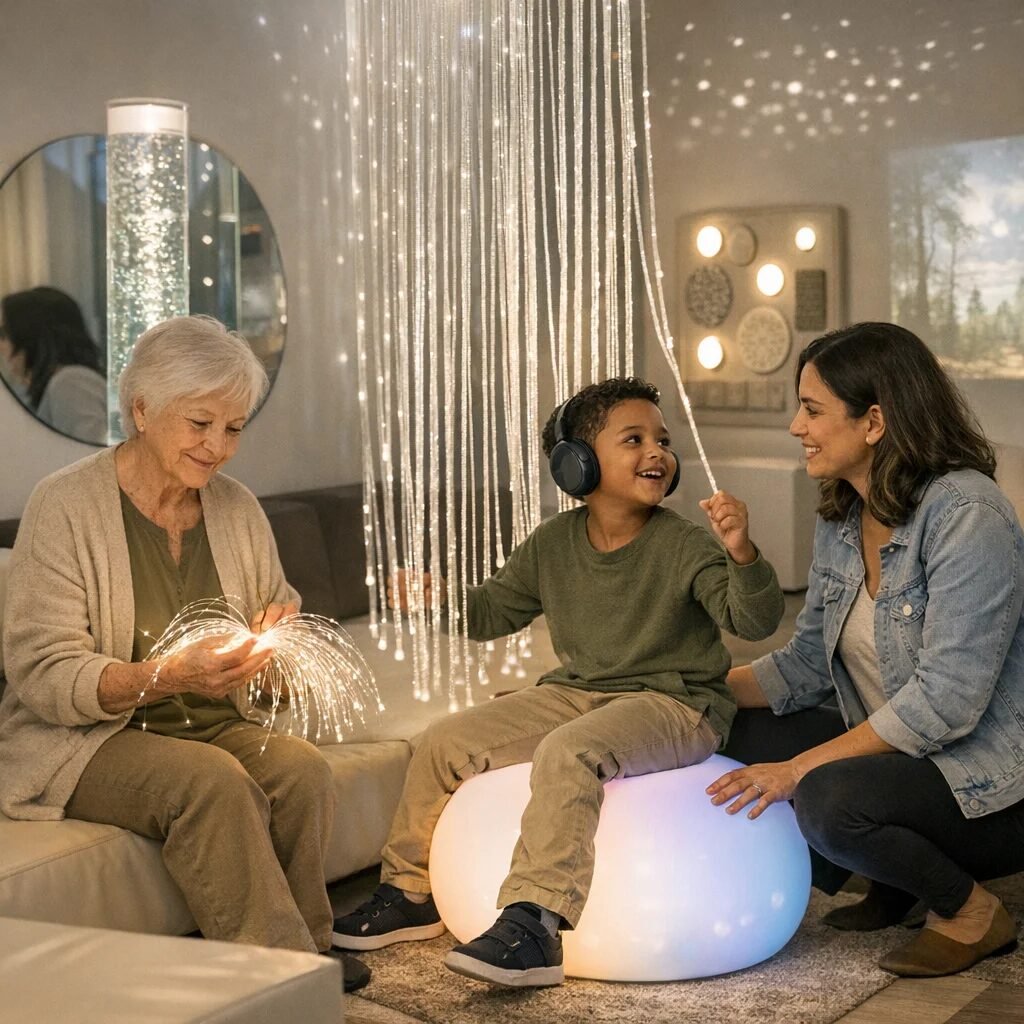
A sensory room is a deliberately designed environment that uses light, sound, texture, movement, seating, and interactive equipment to help a person regulate their nervous system. In simple terms, it is a space built to either calm, organise, alert, or engage the senses in a controlled way. That definition matters, because many rooms are labelled “sensory” when they are actually just colourful spaces filled with stimulating items.
The people who benefit most from using a sensory room are those whose daily environments do not naturally support self-regulation. A child who becomes distressed by noise at school, an autistic teenager who needs predictable downtime after masking all day, a pupil with ADHD who cannot settle before learning, or an older adult with dementia who becomes agitated in busy communal spaces may all need a sensory environment for different reasons. The room itself is not the intervention; the right sensory experience at the right time is.
Research supports this wider view of sensory need. The UK National Autistic Society explains that many autistic people experience hyper- or hypo-sensitivity to sensory input, which can affect day-to-day functioning, comfort, and behaviour through sensory differences described by the National Autistic Society. In education, that means a sensory room may prevent escalation. In the home, it may help a child recover after school. In a care setting, it may reduce distress and improve quality of life.
Autistic children and adults often benefit the most
Autistic people are often the group most closely associated with sensory rooms, and with good reason. Many autistic individuals experience the world in a way that is either painfully intense or frustratingly under-stimulating. Bright strip lights, echoing corridors, scratchy fabrics, crowded classrooms, and unpredictable noise can all trigger overload. A sensory room gives controlled access to sensory input, making it easier to regulate before distress builds into shutdown, meltdown, or withdrawal.
The benefit is not limited to young children. Autistic teenagers and adults often use sensory rooms differently. A younger child may respond well to gross motor input, tactile exploration, and visual cause-and-effect equipment. An older autistic student may need a darker, quieter zone with clear boundaries, low lighting, a soft seat, and one or two familiar regulation tools. In adult services, sensory rooms can support decompression, communication, and emotional recovery after demanding social or environmental experiences.
Effective autistic-friendly sensory rooms usually reduce unpredictability. That means using equipment with gentle transitions rather than sudden flashes, having an obvious layout, and avoiding too many simultaneous sensory demands. For example, a calm corner with a Sensory Tent, dimmable lighting, and one handheld tool such as the Schylling NeeDoh Nice Cube may work far better than a room full of flashing gadgets. A poor setup, by contrast, often combines loud audio, mirror reflections, bright colours, and too many choices, which can overwhelm the very person it was meant to support.
People with ADHD and regulation difficulties gain strong practical benefits
For individuals with ADHD, the challenge is often not sensory sensitivity alone but regulation of attention, movement, and arousal. A sensory room can help them transition from high energy to learning readiness, or from mental fatigue to purposeful alertness. In schools, this is especially useful before literacy work, after lunch, or following stressful transitions when concentration typically drops.
The most effective sensory rooms for ADHD are rarely passive-only spaces. While calming features have value, many pupils with ADHD need heavy work, movement, or active sensory input before they can access calm. That may include stepping routes, crash-safe foam, wall pushes, resistance tasks, or rhythmic movement. A room that only offers gentle lights and beanbags may feel pleasant but do little to improve functional focus.
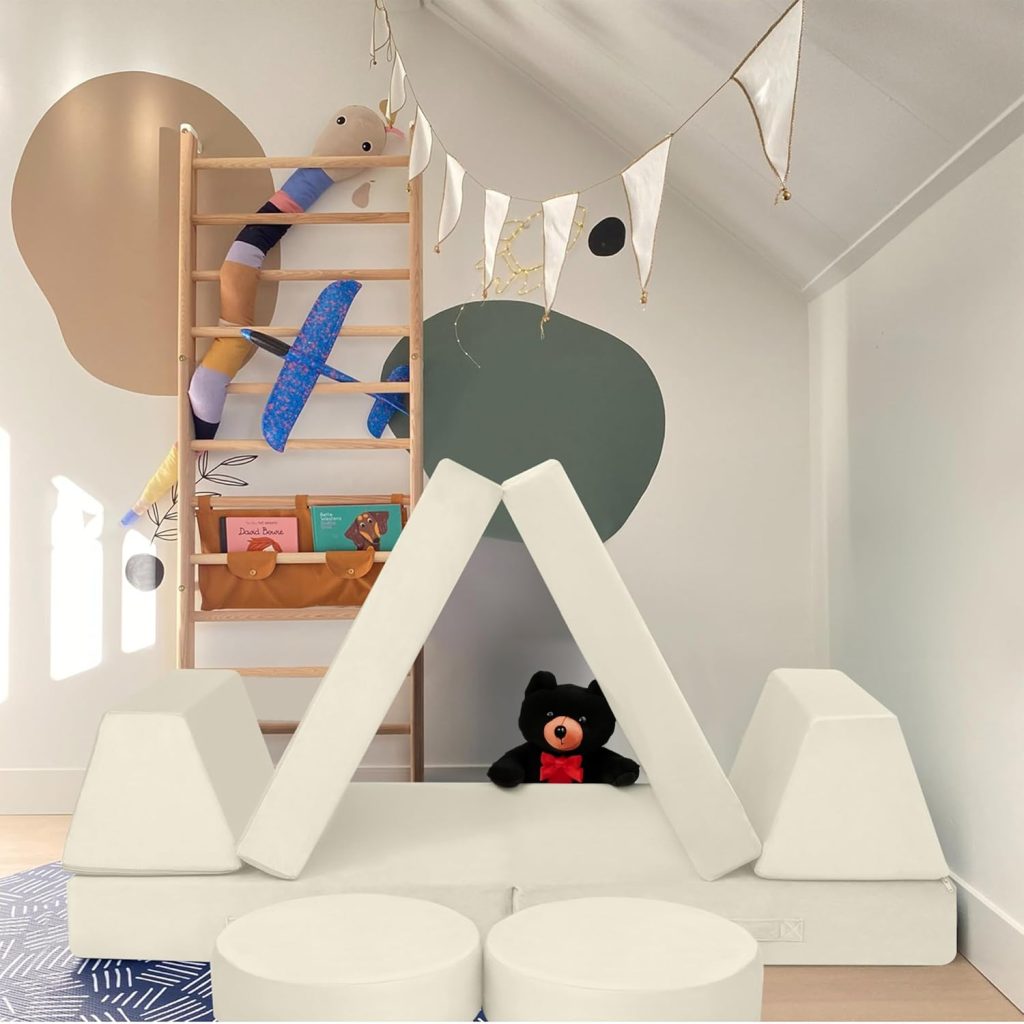
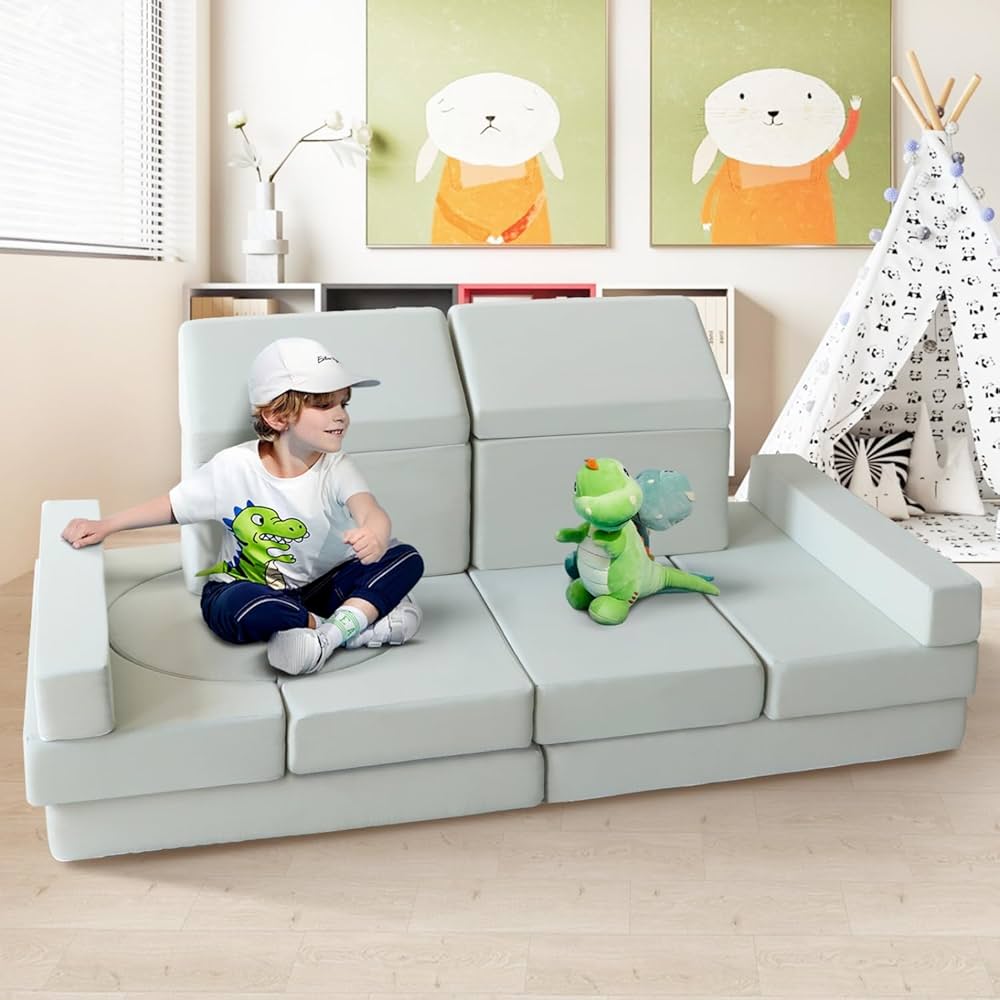
A practical example in a primary school would be a five-minute pre-class routine: two minutes of movement, one minute of deep pressure or squeezing activity, one minute of breathing, and one minute seated with a visual timer. Equipment such as a Kids Modular Play Sofa can create flexible crash, lounge, or pressure zones, and a Peanut Ball for Kids Therapy can support core activation and controlled movement. For ADHD, the best sensory room is often one that helps the body work first and settle second.
Children and adults with sensory processing disorder or developmental disabilities
People with sensory processing disorder, global developmental delay, profound and multiple learning disabilities, or other developmental conditions often benefit significantly because sensory rooms can offer structured access to experiences that build awareness, engagement, and comfort. For some individuals, the room provides calming and regulation. For others, it is a rare opportunity to notice, track, reach, vocalise, and interact with the environment in a meaningful way.
In therapy settings, this can be especially powerful when goals are clear. A therapist may use a bubble tube to encourage visual tracking, a vibrating surface for body awareness, or tactile panels to increase purposeful hand use. In special education, the same room may support transitions, communication targets, shared attention, or cause-and-effect learning. For children with limited verbal language, sensory rooms can become places where preferences are seen more easily, which helps adults respond more accurately.
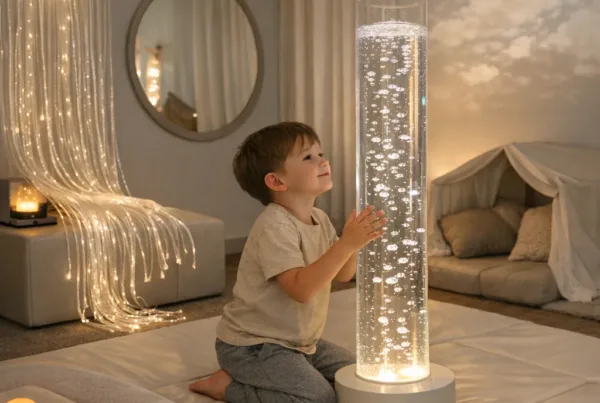
Interactive visual equipment can be highly effective when used sparingly and with purpose. A feature such as the Bubble Tube Tank Vortex Tower may support visual attention, anticipation, and calming when paired with a simple communication routine such as “on,” “off,” “more,” or colour choice. However, too many interactive devices used at once can dilute attention. A strong setup usually has a sensory leader in the room, one main focal item, and clear zones for rest and activity.
People living with dementia can benefit in different but equally valuable ways
Sensory rooms are not only for children. Older adults living with dementia often benefit from multisensory environments that reduce distress and support orientation, comfort, and reminiscence. Agitation in dementia is often worsened by noise, confusion, lack of meaningful occupation, and environments that feel either sterile or overwhelming. A calm, well-structured sensory room can soften these effects.
In dementia care, the goal is rarely excitement. Instead, the most helpful environments are gentle, familiar, and grounding. Soft lighting, slow-moving visuals, tactile fabrics, soothing music, and comfortable seating tend to work better than fast-changing colour cycles and novelty-driven equipment. A room designed for a nursery-age child might be inappropriate in an adult care home, even if the equipment is technically “sensory.” Age dignity matters.
There is growing interest in multisensory support in dementia care, particularly as non-pharmacological strategies for distress. The Alzheimer’s Society notes that dementia can affect how a person experiences what they see, hear, smell, and feel in its guidance on how dementia affects the senses. In practice, a simple projected light pattern, a textured lap blanket, and familiar music can sometimes achieve more than a room packed with equipment.
Who benefits in home, school, and therapy settings
Home sensory rooms
At home, sensory rooms often benefit children who need a predictable place to reset after school, before bed, or during emotional overload. Parents usually get the best results when the room serves one or two clear functions rather than trying to cover every possible need. A home sensory room might be a converted bedroom corner, under-stairs den, loft area, or spare room with blackout curtains and protected flooring.
The biggest advantage of home use is consistency. The child can return to the same space with the same tools and routines, which builds familiarity and trust. A low-cost setup can still work well if it includes an enclosed retreat, one calming light source, soft seating, and a few preferred sensory items. Fancy equipment is not a substitute for good matching.
School sensory rooms
In schools, the children who benefit most are often those who struggle with transitions, noise, emotional regulation, and sustained attention. However, schools make one common mistake more than any other: using the sensory room as a reward room, a timeout room, and a free-play room all at once. That creates confusion and leads to inconsistent outcomes.
A better model is to decide exactly what the room is for. Is it a two-minute regulation stop before re-entering class? A scheduled intervention room? A calming recovery space after dysregulation? A sensory circuit station? Once the purpose is clear, staffing and equipment choices improve quickly. For upkeep, schools should also plan regular maintenance tasks for sensory rooms so that broken lights, worn textures, and loose fixings do not undermine safety or effectiveness.
Therapy and clinical settings
Therapists benefit from sensory rooms because they can shape the environment around a clinical goal: attention, motor planning, body awareness, co-regulation, tolerance, communication, or relaxation. The people who gain the most here are those who need skilled observation and carefully graded input. For example, an occupational therapist may use a sensory room to test whether a child settles with vestibular input, deep pressure, reduced noise, or lower visual demand.
Compared with home or school rooms, therapy sensory rooms usually work best when they are more flexible and less decorative. The space should allow the therapist to increase or reduce stimulation quickly. Portable items, dimmable lighting, and clear documentation matter more than dramatic visual impact.
How to identify whether someone is likely to benefit
A person is likely to benefit from using a sensory room if they regularly show signs that sensory input is affecting functioning. That may include covering ears, avoiding textures, constant movement, crashing into furniture, chewing items, meltdowns in busy spaces, difficulty settling to sleep, distress during transitions, or obvious relief in calmer environments. In adults, it may look like agitation, pacing, withdrawal, low tolerance for noise, or inability to recover after overstimulation.
The key question is not “Does this person like sensory things?” but “What sensory conditions help this person function better?” Liking lights does not automatically mean lights are regulating. Some people are mesmerised by sensory equipment but become more dysregulated afterwards. Others avoid seemingly pleasant items because the intensity is too high. Observation before, during, and after use is what separates thoughtful provision from guesswork.
Useful tracking measures include time to settle, ability to transition out, changes in breathing or body tension, communication attempts, and engagement with the next task. According to the CDC, about 1 in 36 children has been identified with autism spectrum disorder based on CDC surveillance data, which helps explain why sensory-friendly environments are now a mainstream issue for families and education providers rather than a niche add-on.
Step-by-step advice for tailoring a sensory room to the person who will use it
The best sensory rooms begin with assessment, not shopping. Before adding any equipment, identify whether the main goal is calming, alerting, movement regulation, engagement, or therapeutic interaction. Then look at the sensory patterns involved: visual sensitivity, movement seeking, tactile defensiveness, auditory overload, or a need for deep pressure.
A practical setup process usually works like this:
- Identify the user’s main challenge: overload, under-arousal, constant movement, anxiety, poor transitions, or communication difficulty.
- Choose one core room purpose: calm, organise, activate, or engage.
- Create zones: retreat, seating, movement, and interactive focus.
- Limit the first setup to a few high-value items rather than filling the room.
- Observe the response over two to three weeks and adjust based on behaviour after use, not just during use.
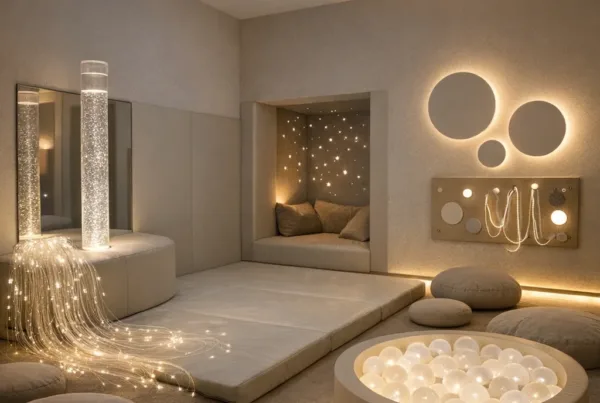
An effective calming setup might include low lighting, acoustic reduction, soft seating, a hideaway den, and one slow visual feature. An effective alerting setup may include movement tools, push-pull activities, stepping routes, and upright seating. These are very different rooms, even though both may be called sensory rooms. That contrast is where many projects go wrong.
Common mistakes and how to avoid them
The most common mistake is designing for appearance instead of regulation. A room packed with bubble tubes, projector effects, mirrors, music, wall lights, and tactile objects may look impressive to adults, but it can be chaotic for the user. When every item competes for attention, there is no sensory hierarchy and no clear route to calm.
Another mistake is copying a generic autism sensory room template without considering the individual. One autistic child may need darkness and pressure. Another may fear enclosed spaces and need gentle movement with side lighting. One pupil with ADHD may regulate through active obstacle work. Another may become dysregulated with too much movement and need heavy proprioceptive input instead.
There are also practical errors: inaccessible switches, unsafe cords, slippery floors, fragile items placed in active zones, and no cleaning or maintenance schedule. A sensory room should never be “set and forget.” Sensory equipment is only useful when it is safe, clean, working, and used intentionally. Many avoidable problems can be prevented by scheduling routine sensory room maintenance checks from the start.
Expert tips for making a sensory room genuinely useful
Start with the nervous system, not the catalogue. Ask what the person needs more of and less of in order to function. Then test small changes first. A single projected light with soft seating may be enough for one child. Another may need movement before any calming feature is effective.
Use contrast carefully. A very active sensory room beside a truly calm retreat can work well, but mixing the two in the same few square metres often fails. Keep active items away from relaxation zones. Store hand fidgets where they can be selected intentionally, not scattered everywhere. Label or visually structure the room if the user needs predictability.
Finally, plan for exit as well as entry. A sensory room session should help the person return to daily life in a better state than when they entered. If someone leaves activated, dazed, upset, or resistant to transition, the room may need fewer stimuli, a shorter session, or a clearer ending routine.
Frequently Asked Questions
Who benefits most from using a sensory room?
People who benefit most from using a sensory room are those with sensory regulation difficulties, including autistic individuals, people with ADHD, sensory processing disorder, developmental disabilities, anxiety, and dementia. The best outcomes happen when the room is tailored to their specific sensory profile and goals.
Are sensory rooms only for autism?
No, sensory rooms are not only for autism. They can also help people with ADHD, learning disabilities, trauma-related stress, dementia, and anyone who needs support with calming, attention, or sensory regulation.
Can a sensory room help with meltdowns and overload?
Yes, a sensory room can help reduce overload and support recovery from meltdowns when it is used early and set up appropriately. It works best as a preventative and regulation space, not just as a place someone is sent after distress has escalated.
What is the difference between a calming room and a sensory room?
A calming room is usually designed mainly to reduce stimulation and support relaxation. A sensory room is broader and may be used to calm, alert, organise movement, encourage interaction, or deliver therapeutic sensory input.
Do sensory rooms work in mainstream schools?
Yes, sensory rooms can work very well in mainstream schools when they have a clear purpose and trained adult support. They are especially helpful for pupils who struggle with transitions, concentration, emotional regulation, or sensory overload during the school day.
What should be in a sensory room for home use?
A home sensory room should include only the items that match the child or adult using it. A simple retreat space, soft seating, low lighting, and a small number of preferred sensory tools are often more effective than a room filled with stimulating equipment.
Can adults use sensory rooms too?
Yes, adults can benefit from sensory rooms, particularly autistic adults, adults with learning disabilities, people experiencing anxiety, and older adults with dementia. Adult sensory rooms should be dignified, purpose-led, and suited to adult sensory preferences rather than child-focused themes.